Get Full Government Meeting Transcripts, Videos, & Alerts Forever!
Get email alerts on the Homelessness Data Dashboard topic
No spam. Unsubscribe anytime.
Multnomah County by-name homelessness dashboard prompts new questions about scale and funding allocation
Summary
Councillor Mark Zimmerman and others briefed the committee on a new by-name dashboard from Multnomah County and an Eco Northwest report; the data show a larger-than-expected regional homeless population and renewed scrutiny of how supportive-housing-service (SHS) funds are allocated.
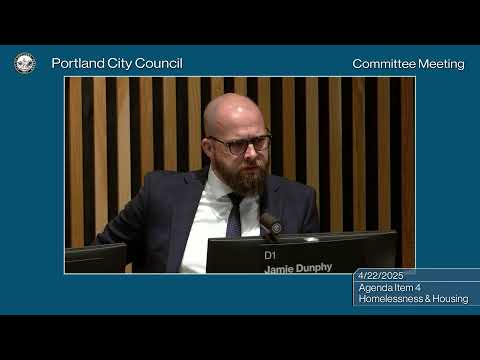
The Homelessness and Housing Committee on April 22 heard an update from Councillor Mark Zimmerman on the Homelessness Response System Steering and Oversight Committee (SOC), which earlier this month received a new Multnomah County “by-name” homelessness dashboard and an Eco Northwest report on the impacts of the region’s supportive housing services funding.
Zimmerman said the county’s dashboard — the first by-name list publicly available in the region — reveals the scale of need in new detail. He told committee members that the regionwide count in the dashboard had grown “well above 14,000 folks who are homeless now,” and cautioned that the increase likely reflects both newly unhoused people and improved accounting.
Zimmerman and other council members raised questions about the distribution of SHS funds, which he said are allocated to counties based on population rather than need. He said Multnomah County represents roughly 85% of people counted in the point-in-time homelessness data but receives about 45% of SHS funding, a disparity he said warrants discussion if the funding model is to be extended.
Committee members noted other findings they want to examine further: high shelter occupancy, rapid returns to homelessness for some people placed in permanent housing, and whether services such as behavioral health and workforce supports are reliably linked to shelter placements. Councilor Ryan and others asked for longitudinal data on retention in housing and on whether placements include sufficient case management and behavioral-health connections to reduce recidivism.
Zimmerman and colleagues said the SOC will need to move from data presentation toward substantive review and guidance to implementation bodies; they also noted leadership changes coming to Multnomah County’s homeless services department and said data transparency via the dashboard should enable more targeted policy decisions.
The briefing was informational; committee members urged the SOC and joint office partners to provide follow-up data on recidivism, service overlays and SHS allocation models.