Get Full Government Meeting Transcripts, Videos, & Alerts Forever!
Get email alerts on the Opioid Policy topic
No spam. Unsubscribe anytime.
Committee backs bill requiring opioid risk discussions with patients; Health and AG offer amendments
Summary
The Senate health committee on April 22 recommended bill 36‑0021 — which would require practitioners to discuss opioid necessity, non‑opioid alternatives and overdose risks before an initial and before a third schedule‑II opioid prescription — and voted 6–0 (with one absence) to forward the bill for further drafting.
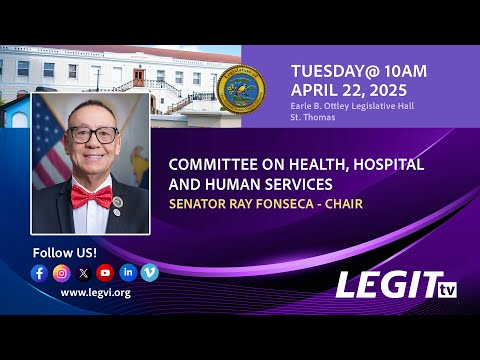
The Senate Committee on Health, Hospitals and Human Services voted April 22 to give a favorable recommendation to bill 36‑0021, a measure that would require practitioners to discuss specific risks and alternatives with patients when prescribing opioids.
The bill, introduced by Senator Marvin A. Bridal, would require clinicians to discuss the prescription’s necessity, non‑opioid alternatives, and the risks of opioid use — including addiction, dependence and fatal respiratory depression when opioids are misused or combined with other depressants — before an initial schedule‑II opioid prescription and again before a third prescription during a course of treatment. Practitioners would document that the discussion took place in the medical record.
Troy A. Deshabert Schuster, AARP State Director for the Virgin Islands, told the committee AARP supports the measure and urged one amendment: "Include caregivers in the required opioid risk notification process," noting that caregivers often manage medications for older adults and help prevent misuse.
Assistant Commissioner Nicole Cragwell Sims testified for the Department of Health and said the department strongly supports the bill but recommended a change to the exemption language. The department suggested narrowing the hospice/palliative exemption so that the counseling requirement would not apply to patients receiving hospice or palliative care for a terminal illness, while removing broader exemptions for active cancer treatment, long‑term care residents and people in treatment for substance use disorder. Sims explained the department’s view that vulnerable patients should generally receive counseling and documented discussion about risks and alternatives. The department also proposed using an informed‑consent form similar to programs used in other states (for example Michigan’s Start Talking initiative).
Attorney General Gordon Ray told senators the measure is consistent with actions in other states and complements existing controlled‑substance laws. He cited Delaware, Florida and Connecticut as jurisdictions that require risk discussions or written agreements and noted the potential for a signed informed‑consent form to protect both patients and prescribers.
The committee held a recorded roll call after Senator Bridal moved the bill and Senator Milton Potter seconded. The committee vote was recorded as 6 yes, 0 no, 1 absent. The committee voted to forward the bill to Rules and Judiciary for further consideration and drafting of amendments.
Ending: Committee members said they would expect implementing guidance and coordination with the territory’s Prescription Drug Monitoring Program (PDMP) and with EMS and behavioral‑health partners. The Department of Health said it will work with the committee on suggested language and on aligning required counseling with PDMP reporting and distribution of naloxone (Narcan) and other prevention measures.