Get Full Government Meeting Transcripts, Videos, & Alerts Forever!
Get email alerts on the Public Health Outbreaks topic
No spam. Unsubscribe anytime.
VI Department of Health briefs senators on hand‑foot‑and‑mouth outbreak, measles risk and vaccination push
Summary
Commissioner Houston Carnacian told the Legislature’s health committee on April 22 that the Virgin Islands Department of Health has recorded 277 hand‑foot‑and‑mouth disease cases territory‑wide as of April 19, is stepping up measles preparedness despite no confirmed cases in the territory, and is promoting vaccines and hygiene to limit COVID‑19 and influenza impacts.
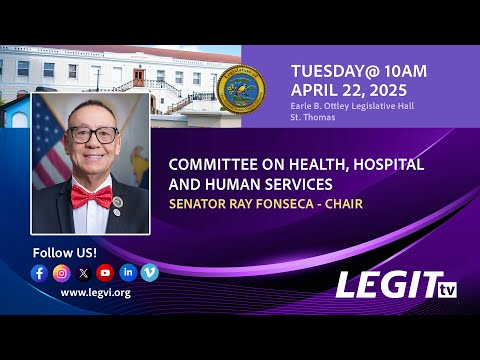
Commissioner Houston Carnacian of the Virgin Islands Department of Health told the Senate committee on April 22 that the department has been working to control several contagious illnesses affecting the territory and to increase vaccine awareness.
Carnacian briefed senators about four priorities: hand‑foot‑and‑mouth disease (HFMD), measles, COVID‑19 and seasonal influenza, and described the department’s coordinated response that includes data surveillance, provider engagement and public messaging.
"As of Friday, April 19, a total of 277 cases of hand‑foot‑and‑mouth disease have been reported," Carnacian said, adding that most were in the Saint Thomas–Saint John district. The department has focused on outreach to schools and daycares, providing on‑site infection control training and recommending enhanced hygiene and environmental cleaning rather than broad closures.
Deputy Territorial Epidemiologist Lisa Ekpo told the committee the first reported HFMD case was in Saint Thomas and that epidemiologists used that early signal to step up messaging in Saint Croix before more cases appeared there. "We do know the first reported case was reported here in Saint Thomas, and we did all our usual follow ups with individual facilities, schools, etcetera," Ekpo said.
On measles, the department highlighted growing national activity and the possibility of importation. Carnacian noted Centers for Disease Control and Prevention reporting and said the territory has no confirmed measles cases but must prepare: "We are alarmed by the high rate of transmission. And while no cases have been reported in the territory, we feel it is a matter of when, not if," he said.
The department reported current measles (MMR) vaccine inventory in the territory as of its briefing: 486 doses at Department of Health clinics, 108 doses at local pharmacies and 48 doses at providers participating in the Vaccines for Children program. The department said it will add a designated measles page to its website within 24 hours of the briefing and is sending letters urging parents with previously approved vaccination exemptions to reconsider.
Officials stressed which groups are most vulnerable if measles arrives: young children, unvaccinated pregnant people and immunocompromised residents. Commissioner Carnacian told senators the department’s immunization program and maternal and child health division are coordinating clinic and outreach options; Assistant Commissioner Nicole Cragwell Sims and Chief Medical Officer Tay Hunt Caesar described planned community vaccine events.
Regarding COVID‑19 and long COVID, Chief Medical Officer Tay Hunt Caesar said the territory has shifted from pandemic to endemic management but maintains surveillance and long COVID reporting plans. "The most important thing somebody should do is to continue to report those symptoms to their health care provider," he said, describing plans to improve surveillance and link patients to specialty care.
On influenza, officials said vaccine coverage is inconsistent and public complacency remains a challenge; the department continues seasonal vaccination promotion and surge planning with hospitals and clinics.
The department described a June territory‑wide wellness fair that will provide no‑cost preventive services and vaccines for adults and children; tentative dates cited were the first week of June in St. Croix and the second week in St. Thomas–St. John, with locations still being confirmed. Officials also said they have placed the Division of Public Health Preparedness on alert and briefed the Emergency Management and Homeland Security Council on measles risk.
Senators pressed the department about school and daycare coordination, Carnival‑season outreach and capacity to deliver vaccines. Ekpo said the epidemiology team has visited classrooms and daycares to give direct infection‑control feedback. The department confirmed secure drug‑drop boxes (for different public health work) and other outreach avenues, and said public service announcements will run on radio and at ports.
The department repeatedly urged vaccination: Carnacian stressed the MMR vaccine’s role in preventing outbreaks and encouraged parents and adults who are not up to date to get vaccinated.
The committee did not take legislative action on the health‑department briefing; senators asked for follow‑up data such as MMR inventory updates and further details on the June wellness fair.
Ending: The Department of Health left the committee with a request to continue rapid messaging and boots‑on‑the‑ground support for schools and daycares as Carnival events begin; officials said they will continue to post weekly surveillance updates to the USVI epidemiology dashboard and to work with healthcare partners on vaccination availability.