Get Full Government Meeting Transcripts, Videos, & Alerts Forever!
Get email alerts on the Business Improvement District topic
No spam. Unsubscribe anytime.
Krause Marshall Business Improvement District outlines security, maintenance and new economic development priorities
Summary
Representatives for the Krause Marshall Business Improvement District told Syracuse City councilors the district will seek funding and a contract authorization to expand services beyond security and maintenance into marketing and façade/economic-development programs, funded by a special assessment that collects about $147,000 annually.
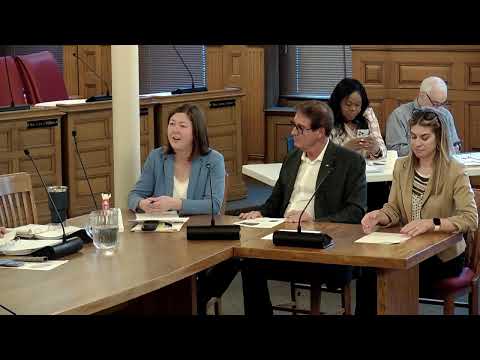
Representatives of the Krause Marshall Business Improvement District presented to Syracuse City councilors on the district’s staffing, budget and new economic-development priorities, saying the group plans to seek a city contract in July to draw on special-assessment funds to expand services beyond security and maintenance.
The district’s board, the presenters said, manages an eight-block area they described as the gateway to University Hill. The district’s work centers on “clean and safe” services — litter patrol, graffiti removal, sidewalk power washing, brick-paver replacement, snow clearance and tree pit maintenance — and security provided by retired law-enforcement officers who patrol the area. The presentation said the district owns 22 flower planters and runs a marketing website, and that it collected about $147,000 in special-assessment revenue; roughly 40 properties contribute to that fund.
Why it matters: District leaders said changes coming to the I‑81 corridor and increased activity related to Syracuse University make the area’s appearance and economic vitality more important, and they want to build a facade-improvement and economic-development program that would offer grants or reimbursements to property owners and merchants.
What the council heard - The district is governed by a 15-member board with appointments from Syracuse University, the city and property- and tenant-representatives; board terms are three years and meetings are held every other month and are open to the public. Jerry Dallas, identified as president of the CMBID, said the board updated its bylaws this year and that Syracuse University appoints five members to the board.
- Security: The district reported one full-time security officer who patrols roughly 35 hours per week while school is in session and 20 hours per week when students are not. The district also has an environmental maintenance staffer (about 60% of full time), pays 5% of an administrative assistant’s time, and budgets 10% of an economic-development staffer’s time. The presentation said officers coordinate with the Syracuse Police Department and with local service providers when needed.
- Budget and cost sharing: The district described a 50/50 cost-sharing arrangement for certain public-space improvements; the presentation gave an example that if the district spends $25,000, the city may reimburse up to $12,500. The district said the city collects the special assessment and deposits it into the Krause Marshall special-assessment fund. The presenters said they will return to the council in early July to request a contract authorizing use of those funds to deliver expanded services.
- Economic development and marketing: Survey results and board discussion identified demand for a broader variety of businesses, improved storefront appearance and more coordinated merchant programming (seasonal events, dining promotions, social-media marketing). Presenters proposed a facade-improvement incentive program modeled on downtown efforts, with an application, contract and reimbursement process; the district said it can pursue grant funding but would need administrative capacity to run such programs.
- Partnerships: Presenters said Syracuse University has recently opened a Department of Public Safety storefront on the district corner and that the university participates on the BID board; Syracuse‑area health systems also have representation. The group said it plans to use Placer AI to study foot-traffic patterns and to work with university students for marketing support.
Decisions and next steps No ordinance, contract or appropriation was voted on at the presentation. District representatives said they will return in early July to request council authorization to draw on special-assessment funds to implement an economic-development program and related contracts. The meeting concluded with a procedural motion to adjourn, which carried on a voice vote.
Ending note: District leaders asked councilors for support in identifying grant and administrative resources to stand up a facade and economic-development program for the Marshall Street corridor.