Get Full Government Meeting Transcripts, Videos, & Alerts Forever!
Get email alerts on the Environment Public Safety Hazardous Substances topic
No spam. Unsubscribe anytime.
Public testimony supports hazardous substance user fee; concerns raised about toxics board vacancies
Summary
At a public hearing April 21, a resident praised the hazardous substance user fee and urged the council to fill vacancies on the Toxics Board; staff described the fee calculation and the public safety rationale.
A public hearing on April 21 on an ordinance setting annual hazardous substance user fees drew a brief public comment in support of the program’s role in protecting first responders and community safety, and a call to fill vacancies on the city’s Toxics Board.
City Manager (unnamed) introduced the hearing, noting the ordinance in the packet and that the fee was recommended by the Toxics Board. Staff said the fee is calculated by full-time-equivalent employees (FTE) rather than number of chemicals; the recommended amount cited in the packet was $85.62 per FTE.
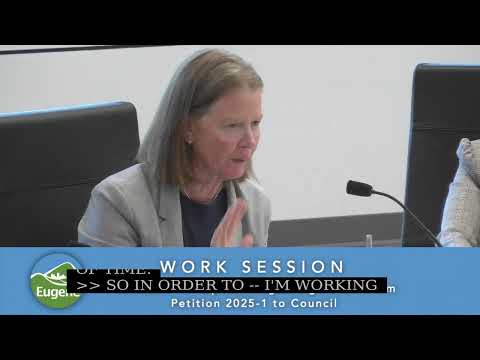
During public testimony a resident who identified attendance at a fire marshal briefing described the program’s value for first responders and said the resident was “disturbed” to learn the Toxics Board “has not been fully filled with people over the last few years,” leaving the board unable to conduct some business due to lack of quorum. The resident urged the council to address the vacant seats (two industry, two advocates, one neutral) so the board can carry out its work.
Fire and emergency services staff noted the program’s safety benefits, saying annual reporting and facility surveys help keep hazardous-substance handling “on the forefront” of industry safety practices and contribute to lower incident frequency compared with similarly sized cities.
Councilors asked staff clarifying questions in public session. Councilor Clark asked whether the Oregon Department of Environmental Quality (DEQ) or the Oregon State Fire Marshal had primary regulatory responsibility; staff replied that the Oregon State Fire Marshal sets state numbers and DEQ participates for substances on federal lists. Staff said full environmental monitoring capacity would require additional resources that the city does not have; the program nevertheless improves safety and information available to first responders.
The council closed the public hearing with no vote recorded on the ordinance at that time and moved on to other agenda items.