Get Full Government Meeting Transcripts, Videos, & Alerts Forever!
Get email alerts on the Municipal And School Budget Fy26 topic
No spam. Unsubscribe anytime.
North Kingstown council and schools hold public hearings on FY2026 budgets as health costs and revaluation shift tax impact
Summary
The North Kingstown Town Council and School Department held public hearings April 21 on the proposed FY2026 municipal and school budgets. Officials outlined a proposed tax rate reduction, rising healthcare and transportation costs, planned capital projects, and use of one-time fund balance to smooth impacts of a state-mandated revaluation.
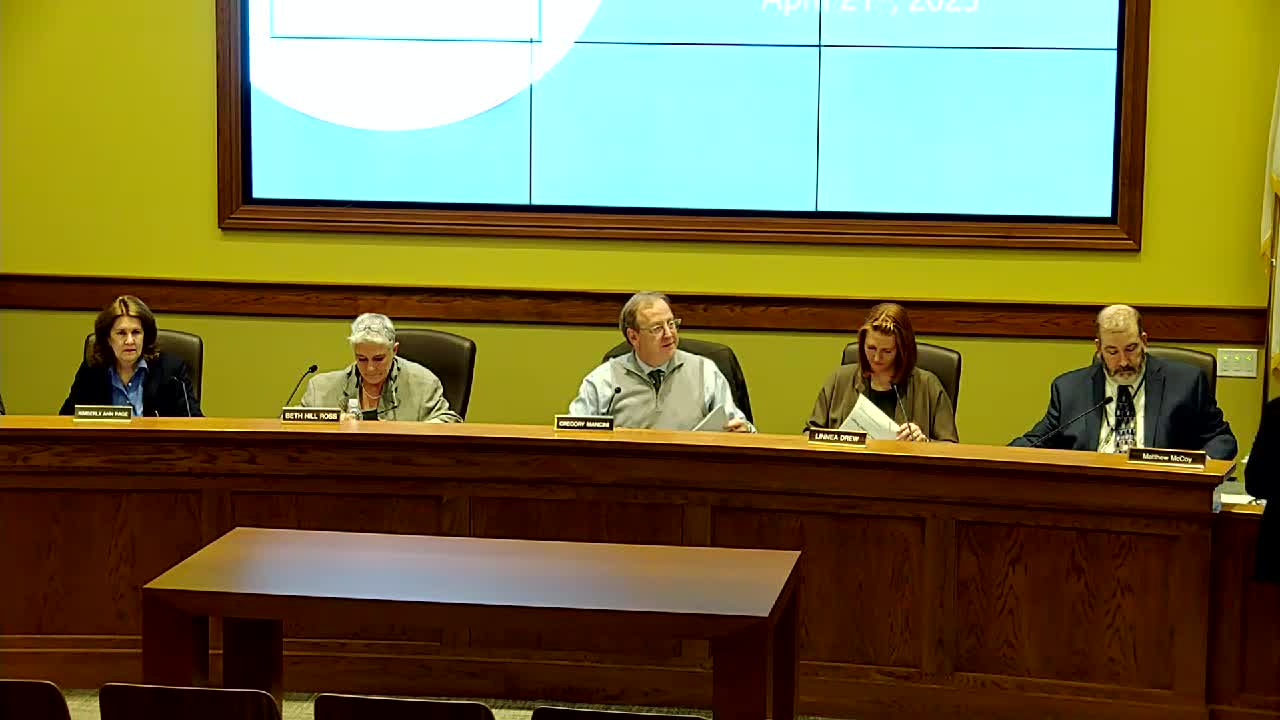
The North Kingstown Town Council and the North Kingstown School Department held public hearings April 21 on the town’s fiscal year 2026 municipal and school budgets, focusing on how a state-mandated property revaluation, rising health insurance costs and out-of-district transportation expenses will affect taxpayers and school services.
Town Manager Ralph Mollis summarized the municipal budget and said the town proposes a lower nominal tax rate — $11.05 for residential property and $10.50 for homestead-eligible properties — but cautioned that individual households could see either increases or decreases depending on how their assessed values changed under the revaluation. "If your home went up 50%, you're going to get a tax increase. If your home went up 10%, you're going to get a tax decrease," Mollis said.
The proposed municipal budget includes investments in technology (an 11% increase), continued road maintenance funding for the town’s more than 150 miles of paved roads, a 6.4% increase in senior and human services, and initial funding for upcoming school and public safety projects. Mollis said enterprise funds (golf course, municipal court, sewer, transfer station, water and Allen Harbor Marina) total about $12,700,000 and are self-supporting. He also noted several large grant-funded projects — an estimated $8,000,000 Post Road Main Street sidewalk project and the Wickford Waterfront Project — are largely supported by federal and state grants and loans.
Mollis told residents the town’s fund balance has grown from about $7.5 million in 2017 to roughly $18.2 million in 2024 and that the administration intends to use parts of the fund balance for one-time expenses or to mitigate tax impacts this year if necessary. He described a sharper-than-expected increase in health-care premiums after the budget was drafted: the town’s health plan increase came in higher than the 5% projection used in March (Mollis said a 10.9% figure was later reported) and will require budget adjustments.
Superintendent Dr. Duva presented the school department’s FY2026 proposal and said the school committee-approved operating budget requests a town appropriation of $63,614,398, with total proposed school funds of $83,200,140, a 3.96% increase from the prior year. The district plans to use $500,000 from its fund balance and projects state aid of $13,462,455. Dr. Duva said the school budget reflects added special-education programming and staffing for students with higher needs, some positions previously funded through ESSER grants that the district must now carry in its operating budget, and modest increases in staffing tied to enrollment changes.
The school presentation also flagged unexpected increases that arrived after the committee adopted the budget. Dr. Duva said statewide out-of-district transportation costs rose and will add about $207,400 to next year’s expenses; health and dental benefits for school employees were reported higher than projected (the presentation cited a 10.16% increase for health and a 6.29% increase for dental), producing a roughly $285,000 budget gap the schools must address. The superintendent said the committee has identified approximately $600,000 of additional cuts, reclassifications to capital, or other offsets to cover those increases.
Public commenters pressed elected officials on tax impacts, fund-balance use and school policy. Ricky Thompson asked whether anticipated increases are driven by school spending and whether undesignated fund-balance dollars are being used; Mollis replied that the administration and school department sought to treat municipal and school budgets equally and that one-time fund-balance uses had been proposed publicly for specific one-time items. Theresa Hirsch urged the council to ask the school committee for a more detailed, district-wide redistricting plan and warned that repeated redistricting could depress residential property values; Dr. Duva and other school officials said redistricting and start-time discussions are active but that detailed plans and stakeholder input are being considered.
Council President Mancini and other councilors thanked department heads and school leaders for the presentations. The council scheduled further deliberation and a planned adoption meeting for April 28, and noted the charter-mandated deadline to adopt a budget is the first Wednesday in May (this year May 7). Mollis invited residents with specific tax-bill questions to contact the town offices directly so staff can calculate individual impacts using the new assessed values.
Votes at a glance: motions to open and close the municipal and school public hearings and to adjourn were moved, seconded and approved by voice vote during the meeting; no roll-call tallies were recorded in the transcript.
The council and school committee will reconvene for budget deliberations and adoption actions in late April and early May, and town and school leaders said they will continue to present potential cuts, capital-vs-operating shifts, and one-time fund-balance uses to reduce tax-rate pressure.