Get Full Government Meeting Transcripts, Videos, & Alerts Forever!
Get email alerts on the American River Contract 3b topic
No spam. Unsubscribe anytime.
Residents urge SAFCA to pause Contract 3B; call for bioengineering alternatives to riprap
Summary
Dozens of residents asked SAFCA on April 17 to press the Army Corps to pause Contract 3B of the American River Common Features Project and to analyze bioengineering alternatives rather than the Corps’ proposed riprap work.
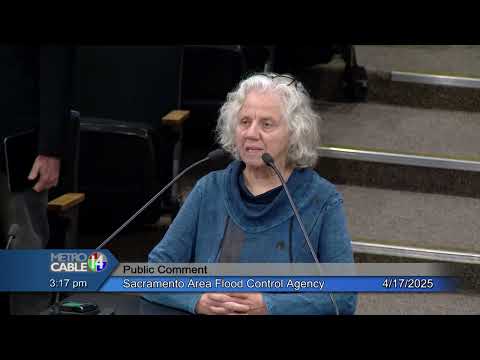
Dozens of residents, environmental scientists and local advocates told the Sacramento Area Flood Control Agency (SAFCA) on April 17 that the Army Corps of Engineers’ proposed erosion-control plan for the Lower American River (Contract 3B) would devastate parkway habitat and fail to consider feasible nature-based alternatives.
Bill Bratton, a retired California water-resource control engineer who lives near the Contract 3B area, said the environmental analyses for the project lack a reasonable range of alternatives required under NEPA and CEQA. “CEQA and NEPA require multiple alternatives,” Bratton said, and he told the board he had asked the Army Corps to remove Contract 3B from the current environmental document so other, uncontested projects could move forward.
The commentary continued with specific concerns about the extent of proposed vegetation removal. Nancy Niskern said the Army Corps’ final environmental document included only a riprap alternative and omitted bioengineering approaches that, she said, earlier Corps reports identified for analysis. “We want the Corps and concerned agencies to do more than ask for environmental review, but take a proactive role for biodiversity and more environmentally sound solutions,” Niskern said.
Julie Gabel, a Sacramento resident and homeowner, described the Contract 3B reach as “in the heart of the parkway” and told the board the Corps’ design would “remove over 700 trees, including mature oaks and heritage trees” and stretch from near Howe Avenue up past Watt Avenue and on the south side toward Mayhew Drain and Rio Americano High School. She also cited a Corps “performance assurance” figure she said showed only a modest increase in protection for a 200-year flood from the proposed work and said the documents left local governments responsible for additional work to reach the 200-year standard.
Other speakers raised overlapping concerns: long-term habitat loss, soil compaction from heavy equipment that would hamper revegetation, impacts on recreation and property values, and inadequate public outreach. Annette Ferreault, a nearby property owner, said she paid a premium to live next to the river and pleaded with the board to “rethink this” to avoid losing trees and public access. Pete Spalding of American River Trees said his group and about 2,800 petition signers are not seeking to stop flood protection but want a “targeted surgical approach to minimize tree removal” and more community engagement.
Board members repeatedly told speakers they heard the comments but noted state law limits what the board can discuss about non-agendized matters during the meeting. Several board members later asked staff to coordinate outreach with the Corps and local elected officials for planned construction that may affect public access — for example, work near Sand Cove and adjacent parking — and to clarify detour routes and outreach to impacted neighborhoods.
No formal board action was taken on Contract 3B at the meeting. The public comments were recorded during the public comment period for items not on the agenda. Speakers urged SAFCA and the Corps to analyze bioengineering and other nature-based alternatives in the environmental record and to pause or revise Contract 3B to reduce tree removal and limit staging impacts.
Why it matters: Contract 3B is part of the larger American River Common Features program, a multi-decade set of Corps projects intended to reduce flood risk. Residents and environmental groups say the Corps’ riprap approach would permanently alter the Lower American River Parkway’s scenic and ecological character, and that alternative bank-protection designs could offer flood protection with less vegetation loss. SAFCA board members acknowledged the tension between flood safety and environmental protection and indicated they would seek clearer outreach and coordination between the Corps, local jurisdictions and community stakeholders.