Get Full Government Meeting Transcripts, Videos, & Alerts Forever!
Get email alerts on the Financial Assets Tax topic
No spam. Unsubscribe anytime.
Committee advances scaled proposal to tax large holders of publicly traded financial assets
Summary
Substitute Senate Bill 5,797 — a proposed tax on certain financial intangible assets owned by individuals with at least $50 million in such assets — received a due‑pass recommendation after a substitute reduced the rate and changed revenue destination to the education legacy trust account.
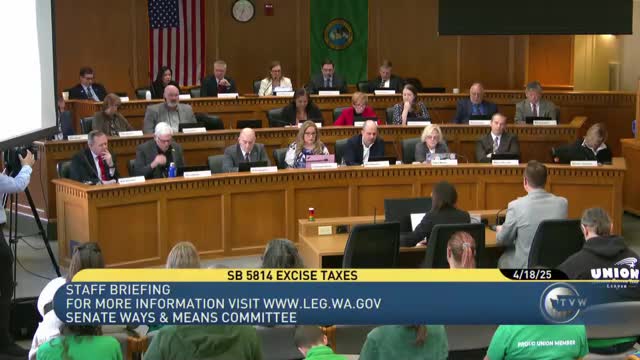
The Senate Ways & Means Committee on April 18 forwarded substitute Senate Bill 5,797, a bill to impose a state tax on certain financial intangible assets (publicly traded stock, publicly traded bonds, mutual funds, exchange‑traded funds) owned by taxpayers with at least $50 million in taxable financial intangible assets.
Committee staff briefed an original revenue estimate of roughly $12.2 billion over a four‑year outlook and an expenditure impact, but a proposed substitute by Senator Frame substantially reduced the rate and adjusted exemptions and revenue distribution. The substitute reduced the tax rate and exempted the first $50,000,000 of financial intangible assets, and redirected revenues to the Education Legacy Trust Account instead of the general fund; staff said the revised proposal would generate about $100 million per year beginning in 2027.
One amendment removed a clause declaring the act necessary for state support; that amendment was adopted. Some members raised implementation and administrative cost concerns; staff presented an estimated $54 million in expenditures across the outlook period in early briefing.
Outcome: The committee adopted a proposed substitute and recommended substitute Senate Bill 5,797 for a due‑pass recommendation to the rules committee.
Why it matters: The bill targets a narrow population of very large holders of publicly traded financial assets and would create a new source of revenue under the state’s tax code, channeled under the substitute to the Education Legacy Trust Account.
What happens next: The bill will proceed to the rules committee for signatures and any further floor consideration; staff and members signaled continued review of administrative costs and exemption thresholds.