Get Full Government Meeting Transcripts, Videos, & Alerts Forever!
Get email alerts on the Shelter Assessment topic
No spam. Unsubscribe anytime.
Controller’s assessment finds strengths and gaps in San Francisco’s shelter system; HSH cites early family‑shelter data
Summary
The Controller’s office assessment found generally adequate safety but concerns about theft, staffing and data quality in the city’s emergency shelter system; HSH reported early results from family‑shelter reforms and showed declines in some wait‑list counts while cautioning that it is too early to draw firm conclusions.
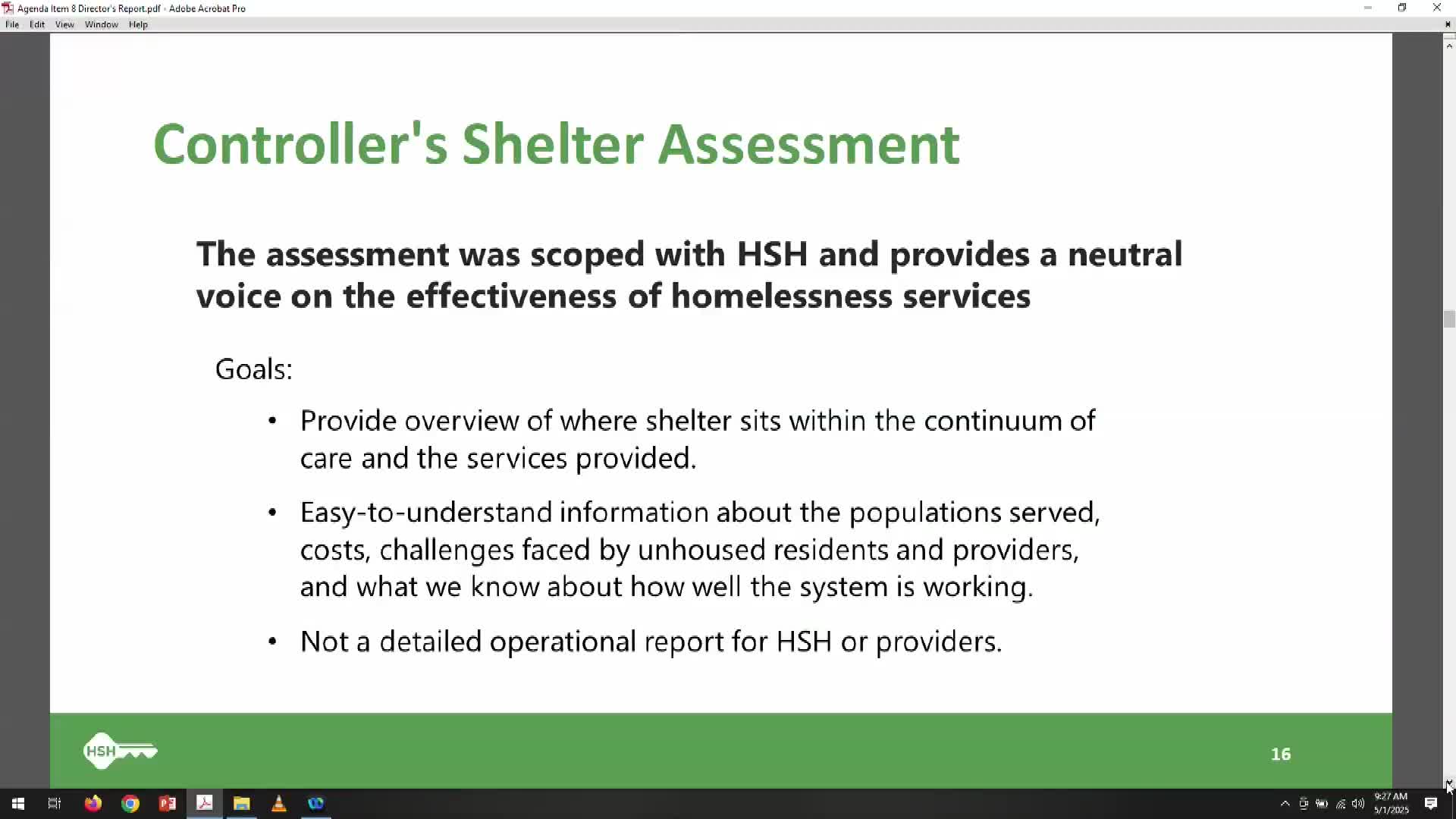
The San Francisco controller’s office assessment of the emergency shelter system, summarized to the Homelessness and Supportive Housing Commission on May 1, described client experiences and operational strengths while identifying areas for improvement including data quality, staffing levels and management of street conditions around shelters.
HSH Executive Director Shereen McFadden said the controller’s office report provides an "unbiased perspective" and a broad overview intended to help readers understand the shelter system’s performance. The report included focus groups with shelter clients and found that clients generally viewed safety as adequate but cited theft of personal belongings as a recurring concern. McFadden said female focus‑group participants reported more safety concerns than male participants in adult congregate shelters.
The assessment identified operational challenges: providers reported staffing shortages, difficulty enforcing rules for external behaviors, and limitations supporting high‑need clients who require skilled nursing or therapy beyond shelter resources. The report also noted data‑quality and availability problems that make it difficult to evaluate service impacts.
HSH placed the report in context as the department pursues shelter expansion and closer integration with the Department of Public Health (DPH). McFadden said the administration is working to design shelter types with differentiated service levels for older adults and people with higher acuity needs and to bring DPH services into shelter models.
Family shelter reforms and wait lists
HSH also briefed the commission on family shelter reforms that went into effect in December and shared initial, limited post‑implementation data. McFadden said preliminary comparisons of four months pre‑ and four months post‑reform (December–March) show a 39% decrease in the family‑shelter wait list since November 2024 and a 72% increase in housing referrals from Q1 2024 to Q1 2025. Shelter exits to housing rose modestly from 21% to 25%.
Vice Chair Kristen Evans cautioned the commission that reductions in wait‑list counts can reflect changes to eligibility criteria rather than immediate housing outcomes. In public comment, Megan Rohrer, policy director at Compass Family Services, urged HSH to expand “shallow subsidies and rapid rehousing” and to consider placing families in nearby jurisdictions served by transit if space and services are appropriate. Rohrer said many vehicle‑dwelling households are families and highlighted gaps in private bathrooms and kitchens for families living in vehicles.
Shelter experience: overdoses, meals and equity
The controller’s office found that overdoses and overdose reversals occur in shelter, particularly in adult shelters; HSH reported precautions such as on‑site safety or security personnel and a weapons check policy. Clients reported mixed satisfaction with shelter meals; HSH said it has moved toward flexible meal times and more frozen meals to accommodate clients’ schedules, but the department continues to evaluate meal quality.
Public commenters and commissioners pressed HSH on whether mixed‑use buildings and colocated populations (for example, families and people with serious mental illness) create tensions and on what policies the department uses to screen and match tenants and protect families.
HSH asked commissioners and the public to review the controller’s full report for detailed findings and said the department will continue efforts to reduce offline housing units, shorten offline durations and prioritize vacancies for referral.