Get Full Government Meeting Transcripts, Videos, & Alerts Forever!
Get email alerts on the Carb Fee Authority topic
No spam. Unsubscribe anytime.
LAO and industry urge Legislature to reject broad CARB fee authority; CARB says targeted fees will move costs to regulated entities
Summary
CARB told a Senate subcommittee it needs statutory trailer-bill authority to recover regulatory costs by charging fees to regulated entities; the Legislative Analyst's Office and multiple industry groups opposed a broad delegation and urged narrower, targeted fee legislation or case-by-case BCPs.
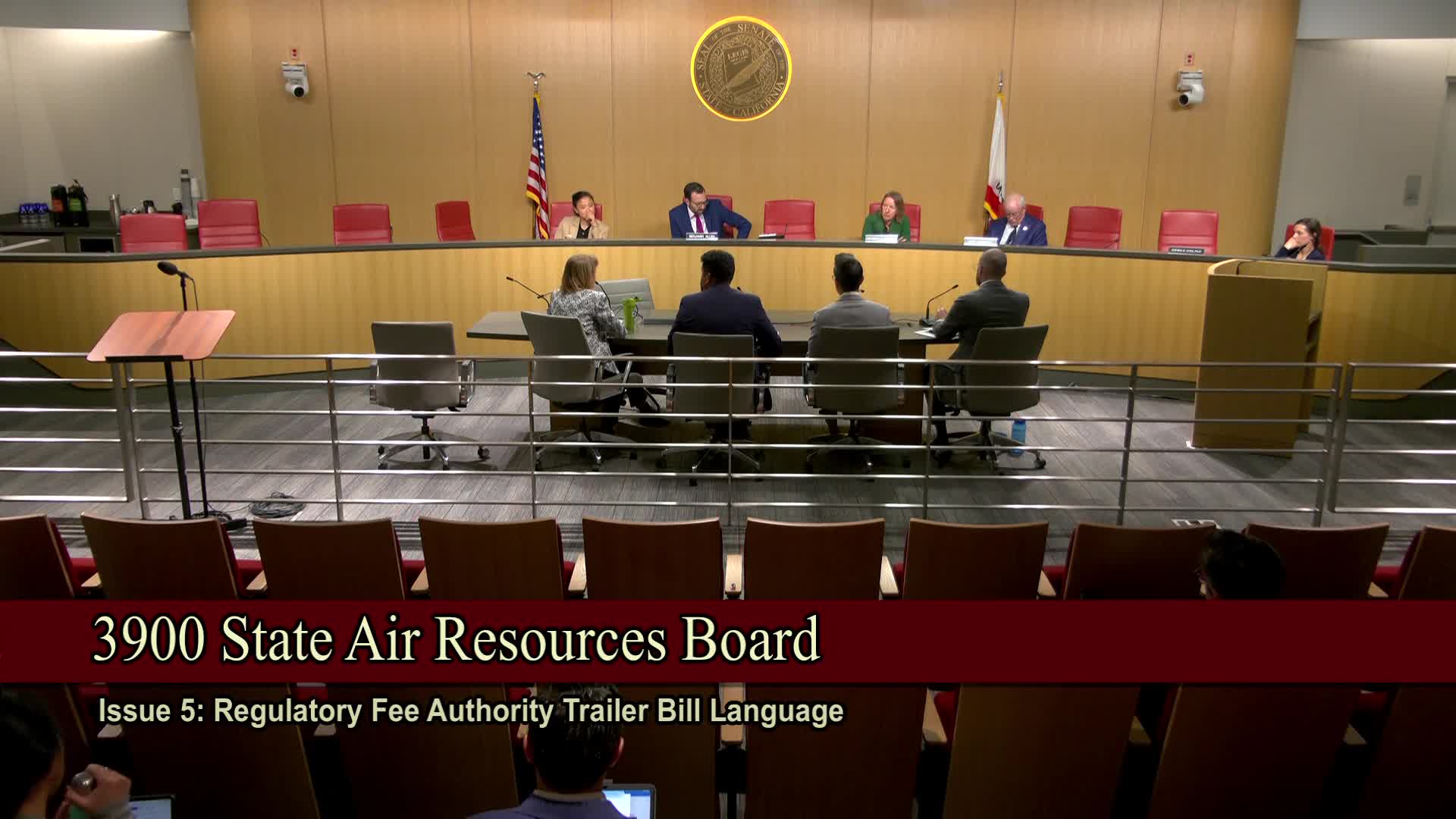
The Senate Budget Subcommittee No. 2 heard competing arguments on May 1 over proposed trailer-bill language that would authorize the California Air Resources Board to impose fees to recover costs for regulation, implementation and enforcement.
Ajay Mangat, CARB acting division chief, described past examples where CARB included fees within adopted regulations and then later sought and received budget authority to collect them, but said a recent court ruling barred CARB from collecting certain fees tied to a regulation, and that the agency now subsidizes that program from the Air Pollution Control Fund. CARB argued that the requested authority would shift the financial burden from taxpayers and drivers to regulated entities and would help sustain program delivery as the state continues to implement complex regulatory packages.
The Legislative Analyst's Office and multiple stakeholders urged caution. The LAO recommended rejecting the administration's proposed trailer-bill language because it would be broad enough to allow the board to impose fees across an entire code division (Division 26, Health & Safety Code) without sufficient legislative oversight. The LAO said fee authority is a core legislative power and that narrower, targeted authorizations would be preferable.
Industry groups -- including trucking associations, manufacturers and port interests -- echoed the LAO's concerns, saying the proposal would allow CARB to set fees unpredictably and that the Legislature should retain tariff-setting authority. Environmental groups and some advocacy organizations supported moving toward a polluter-pays model but also urged legislative guardrails.
Why it matters: the proposal would change how CARB funds regulatory work and could alter who ultimately pays for program implementation. The committee heard arguments that the state's current funding model (MVA and the Air Pollution Control Fund) is strained and that as the regulatory agenda expands, new financing tools may be necessary; critics said the proposal as written is too open-ended.
Key points from the hearing
- CARB argued the trailer bill would allow it to recover reasonable costs from regulated entities and reduce pressure on existing state funds; CARB also said agencies typically return to the Legislature via a budget change proposal with details about fee design and implementation.
- LAO recommended rejecting the proposal as overly broad and urged the Legislature to ask CARB to return with narrowly targeted fee proposals so lawmakers could exercise oversight.
- Numerous industry groups (trucking, manufacturing, towing, port, and moving/storage) opposed the broad delegation; environmental groups said the principle of a polluter-pay model is sound but recommended legislative restrictions and transparency.
Ending note
Lawmakers did not adopt trailer-bill language at the hearing. The debate is likely to continue as the Legislature balances the need for stable program funding against constitutional and policy concerns about fee-setting authority.