Get Full Government Meeting Transcripts, Videos, & Alerts Forever!
Get email alerts on the Zoning Use Variance topic
No spam. Unsubscribe anytime.
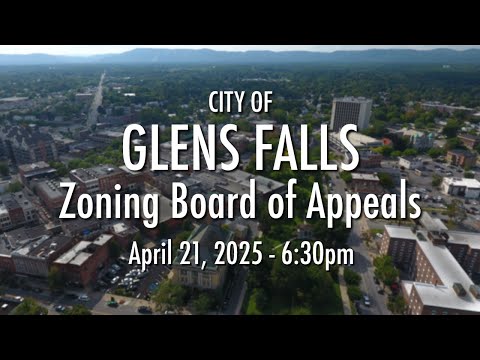
Zoning board hears use-variance request for 113 Bay St.; motion to deny filed, final vote unclear
Summary
The City of Gonzales Zoning Board of Appeals on April 21 reviewed a use-variance request for 113 Bay Street from a chef seeking to open a daytime restaurant and found the applicant had not shown the statutory “unnecessary hardship” required for a use variance; a motion to deny was made but the transcript does not record a clear final vote count.
The City of Gonzales Zoning Board of Appeals on April 21 reviewed a use-variance application for 113 Bay Street (tax parcel cited by staff as 302.16-17-32) from an applicant proposing a daytime restaurant and café. After hearing testimony and public comment, a board member said the applicant “failed to prove unnecessary hardship” under the state statute governing use variances and moved to deny the application; the transcript records confusion about whether the required vote was reached and does not record a final, explicit tally.
The issue matters because the requested use — a full-service restaurant/café in an LNC zoning district where that use is not permitted — would change the allowed intensity of downtown commercial parcels and could require either a property-owner-initiated rezoning or a finding of statutory hardship. Board members and planning staff stressed that a use variance requires a strict four-part legal test and that financial hardship documentation is central to proving the claim.
The applicant, who identified herself as a chef and operator of Scratch Kitchen at 199 Orange Street, told the board she is seeking a larger daytime space to expand breakfast, lunch and coffee service and to sell some plants and flowers. She said she would rent rather than own the property and that the prospective owner had discussed the space with her and indicated support. She told the board, “there’s not gonna be any kind of nightlife there … it’s going to be breakfast, lunch, coffee.”
Planning staff member Denver Seaman (staff) presented the property and explained the application must satisfy the four statutory proofs for a use variance, including demonstrating that the applicable zoning regulations have caused an unnecessary hardship. Zoning planning coordinator Devon Roselle told the board she had held pre‑submission meetings with the applicant and the property owner and explained the difficulty of proving financial hardship when the applicant is not the property owner.
Board members debated the four required findings. Several members said the applicant had not submitted convincing financial evidence because she is not vested in the property and therefore is not demonstrably losing an ability to realize a reasonable return there now. The board discussed whether the property’s characteristics were unique in a way that would prevent permitted uses and whether the proposed restaurant would alter the essential character of the neighborhood; members generally agreed the change would not harm the character and that neighbors’ concerns were limited to potential nighttime hours, which the applicant said she would not operate.
One resident, Colin Murphy, spoke in support and said the applicant’s need to grow from a smaller location could be viewed as a financial constraint and added, “I’m just here to voice my support for it as someone in the neighborhood.” The board also read an email from Lou Saraw expressing conditional support but asking whether late‑night hours or bar operations might bring “undesirable characteristics” to the neighborhood; the applicant had indicated no late‑night plans.
As part of its environmental and land‑use screening, staff and the board reviewed impacts including traffic, infrastructure and energy use. Based on the applicant’s answers and the board’s discussion, staff indicated a negative declaration could be issued with conditions (meaning no significant adverse environmental impact was found subject to conditions).
At the conclusion of discussion a board member stated the ZBA found the applicant failed to meet the statutory test and moved to deny the use-variance application. The transcript records procedural confusion about whether the board had the necessary unanimity with only four members present and whether a subsequent speaker had made a motion to approve; the record does not contain a clear roll-call vote or a finalized outcome. Board members advised the applicant that the more appropriate next steps would be for the property owner to pursue rezoning through City Council or for the owner to apply directly, and staff reiterated options such as a temporary certificate of occupancy or pursuing a formal rezoning concurrent with the city’s comprehensive plan process.
Notes from the hearing: the applicant said renovations on the property began about two years ago; on‑street parking exists but is limited; the owner had marketed the space previously for office uses; and the owner’s written permission for the applicant to pursue the application was included in the submission materials. The board recommended the applicant coordinate with the property owner and with planning staff on next steps.
The record does not show a final, named vote count in the transcript provided; the board’s motion to deny was made and discussion ended with guidance to pursue rezoning or owner‑initiated action.