Get Full Government Meeting Transcripts, Videos, & Alerts Forever!
Get email alerts on the Sales Tax Fund topic
No spam. Unsubscribe anytime.
Venice committee reviews 1-cent surtax revenues, budgets and major projects including Fire Station 2
Summary
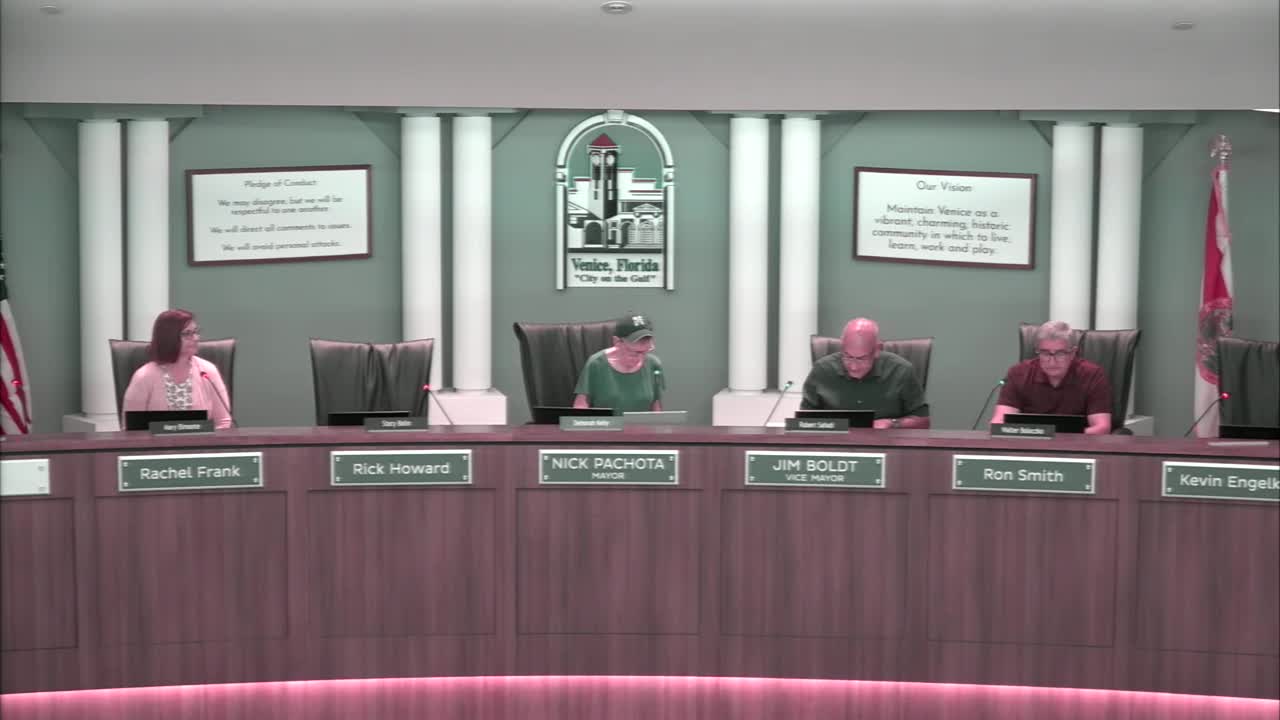
At its April 29 meeting the Venice Citizens Tax Oversight Committee heard a finance presentation on 1¢ surtax revenues and spending, discussed grants and reserves, and reviewed project budgets for Fire Station 2 and a proposed fleet maintenance/solid-waste facility.
Venice Finance Director Linda Sending told the Citizens Tax Oversight Committee on April 29 that the countywide 1¢ sales surtax remains the primary revenue source for the city’s surtax fund and presented actual revenues and expenditures for fiscal 2023–25, as well as planned projects.
The surtax revenues returned to Venice were $5.7 million in fiscal 2023 and about $5.8 million in fiscal 2024, Sending said. She told the committee the city also expects grant revenue in fiscal 2025, including a FEMA grant request of about $1.1 million for a fire-station generator and a $50,000 grant received from the Gulf Coast Community Foundation for an “Old Betsy” display building near the library and Venice Heritage Museum.
The surtax money, Sending said, is collected by businesses across Sarasota County and sent to the state, which redistributes the funds to the county and then to municipalities based on population. “That money goes to the state, then the state distributes it to Sarasota County based on the population,” Sending said.
Why it matters: city leaders are balancing a long list of capital projects against limited surtax proceeds and established reserve targets while design and final pricing for major projects remain pending. The committee heard that reserves, projected grant receipts, and possible debt will shape whether and how projects proceed.
Sending summarized how projects are selected and funded: the surtax is restricted to capital projects (not operating costs), departments submit capital requests for the annual budget and capital-improvement-program (CIP) workshops, staff and the city manager prioritize projects, and City Council approves the final budget. “The target reserve policy for this fund is 2,000,000,” Sending said, adding that available excess in the surtax fund was shown on the worksheet as about $12.9 million but much of that is earmarked for upcoming large projects.
Major projects and timing
Sending identified two headline projects the city expects to fund partly from surtax reserves and partly by borrowing: Fire Station 2 and a combined fleet maintenance/solid-waste facility. She said Fire Station 2 is in design and the city expects a guaranteed maximum price (GMP) from the selected construction firm within about 30 to 60 days. The construction firm named in the presentation was Willis Smith, which also built Fire Station 1.
The committee was given current cost estimates for Fire Station 2 in the $19 million to $23 million range; Sending said the final contract and the city’s borrowing needs will depend on the GMP and how much of the surtax fund balance the city elects to use. “Until we know when we get the final cost, then we'll determine how much that we'll use of our own city's cash. The difference will be about [a loan],” Sending said.
Sending also told the committee the city placed a $50,000 down payment on land the city hopes to use for a relocated solid-waste and fleet maintenance facility; moving those operations, she said, is part of a larger redevelopment goal for the Seaboard Avenue area.
Contingency, timing and procurement
Committee members pressed staff on contingency allowances and procurement. Sending said contingency built into construction estimates typically ranges from about 5% to 10% of construction costs and that procurement and project managers will seek best-value bids and process final offers during the procurement phases. “Yes. We do that within procurement and the project manager,” she said regarding best-and-final-offer procedures. She also explained that if the city borrows to fill a funding gap the borrowed funds must be spent within the applicable spend-down period.
Other expenditures and grants
The presentation itemized previously completed or in-progress capital work funded in part by the surtax, including City Hall remodeling (clock tower replacement, HVAC/chiller work, council chambers refurbishment), community-center flooring and roofing, and public-works relocation and locker-room renovations in the building that previously housed the police department. Sending also detailed fleet-related capital projects shown in the worksheet, including a fleet-fuel system upgrade and equipment replacements; certain line items were carried across fiscal years because projects span multiple years.
The committee also heard that the city transfers $200,000–$300,000 annually from the surtax fund to a separate beach-renourishment fund to accumulate the city’s share of future Army Corps of Engineers beach projects. Sending explained the Army Corps coordinates renourishment, typically about every 10 years, and the city must contribute a portion when renourishment occurs.
Process, referendum and limits
Committee members asked about the surtax’s legal and practical limits. Sending said the current countywide 1¢ surtax was extended by referendum in November 2021 for another 15 years and that the surtax proceeds are distributed countywide; she stressed any change would require another countywide referendum. “Everybody pays 1¢ sales tax, and every business that has 1¢ sales tax has to submit the 1¢ sales tax dollars to the state,” she said.
Questions and next steps
Committee members asked for clearer worksheets and line/column references to make follow-up questions easier; a member with experience in “smart cities” offered to assist staff during procurement and vendor evaluations. Several members expressed concern that the 1¢ surtax alone will not cover the city’s long-term capital needs and that debt financing will likely be required for the largest projects.
The presentation closed without a committee vote on any fiscal actions; Committee members requested to see the GMP and updated cost and financing plans when those figures are available to inform future budget and borrowing decisions.
Ending: The committee did not receive public comment at the meeting and adjourned after the presentation.