Get Full Government Meeting Transcripts, Videos, & Alerts Forever!
Get email alerts on the Tax Increment Financing topic
No spam. Unsubscribe anytime.
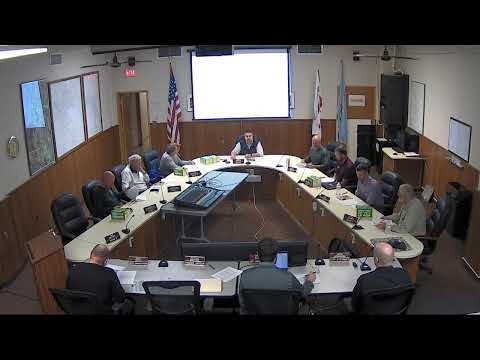
Board approves two TIF project plans, including 70-unit affordable housing; residents raise tax concerns
Summary
Members voted to establish boundaries and approve project plans for Tax Increment Financing districts 41 and 42. TIF 41 would support a multi‑building, 70‑unit affordable housing development; public commenters raised questions about economic analysis and local tax impacts.
At its meeting, the board approved establishing boundaries and the project plan for Tax Increment Financing (TIF) District 41 and separately approved the project plan for TIF District 42. Board members moved and seconded the motions and the measures carried after roll call or voice votes.
The TIF 41 project is scoped as an affordable‑housing development in multiple phases. Phase 1 covers six buildings on the north side of the site (five buildings with six three‑bedroom apartments each and one building with four three‑bedroom apartments), plus a coffee shop and fitness center; the presentation estimated about 70 apartment units in total and said units would be rented at 80% of the state median income. Staff and the developer said the project would be paid through a developer reimbursement structure typical of past TIFs, with developer‑eligible reimbursements and a separate developer agreement. City staff described a city capital cost component of about $2,020,000 and said projected tax increment receipts for the site are roughly $2,700,000; the plan discussed a higher statutory cap on eligible reimbursements but the transcript contained some unclear figures for total requested amounts and the precise developer‑eligible total, which are not specified here.
Why this matters: TIFs divert future property‑tax increments from taxing jurisdictions to reimburse developer costs; they can enable projects the developer says are not feasible “but for” the TIF and can delay or reduce tax receipts to county and other taxing authorities until the developer is paid.
During public comment, resident Steve Zipson said he reviewed the project plan on the city website and flagged a numeric error in the document (a levy rate he said should read 0.004225 rather than 0.0425) and asked for more rigorous economic analysis showing why the project would not proceed without TIF assistance. Zipson said his calculation showed the TIF could reduce county levy receipts by about $28,000 a year and raised concern about the cumulative impact on the county’s property‑tax revenue.
Don Peterson, representing the applicant team, and developer representatives noted prior successful TIF projects and said the developer expects phase‑one construction to be ready by November if the TIF is approved. Developer representative Darren Long invoked the ordinary “but for” feasibility test used in TIF reviews, saying the Long family business requires the TIF for the expansion to proceed and that taxes will return to taxing jurisdictions after the TIF is repaid.
Board members and staff also discussed using any leftover increment beyond the developer’s reimbursement to help construct Matty Street; staff said the city could capture remainder increment in later years (year 3 or 4 in projections) to fund part or all of Matty Street, depending on final increment performance and final reimbursements to the developer.
On TIF 42 (an economic development TIF tied to Long Brothers LLC), the board approved boundary and project plan motions after discussion of job creation and infrastructure. A commenter, Steve Simpson, pointed out inconsistent language in the project plan regarding job counts (the plan alternately said the project would “add up to 10 employees” and that the developer “will have the capacity to add a minimum 10 full‑time jobs”); counsel and staff agreed to correct the wording to reflect “up to 10” as the planned job increase, while noting the business could expand beyond that in the future.
Board members said the TIF approvals will proceed to the City Council (as the board’s recommendation) for final action where required. The board recorded motions, roll calls and voice votes for the TIF items and the motions carried.
The meeting record contains several numeric entries that were unclear in the audio transcript (some dollar figures and a number appearing as 4,000,301,008.66 in the transcript appear to be transcription errors); the staff packet and final project documents to be reviewed by City Council should supply corrected, official figures and the economic analysis noted by commenters.
The board’s approval of both TIF project plans completes the board’s recommendation step; the items were forwarded to the City Council for final review and any required developer agreements and determinative legal instruments.