Get Full Government Meeting Transcripts, Videos, & Alerts Forever!
Get email alerts on the Behavioral Health topic
No spam. Unsubscribe anytime.
Harrison County leaders, providers debate CSU staffing, diversion center plan and health-department footprint
Summary
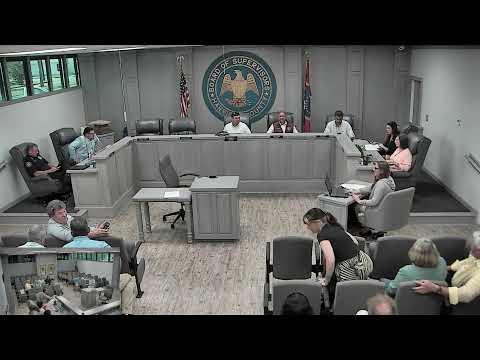
Harrison County supervisors and local health providers spent the bulk of a meeting discussing the county’s crisis-stabilization services, an upcoming diversion center on Seaway Road and plans to relocate the county health department — issues county leaders said affect hospitals, law enforcement and a major ARPA funding deadline.
Harrison County supervisors and local health providers spent the bulk of a meeting discussing the county’s crisis-stabilization services, an upcoming diversion center on Seaway Road and plans to relocate the county health department — issues county leaders said affect hospitals, law enforcement and a major ARPA funding deadline.
The discussion centered on whether the existing Crisis Stabilization Unit (CSU) is being staffed and used to capacity, whether Pine Belt should continue management or the county should issue a request for proposals, how the diversion center would operate as a single point of entry for Harrison County, and whether the health department needs the 10,000–12,000 square feet planned for its new location. Participants also raised timeline and funding concerns, including a one-time ARPA allocation the board was told could lapse if not spent in time.
County, hospital and provider officials said the CSU — licensed for 16 beds but sometimes operating with fewer because of staff shortages — draws patients from multiple counties under state oversight. “We are fully staffed at CSU since April,” said Kevin Belcher, who described recent staffing changes and said the CSU serves multiple counties and receives Department of Mental Health funds. Other speakers, including hospital leadership, said at times the CSU census has been low and local hospitals have held psychiatric patients in emergency departments while awaiting placement.
Leonard Papania of Ocean Self Care, who has tracked regional mental-health programs for years, emphasized that the diversion center’s role differs from a CSU. “It’s not interchangeable with the CSU,” Papania said, describing the diversion center as a place for people who are not yet in an acute phase to receive short-term care and avoid hospitalizations. Board members confirmed the diversion center is planned to serve Harrison County as a single point of entry for law enforcement transports; officials said CIT-trained officers would bring people there for triage and up to 23 hours of observation, with the option of a few swing beds for short admissions.
Officials gave several operational and funding details during the discussion: the state Department of Mental Health has provided about $1.2 million toward operating funds; the county received about $1.9 million in ARPA funds earmarked for the project but those ARPA funds are time-limited and “will go away,” a speaker warned, if the project is not completed in time. County staff said the building project is ready to go to bid and estimated 12–15 months to completion if work proceeds; supervisors asked whether the diversion center could be spun off for an expedited schedule.
Speakers also raised concerns about future usage and community impacts. Mayor Hughes said the county is “at crossroads” and urged a collaborative, regional approach; Papania warned a successful single-entry diversion center will likely concentrate people near the site and that the county should pull additional partners together to address downstream issues such as housing and services.
On the health department relocation, county staff said final floor plans were recently completed and the architect David Hardy is scheduled to present an update at the board’s May 5 meeting. Several supervisors pressed county staff to verify demand data — who currently uses health-department services and whether Federally Qualified Health Centers and hospitals already provide many of the same services — before finalizing an estimated 10,000–12,000 square-foot build-out. A supervisor asked staff to request utilization numbers from Dr. Edney and the state so the board can avoid building more space than the department will need.
Board members recommended continued, regular coordination among county supervisors, Pine Belt and other stakeholders to monitor CSU census, staffing and diversion-center planning. One supervisor urged reconvening the broader stakeholder group on a monthly basis to maintain momentum and avoid misunderstandings. No formal policy change or contract award occurred during the session; participants agreed to return with additional data and to schedule follow-ups.
Votes at a glance
- Motion to spread the notice on the minutes: approved by voice vote (no individual roll-call given). - Motion to adjourn: approved by voice vote (no individual roll-call given).