Get Full Government Meeting Transcripts, Videos, & Alerts Forever!
Get email alerts on the Local Government Terms And Elections topic
No spam. Unsubscribe anytime.
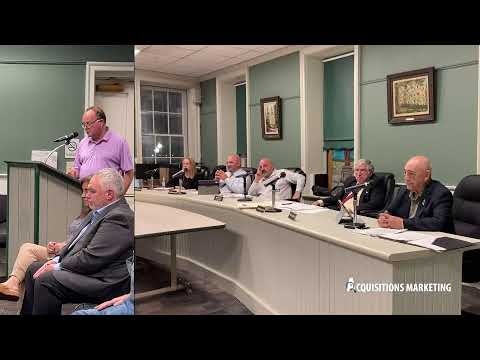
Goshen residents press board at public hearing over abolishing elected tax receiver and proposed longer terms for town officers
Summary
At April 20 public hearings, residents and the current tax receiver urged the Town Board to retain a separate elected receiver of taxes and to keep two-year terms; board opened and closed hearings and will place local laws on a referendum.
The Town Board of Goshen heard more than two hours of public comment April 20 as residents debated a pair of related introductory local laws: one that would abolish the separate, elected receiver of taxes and extend the town clerk’s term from two to four years, and another package that would lengthen the terms of the town supervisor and the highway superintendent from two to four years.
The board opened public hearings for the measures and accepted public comment before formally closing the hearings; a roll-call recorded the board’s action to close the first hearing. Members signaled that the bills will go to referendum. The measures were the focus of extended comment from residents who said term length changes would reduce voters’ ability to hold officials accountable, and from the town’s elected tax receiver who described day-to-day duties she says are already being performed.
Why it matters: The proposals would alter how voters choose local executives and how the town delivers tax collection services. Abolishing the elected tax receiver would consolidate responsibility into the town clerk’s office and, by proponents’ estimates, could change the town’s pay and staffing for tax collection. Extending terms would change the frequency of elections for major local offices.
Residents and current receiver press case to preserve office Mark Buckheit, a longtime town resident, asked the board to explain why the changes were proposed and urged the board to allow voters to act. “This law affects every single voter in Goshen,” Buckheit said during public comment. Chris Healy, another resident, said the change to four-year terms would “strip our rights” by halving the number of times voters could replace a chief executive.
Nan Gill Wilson, who identified herself as the elected receiver of taxes, told the board she has been performing collection duties well beyond the brief statutory window that attracts most in-person payments. Wilson said deputies were appointed to accept payments during her absences and described collecting and processing funds in-house as a safeguard against mail or bank errors, which she said had previously delayed funds clearing by as much as two weeks. She also said the receiver normally participates in preparing the receiver’s portion of the town budget from August through November.
Board explanation, budget questions Board members described the measures as partly a cost-management and service-access proposal. One board member said that many towns have the town clerk serve as tax receiver and that a consolidated office can provide weekday service 9 a.m.–5 p.m. rather than limited January hours for a separately elected receiver. The board estimated that a full-time tax receiver’s compensation in the county could be about $30,000–$36,000 plus benefits, and said that consolidating could save the town money, depending on staffing choices. At the hearing Nan Wilson and others disputed budget descriptions presented by the board; Wilson said the published town budget entry listed $24,000 for the receiver but that the incumbent had received only $10,000 in recent years. The board said it would check the line item with the budget officer.
Process and next steps Board members clarified that the measures will be placed on the referendum as required; the board noted a prior referendum on a similar proposal was narrowly defeated and said this would be the last scheduled referendum under the town’s process if again submitted. No final law was adopted the night of April 20; the board opened and then closed the public hearings and signaled the items will be returned for consideration and placed on a ballot question later this year.
Ending note Residents repeatedly asked the board to explain specific budgetary effects and urged clarity about how duties and pay would change if the receiver of taxes position were abolished. Board members said they will review budget line items and follow the referendum process before any change takes effect.