Get Full Government Meeting Transcripts, Videos, & Alerts Forever!
Get email alerts on the Humanitarian Gaza topic
No spam. Unsubscribe anytime.
UN warns Gaza aid blockade has driven hunger, pushed prices sharply higher
Summary
The United Nations says nearly two months of severe restrictions on aid into Gaza have depleted supplies, driven up food prices and left hospitals and displaced people without essential services, urging immediate lifting of restrictions.
The United Nations said on Thursday that nearly two months of near-total restrictions on humanitarian assistance entering Gaza have led to severe shortages of food, water, shelter and medical supplies, driving hunger and excess mortality among civilians.
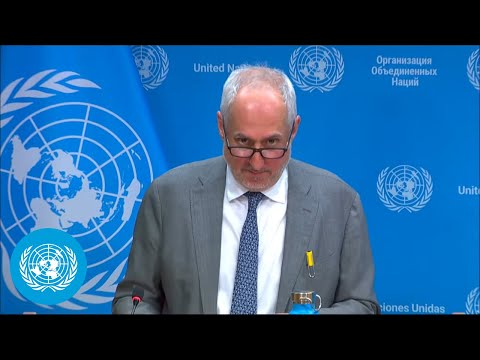
"Children are going hungry. Patients are going untreated. People are dying. It is time to lift the restrictions immediately," UN spokesperson Stéphane Dujarric said at the daily press briefing.
UN agencies and partners reported that the blockade has pushed prices for staple items between about 29% and as much as 1,400% above pre-ceasefire levels, and that prices on average rose roughly 50% in April compared with March. The Office for the Coordination of Humanitarian Affairs (OCHA) said desalination plants are operating at only about 15% capacity in parts of southern Gaza because of electricity cuts, severely limiting access to clean water.
Field visits by OCHA teams documented overcrowded displacement sites and damaged shelter stocks; emergency shelter partners reported severe shortages of tents, tarpaulins and essential materials, and said warehouses hold only a fraction of what is needed to meet needs. The UN Population Fund and partners continued distributing reproductive health and dignity supplies; in one dispatch this week 10 reproductive health kits — enough to reach more than 6,900 people — were delivered to six health partners, and more than 900 women and girls received dignity kits.
The spokesman also said the broader depletion of essential items and sharply reduced purchasing power have pushed many people deeper into hunger and that UN and humanitarian partners are adjusting responses where security and funding permit.
The briefing separated on-the-ground observations from policy prescriptions: the UN called for restrictions to be lifted so aid can reach civilian populations but did not announce any new operational changes or conditions attached to deliveries during the briefing.
Looking ahead, the UN said assessments and relief operations will continue where possible but warned that the scale of needs cannot be met until movement of supplies is restored and energy supplies to critical infrastructure are stabilized.