Get Full Government Meeting Transcripts, Videos, & Alerts Forever!
Get email alerts on the Human Rights Commission topic
No spam. Unsubscribe anytime.
Residents urge Sullivan County Legislature to reconsider Human Rights Commission appointments over officials' social-media records
Summary
Multiple residents told the Sullivan County Legislature they oppose the current Human Rights Commission membership—and the presence of legislators on the commission—citing inflammatory social-media posts and calling for greater independence and transparency.
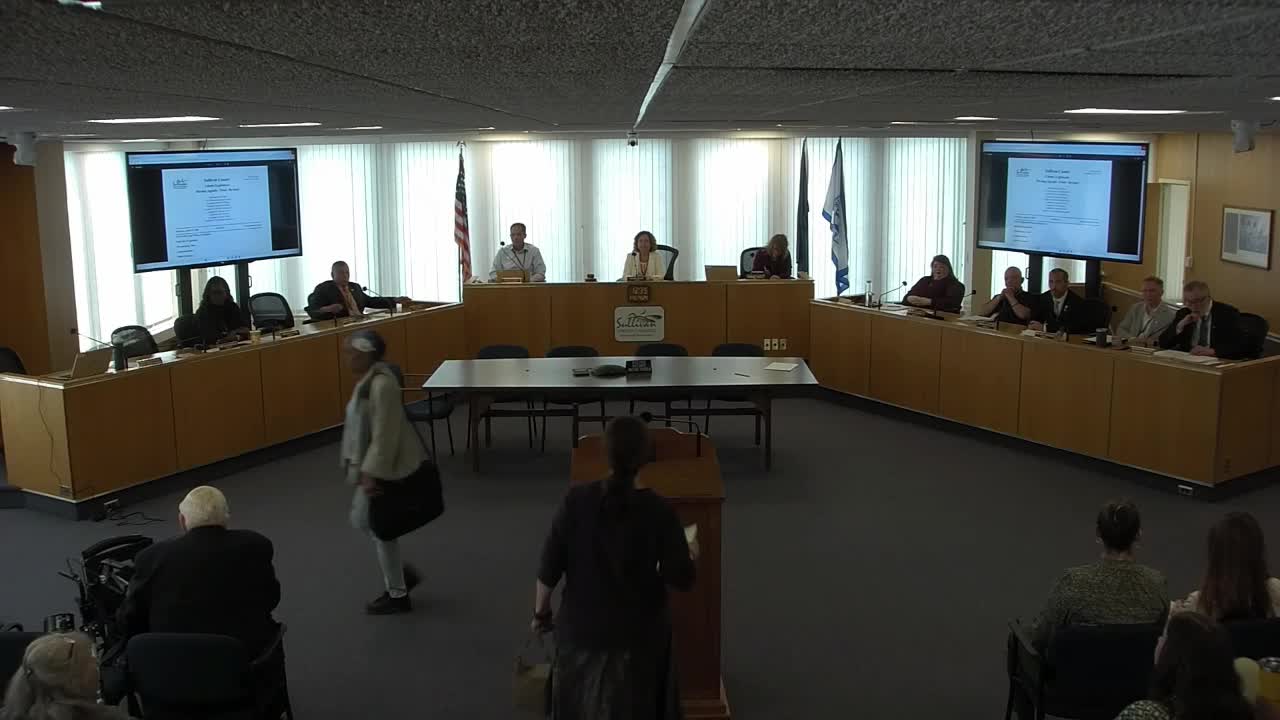
At a Sullivan County Legislature meeting, a string of public commenters urged legislators to reconsider recent appointments to the county Human Rights Commission, saying some appointees’ public statements and social-media activity would discourage community members from filing complaints.
The comments centered on one prospective member, Bill Libelich, whose past writings were read aloud by a speaker who said they disqualified him from the commission. "If someone cannot read or write English, perhaps they just shouldn't vote," Miriam Hernandez quoted from a 2012 opinion piece attributed to Libelich and said at the meeting. Hernandez called that language "inflammatory" and said it undermined trust in a body intended to protect civil rights.
The concerns were echoed by former commission chair Judy Balaban, who said the commission must remain free of overt political agendas. "We never had a legislator on the commission, and I don't believe we should," Balaban said, adding that members must be able to set aside personal biases and apply the law fairly. Elaine Matthews and Kathy Aberman also urged rejection of appointees who have publicly disparaged others and warned that such behavior would deter people — including immigrants and other vulnerable residents — from bringing complaints.
Several speakers pressed for structural changes. A commenter said the county should consider letting the state handle the Human Rights Commission to ensure enforcement and bring "more eyes" and enforcement power to complaints. Other speakers said they support the commission's mission but object to mixing the legislature’s membership with the commission, arguing that perceived conflicts could chill complaints against county officials.
Legislators and other speakers acknowledged the public concern on the record. Miriam Hernandez and others delivered verbatim examples of posts and newsletters they said were relevant. One public commenter praised Legislator Amanda Ward as a qualified candidate but noted the perceived conflict created when legislators serve on the commission. Another former commissioner said she plans to meet with the commission's new director to share experience from her tenure (2005–2019).
No final county action on the specific question of removing or replacing the named appointee was recorded in public comment; the meeting proceeded to resolutions afterward. Several speakers called for clearer public information about the commission's role and the processes for filing and investigating complaints.
Why it matters: The Human Rights Commission is the county body where residents can bring discrimination complaints; public confidence in the commission's impartiality affects whether people will use it. Several commenters said the appearance of bias—especially from appointees who publicly disparage protected groups or community members—would discourage filings and weaken enforcement.
The Legislature did not at the meeting reverse any specific appointment on the record. Commenters asked the Legislature to consider removing sitting legislators from the commission, to ensure the commission's independence, and to improve transparency about how complaints are handled and which investigations are undertaken by the county versus the state.
Speakers quoted in this article spoke during the public-comment portion of the meeting. The record shows repeated, sustained opposition to at least one named appointee and broader concerns about allowing sitting legislators to serve on the Human Rights Commission.