Get Full Government Meeting Transcripts, Videos, & Alerts Forever!
Get email alerts on the Shoreline Stormwater topic
No spam. Unsubscribe anytime.
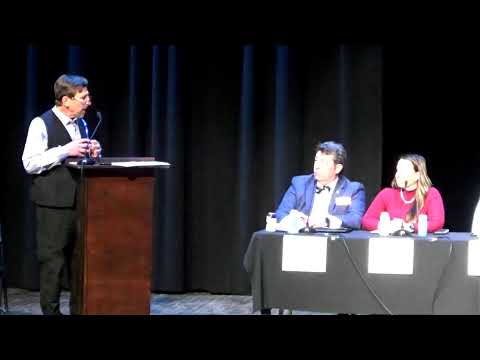
Candidates emphasize living shoreline work, sediment ponds and PFAS concerns for Lily Run and waterfront
Summary
Forum candidates described living shoreline plantings, MS4 stormwater obligations and new sediment ponds as steps the city is taking to reduce flooding and pollution; several raised PFAS and hazardous‑waste handling at the wastewater treatment plant as ongoing concerns.
Candidates at the forum discussed shoreline protection, stormwater management and ongoing efforts to mitigate flooding on Lily Run, linking those topics to living shoreline plantings, city MS4 obligations and concerns about industrial contaminants.
George Kaznick and others described the city’s living shoreline project and work with the U.S. Army Corps of Engineers and Harford County: "The living shoreline was negotiated in an agreement with the ... US Army Corps of Engineers at Harford County to actually begin that process," Kaznick said. Candidates noted that native plantings are being used to reduce runoff and improve habitat.
At the same time, candidates said Lily Run flooding is an ongoing problem for the North End. Johnny Boker said the city is purchasing property to build sediment ponds around Lily Run to increase capacity and allow settling before water discharges downstream: "They're gonna put those sediment ponds around Lily Run... as the water sits in there, it'll then purify itself before it's released down there."
Several candidates raised PFAS as a water‑quality issue tied to wastewater treatment. "These concerns from the EPA represent possible health issues ... The concern is always going to be, our wastewater treatment plant and the influence that they put back out into the Susquehanna River," a candidate said, noting that treatment and disposal of PFAS require special handling and costs.
Candidates suggested pursuing grants (state, Chesapeake Bay programs) and creative solutions, including permeable parking surfaces and additional retention ponds. Several candidates also recommended studying what has or hasn’t worked historically and engaging engineers to develop durable solutions rather than repeating failed approaches.
No candidate proposed immediate construction beyond projects already funded; the forum discussion emphasized coordination, grant pursuit and phased technical work to address flooding and contamination risks.