Get Full Government Meeting Transcripts, Videos, & Alerts Forever!
Get email alerts on the Hazard Mitigation topic
No spam. Unsubscribe anytime.
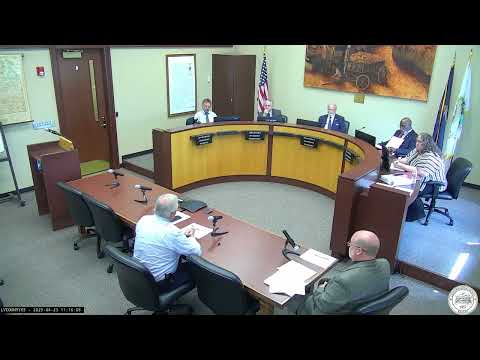
Leavenworth County staff recommend adopting regional hazard mitigation plan; commissioners raise changes and funding questions
Summary
County emergency management reviewed a five-year Regional Hazard Mitigation Plan covering Johnson and Leavenworth counties, explaining grant eligibility, project examples and goals; commissioners asked about edits, climate-change language and funding implications. Staff will return the plan on a regular agenda for formal approval.
Leavenworth County emergency management presented the Mid-America Regional Hazard Mitigation Plan and asked the Board of County Commissioners to bring the plan back for formal approval at a regular meeting.
The plan is a five-year regional document that covers Johnson and Leavenworth counties and includes a county-specific goals and objectives section. "The entire plan is 380 something," the presenter said, adding that Leavenworth County's entry lists about "50 goals." The presenter (identified in the meeting as Chuck, emergency management) said the county-level goals are the portions the county can change; the main body of the regional document was prepared by state and federal partners.
County staff emphasized that adoption matters for grant eligibility. The presenter said the hazard mitigation grant program is generally split about 75% federal and 25% local contribution, and described how a portion of public-assistance funding (about 2% of disaster public assistance dollars, per the presenter) is pooled at the state level to prioritize mitigation projects. He advised that if the county does not adopt a mitigation plan, local projects would not be eligible for those hazard mitigation funds.
Commissioners questioned several parts of the draft. One commissioner said climate-change language throughout the document was unacceptable to them and that the county should not be forced to adopt federal or regional “agendas.” The presenter and county staff replied that the climate-change language is included statewide and regionally and cannot be removed from the main body; county-specific goals and objectives can be modified. Commissioners pressed on whether removing sections would block grant eligibility, and staff replied that removing sections of the main body could jeopardize eligibility but changing county goals and objectives is permitted.
Staff gave examples of projects listed in the plan that could be eligible for mitigation funding, including installing backup generators at county facilities, cleaning and maintenance of Stranger Creek (a drainage district need last done in the 1990s), and past mitigation buyout efforts that were denied at the federal level. The presenter noted the plan is updated annually and the next full planning period is due in 2029.
County staff said cities, school districts and water districts within the region were invited to participate and some have already adopted goals; staff will continue outreach to agencies (the presenter cited a recent session with the Leavenworth School District). Commissioners and staff also discussed sheltering and liability, with staff explaining that FEMA standards (cited in the meeting as FEMA 361) set construction and design requirements for shelters to avoid local liability when facilities serve as official shelters.
The board indicated agreement to have staff place the plan on a future regular agenda for formal approval. No final adoption vote was taken during the work session.
Next steps include county staff refining the county goals and objectives and returning the plan for the board's formal approval on a regular agenda.