Get Full Government Meeting Transcripts, Videos, & Alerts Forever!
Get email alerts on the Board Of Pardons And Paroles topic
No spam. Unsubscribe anytime.
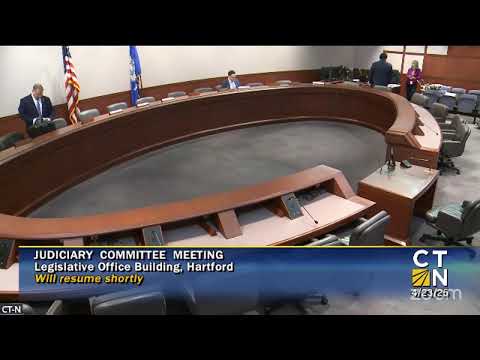
Nominee Aileen Keys tells Judiciary Committee she will prioritize public safety and due process if confirmed to Board of Pardons and Paroles
Summary
Aileen Keys, nominated by Gov. Ned Lamont to the state Board of Pardons and Paroles, told the Judiciary Committee she will weigh victims’ interests, public safety and applicants’ conduct since their offense; committee members questioned her neutrality because of prior work on children with incarcerated parents.
Aileen Keys, nominated by Gov. Ned Lamont to the Connecticut Board of Pardons and Paroles, told the General Assembly’s Judiciary Committee that she would weigh public safety, victims’ interests and evidence of behavior change when deciding parole or pardon requests.
Keys, who said she lives in Farmington and has worked 17 years with the Institute for Municipal and Regional Policy (IMRP), said she has led the institute’s children-with-incarcerated-parents initiative and worked with the Judicial Branch’s Commission on Racial and Ethnic Disparity in the Criminal Justice System. “I am deeply honored to have been nominated by Governor Lamont to serve the state of Connecticut on the Board of Pardons and Paroles,” she told the committee. She added she is “committed to using these principles to support the state's pursuit of justice, safety, and well-being.”
Why it matters: The board reviews pardon and parole applications that can shorten incarceration or return people to community supervision; nominees’ judgments shape risk assessments and public-safety outcomes. Committee members pressed Keys on whether her past work would affect her neutrality and on how she would weigh victims’ statements and community safety.
Committee questions and concerns Committee members repeatedly asked about Keys’s background and whether she had been an advocate for incarcerated people or for victims. Representative Fishbein asked Keys to identify her race and gender (Keys replied, “Female and Caucasian”) and questioned why the children-with-incarcerated-parents initiative appeared on her LinkedIn but not in the employment section of her legislative questionnaire. Keys explained the initiative is a project of IMRP and said she listed the institute as her employer on the formal questionnaire.
Several legislators pressed Keys on impartiality. Representative Fishbein asked whether Keys viewed herself as an advocate for people who are incarcerated; she replied the institute is nonpartisan and that her work involved research and service design rather than advocacy. “I would not consider the work that I had done as advocacy for children with incarcerated parents,” she said, describing her role as providing research and information to inform legislation.
On victims’ interests, Keys said those perspectives must be part of the “totality of circumstances” the board reviews. She told the committee she wants to see applicants’ understanding of their offense, the offense’s impact on victims and the community, and applicants’ plans for the future. “I do not want to be part of a decision that leads to victimization in the future,” she said.
Process and approach Keys said she has watched Board of Pardons and Paroles hearings to learn format and process, and that she intends to follow statutory rules and established procedures. She emphasized a conservative approach when uncertain: asked whether she would err toward release or continued incarceration if she remained “on the line” after reviewing a file and attending a hearing, Keys said she would lean toward continued incarceration in such cases. “I don't want the responsibility of feeling like I let somebody out…when they were not ready,” she told the committee.
Several committee members urged Keys to rely on staff, board chairs and established procedures while learning the job. Senator Kissel, recounting past high-profile parole controversies, emphasized the weight of the responsibility Board members hold and urged caution and thoroughness in decision-making.
Public support and next steps A public commenter, Ken Brown, who identified himself as a longtime colleague from IMRP, testified in support of Keys and the other nominee, praising Keys’s judgment and experience. The committee did not vote at this hearing; staff said the two nominations will be taken up at the committee’s next meeting on Friday.
Ending Keys faces additional committee consideration; the Judiciary Committee indicated it will act on both nominations at its next scheduled business meeting.