Get Full Government Meeting Transcripts, Videos, & Alerts Forever!
Get email alerts on the Municipal Court topic
No spam. Unsubscribe anytime.
Wauwatosa municipal judge outlines court operations, fines collection and case data
Summary
A municipal court judge described how Wauwatosa’s municipal court functions, types of cases heard, court schedule and the city’s options for collecting unpaid fines and forfeitures, and answered aldermen’s questions about juvenile proceedings and traffic enforcement.
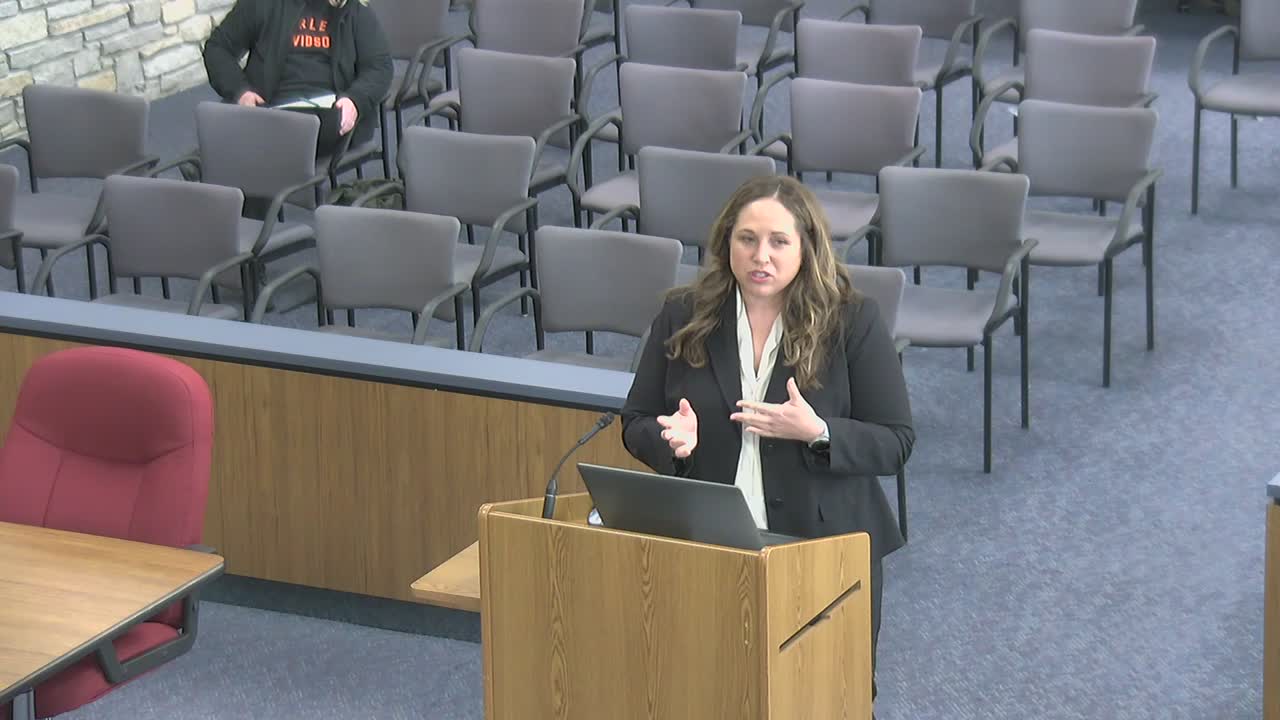
Municipal Judge (name not specified) told the Wauwatosa Common Council that the municipal court handles noncriminal traffic violations, municipal ordinance violations and certain juvenile matters, and described how the court schedules hearings, collects fines and submits data to state authorities.
The judge said the presentation was informational and intended to explain where municipal court sits in Wisconsin’s judicial system and how the court manages collections and case processing. “My goal is simply informational,” the judge said.
The judge explained that municipal court decisions are appealable to the Milwaukee County Circuit Court and described the court’s jurisdiction: noncriminal traffic violations (including certain OWI matters when handled locally), municipal ordinance violations such as zoning and dangerous-dog citations, retail theft and other ordinance-level misconduct that the city has chosen to prosecute in municipal court. She said the court has exclusive jurisdiction over municipal ordinance violations and concurrent jurisdiction for some juvenile nonmoving violations.
The judge described the court’s calendar and practices: initial appearances are at 9 a.m., with pretrial conferences, motions and trials starting at 10 a.m.; juvenile sessions are scheduled in the afternoon. She said the court recently moved daytime and that the change has reduced demand for evening sessions. The judge said some defendants who appear choose to accept negotiated offers before trial; others proceed to pretrial conference and trial. She said she generally issues written decisions for motion hearings.
On costs and collections, the judge said statutory fees require a variety of mandated charges and that the municipal court currently assesses a $38 court cost on tickets. “The maximum court cost is $38,” she said. She described tools the city uses or is considering to enforce unpaid fines and forfeitures: the state debt collection service, tax refund intercepts, withholding city licenses or permits (using an internal lookup tool when applicants apply), and potential use of assignment of income or docketing municipal judgments in circuit court. She said writs of commitment (incarceration for unpaid fines) have not been used since the COVID-19 period and that Milwaukee County is not accepting writs of commitment at present.
The judge said driver’s-license suspension for failure to pay is available in certain circumstances but used “carefully and thoughtfully” because of the possible consequences for individuals. She also noted the court works with the city prosecutor, who attends hearings regularly, and that continuity between prosecutor and court staff makes case handling more efficient.
On case types and local patterns, she said the court frequently sees exceeding-posted-limits and similar speeding-related citations, operating after suspension or nonregistration, and retail theft at local malls and stores. She named Mayfair, Sephora, Macy’s, Target and Meijer as frequent retail-theft venues in cases she sees. She said when defendants return repeatedly on suspension or registration charges the court and prosecutor frequently assist by giving time to resolve suspensions or register vehicles rather than immediately imposing further sanctions.
During questions, Alderman Morgan urged the judge to keep reckless driving enforcement in mind when exercising discretion; Morgan said that curbing reckless driving was an objective in the recent vehicle registration fee discussion. “Top of mind is that that issue of reckless driving,” Morgan said. Alderman Foley and Alderman Lowe asked about juvenile proceedings; the judge said juvenile sessions are scheduled after school (typically 3 p.m.), that she meets with juveniles in a separate room when appropriate, and that juvenile proceedings are not open to the public.
The judge closed by saying she and her clerk have reviewed court procedures following a recent clerk retirement and that the court monitors payment plans, poverty hearings and monthly repayment arrangements. She said some collection methods are mandated by statute while others the court is evaluating for implementation.
The presentation concluded with the aldermen thanking the judge for the overview and an offer to answer follow-up questions at a later date.