Get Full Government Meeting Transcripts, Videos, & Alerts Forever!
Get email alerts on the Regional Planning topic
No spam. Unsubscribe anytime.
SACOG presents 2025 regional "Blueprint," warns of housing shortfall and shrinking transportation revenues
Summary
James Corliss, executive director of the Sacramento Area Council of Governments (SACOG), briefed the Sacramento City Council on the 2025 Blueprint, projecting regional population and housing needs, emphasizing outreach, equity programs and limits on transportation funding.
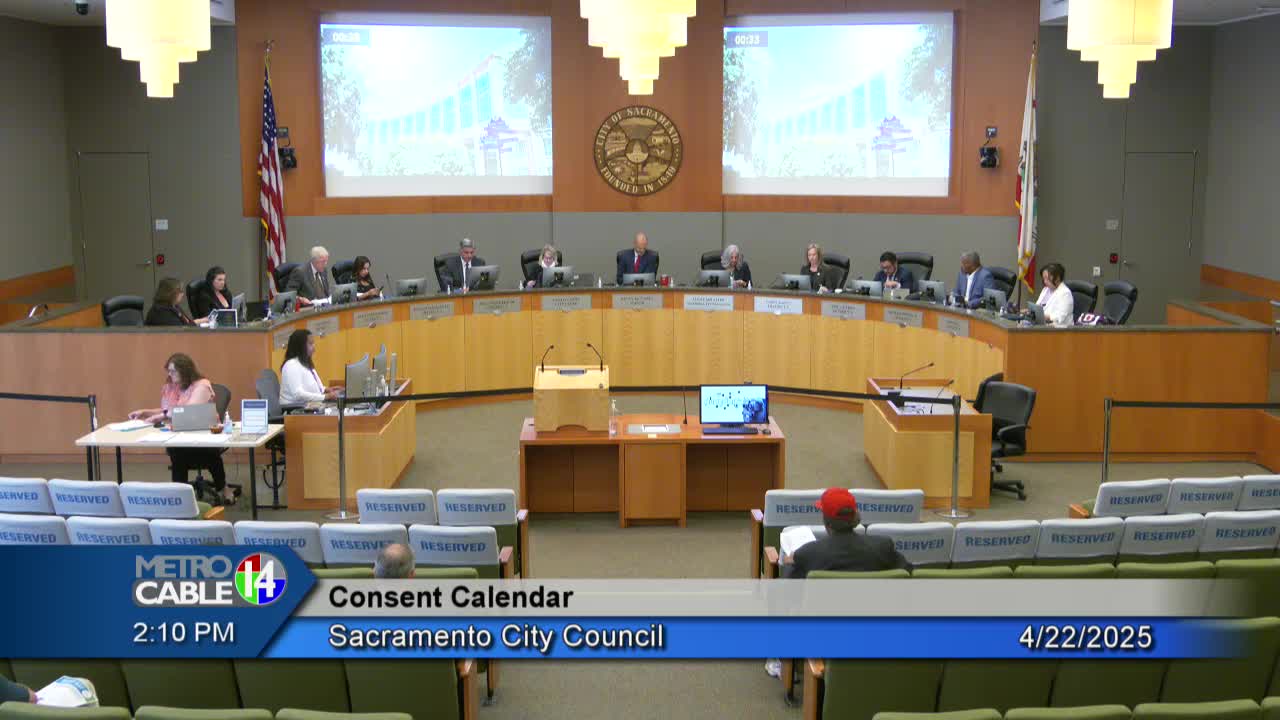
James Corliss, executive director of the Sacramento Area Council of Governments, told the Sacramento City Council on April 22 that SACOG’s 2025 long‑range plan — the “Blueprint” — projects continued population growth across the six‑county region and lays out housing, transit and climate goals for the next 25 years.
Why it matters: SACOG’s plan guides where the region plans to direct transportation and land‑use investments, helps prioritize state and federal grant advocacy and will shape local planning decisions that affect housing affordability, commute times and greenhouse gas targets.
Corliss said the region will grow by roughly 600,000 people over 25 years, producing an estimated 278,000 housing units regionwide and about 83,000 housing units needed inside the City of Sacramento. “We’re gonna grow by another 600,000 people in the next 25 years,” Corliss said. He added the plan assumes roughly two‑thirds of growth will occur inside the existing urban footprint and about one‑third in new growth areas.
SACOG described extensive community outreach for the update — polls, focus groups and mini‑grants to community‑based organizations — and distilled responses into seven themes, Corliss said: housing for all life stages and income levels; safer, more convenient transportation choices; resilience to climate hazards; and protection of working landscapes. Housing was the top concern in SACOG’s outreach, followed by public safety and transportation options.
Corliss also outlined funding constraints: transportation revenues tied to gasoline are declining, which will require prioritizing lower‑cost, “quick‑build” safety and maintenance projects and using technology and partnerships to stretch limited funds. The Blueprint will be released for a two‑month public review in May along with an environmental impact report, with a final plan expected for board review in September and adoption in November, Corliss said.
Council members raised implementation and funding questions. Mayor Pro Tem Guerra urged the city to press for REAP‑style funding (sometimes referenced as REAP 2/REAP 3) to reduce infill infrastructure costs; Corliss said REAP‑style programs and cap‑and‑trade reauthorization are on SACOG’s advocacy agenda and that AB 1223 (Assemblymember Nguyen) has provisions SACOG supports. Guerra asked SACOG to coordinate outreach with the city’s events and to support a locally viable transportation measure that could fund both neighborhood safety and larger regional projects.
Councilmember Dickinson asked about changes in commuting and work patterns after the pandemic and how those trends affect SACOG’s forecasts and greenhouse gas modeling. Corliss said SACOG is working with the California Air Resources Board on updated forecasts that reflect hybrid work and more dispersed travel patterns; he said hybrid patterns can reduce vehicle miles traveled and greenhouse gas emissions but also change downtown and transit ridership dynamics.
Other council remarks covered wildfire evacuation concerns, regional assets such as Sacramento Valley Station and the need for regional funding approaches, transit projects including the Third Main Line and ACE/Valley Rail expansions, and the requirement to update a federally required memorandum of understanding among SACOG, Sacramento Regional Transit and other operators. Corliss said SACOG is working with transit partners on an MOU update and on strategies to increase transit ridership and financial sustainability.
Councilmember Kaplan asked SACOG to consider specific local growth proposals north of the city (Grand Park and Upper West Side) and to show potential growth scenarios in appendices or supplemental materials; Corliss said those projects are tracked and would be added to the plan footprint if they break ground.
Corliss closed by urging regional collaboration across jurisdictions and parties, and by noting that SACOG will ask member jurisdictions to review the draft during the May public comment period.
Looking ahead: SACOG will release the draft Blueprint and EIR for two months of public comment in May, return to the board with revisions in September and aim for adoption in November. Councilmembers requested follow‑up briefings on specific modeling assumptions, wildfire/evacuation planning, and coordination on advocacy for state funding programs.