Get Full Government Meeting Transcripts, Videos, & Alerts Forever!
Get email alerts on the City Finance Audit topic
No spam. Unsubscribe anytime.
External audit issues clean opinion; committee hears debt and fund-balance trends
Summary
City auditors issued an unmodified (clean) opinion on the city's 2024 financial statements and reported several trends: rising capital assets, a stormwater fund reclassification, decreased pension liability, modest OPEB increases, and continued attention to debt-service ratios and fund balances.
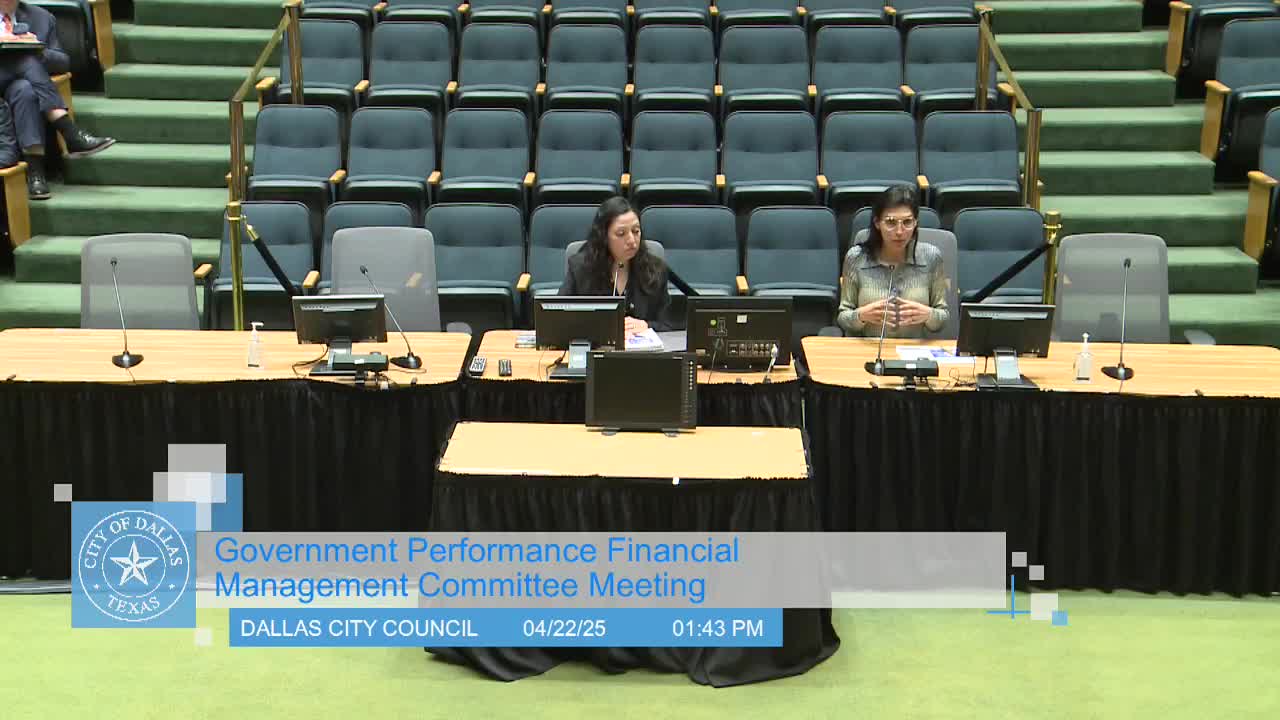
The Government Performance and Financial Management Committee on April 22 heard Weaver auditors and city finance staff present the city's 2024 annual comprehensive financial report and related audit results, including an unmodified opinion on the financial statements.
Weaver audit partner Sarah Dempsey told the committee, "You have an unmodified opinion over your financial statements," and summarized other key audit findings: no material weaknesses in internal control over financial reporting, no significant deficiencies and no audit adjustments. Dempsey said the audit team completed the city's ACFR and other deliverables, while single-audit work for federal and state awards remains due later this year.
The audit team highlighted areas of heightened testing and judgment, including management override of controls, revenue recognition across enterprise and grant funds, capital assets, pension and OPEB liabilities, incurred-but-not-reported claims, landfill closure liability and IT controls. Dempsey said the firm used data analytics for high-volume areas such as procurement, payroll and disbursements.
Why it matters: the unmodified opinion indicates the auditors found the city's fiscal reporting reliable for 2024, while the other trends the auditors and staff discussed have implications for budgeting and long-term fiscal strategy.
Key financial trends presented
- Fund balance and reserves: The general fund's total fund balance increased in 2024 (the presentation reported an increase of about $5.5 million). Unassigned general fund balance rose by roughly $11.6 million and was presented as about 26% of general fund expenditures in 2024. Staff noted the Financial Management Performance Committee (FMPC) expresses unassigned fund balance targets in days (50'70 days required by FMPC). Jack Ireland, the city's chief financial officer, told the committee the city would convert and present the FMPC days target into a comparable percentage on request.
- Debt and tax rate: Auditors showed the debt-service portion of the tax rate declining in recent years; the debt-service component was reported at 27.7% in 2024 when compared with peer Texas cities. The presentation showed the city carries more tax-supported debt than many peers, which drives a higher debt-service share. Committee members pressed staff on the financial trade-offs between issuing bonds and paying with cash; staff noted state law limits on property-tax revenue growth (Senate Bill 2) constrain some options for shifting tax-rate components.
- Enterprise and capital: Capital assets continued to increase in 2024. The stormwater activity was reclassified and presented this year as an enterprise fund for the first time. For enterprise funds, the presentation noted variable bond coverage trends across Dallas Water Utilities, the convention center and the airport.
- Pension and OPEB: The presentation showed an overall decrease in net pension liability in 2024 and a slight increase in the city's OPEB liability. Auditors said those estimates required significant audit attention.
Committee questions and next steps
Committee members asked for more detail on capital-asset monetization, the city's debt targets, and how Dallas compares with peer cities. Dempsey and city staff explained how capital assets are largely infrastructure (streets, facilities, runways, treatment plants) and therefore not easily monetized. On debt ratios, staff recommended monitoring the debt-service percentage and noted the figure increased in 2024 primarily because of debt issued that year.
Staff committed to provide follow-up figures requested by members (including conversions between FMPC days and percent of expenditures) and to continue reporting on single-audit status and other outstanding audit deadlines.
Ending
Committee members thanked the audit team for completing the ACFR amid a system conversion year; Chair and members directed staff to return with the requested metric conversions and follow-up materials for budget and policy discussion.