Get Full Government Meeting Transcripts, Videos, & Alerts Forever!
Get email alerts on the Search And Rescue topic
No spam. Unsubscribe anytime.
Alpine Rescue Team outlines capabilities, 2024 workload and funding gaps for Clear Creek County officials
Summary
Alpine Rescue Team told Clear Creek County commissioners it responded to a record number of incidents in 2024, provided roughly $771,000 in volunteer value to three sheriffs, and relies on a mix of grants, donations and sheriff contributions for operations and workers' compensation.
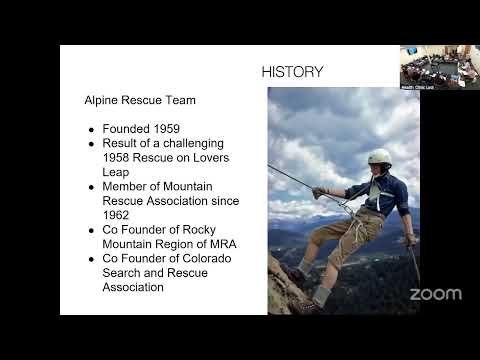
William, a representative of Alpine Rescue Team, briefed Clear Creek County elected officials on the volunteer search-and-rescue group's history, capabilities and funding during a meeting of the Board of County Commissioners.
At the meeting, William said Alpine Rescue — founded in 1959 and nationally accredited by the Mountain Rescue Association — fields roughly 80–100 trained volunteers and operates a fleet that now includes three rescue trucks, a mobile command vehicle, ATVs, snowmobiles, a tracked UTV and recently acquired electric bikes purchased with grant funding. He said the team responds across Colorado and to national incidents and that it does not charge sheriffs or rescue subjects for operations.
The group described its primary mission areas as low-angle carryouts, backcountry searches and avalanche response, noting that carryouts are the “bread and butter” of its workload and that some rescues require multi‑hour ground work. Alpine representatives said they operate at basic life support (BLS) scope on missions but now partner with a county SAR medic to enable more advanced on-scene medical care.
Alpine reported operational statistics for 2024: the team recorded its highest incident year on record with 172 incidents; the team logged 20,522 volunteer person‑hours that year; and the county accounted for about 70% of the team's total time on duty. Using three Department of Interior pay‑scale rates to estimate an economic value of volunteer labor, the presenters said the 2024 volunteer contribution to the three sheriffs they serve was approximately $771,000, with roughly $500,000 of that attributed to Clear Creek County calls.
On funding, Alpine described a diversified mix: traditional fundraising events, corporate and individual donations (including people they rescued), two state grant streams connected to hunting/fishing license dollars and a newer vehicle-registration fund created by state legislation (referred to in the presentation as Senate Bill 249 / “Keep Colorado Wild”). Alpine also said sheriffs contribute funds annually to pay worker's compensation, which the presenters said is their largest single budget line and has risen substantially.
Commissioners and staff asked about call duration, recruitment and membership. Alpine said average incident durations are long relative to many teams because volunteers often drive long distances from the Front Range to Clear Creek County and then spend many hours on scene. The team described a rigorous annual recruit class and a nine-month probationary process; presenters said they retain most new members for multiple years.
Alpine asked the county to note the scale of volunteer time provided and to consider that grants and vehicle purchases do not cover recurring costs such as insurance and workers' compensation. Commissioners said they appreciated the briefing and asked that the team’s slides be distributed; presenters confirmed the slides would be shared with meeting attendees.
Ending: Commissioners thanked Alpine Rescue Team for the presentation and for their volunteer service. The county said it would distribute the team's slides to meeting participants.