Get Full Government Meeting Transcripts, Videos, & Alerts Forever!
Get email alerts on the Special Education Funding topic
No spam. Unsubscribe anytime.
Marathon public hearing lays out competing views on HB 7277, the bill to reshape Connecticut special-education funding
Summary
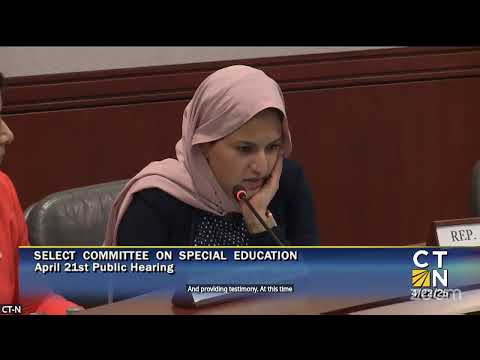
The Select Committee on Special Education spent more than a day hearing public testimony on HB 7 2 7 7, a package of proposals lawmakers described as an effort to make special-education funding more predictable and to encourage in-district services.
The Select Committee on Special Education spent more than a day hearing public testimony on HB 7 2 7 7, a package of proposals lawmakers described as an effort to make special-education funding more predictable and to encourage in-district services. Witnesses ranged from parents and public-school board members to private program operators and special-education staff, and testimony split between those who said the measure is a necessary structural fix and those who said elements would harm students and providers.
Supporters told the committee the bill would bring transparency and stability to growing outplacement and transportation costs that have strained district budgets. "This bill's creation of a universal rate schedule for out of district special education services is a critical step forward in predictability and accountability," said Tyrone Walker, a Harvard Board of Education member, adding the measure would be "pro family, pro district, and pro taxpayer." Walker asked the committee to advance the proposal.
Opponents warned that provisions in the draft would undercut families and private programs that serve students with intensive needs. "These bills are dangerous," said Dr. Danielle Cohen, a special-education advocate and former administrator, who argued that shifting the burden of proof in due-process hearings onto parents and capping tuition rates for approved programs would make it harder for children to get a free, appropriate public education under federal law.
Why it matters: Connecticut districts pay rising sums to educate students whose needs cannot be met in their home schools. Witnesses described a two-tier system in which wealthier towns can absorb costs while cities and resource-strapped towns cannot. The bill includes several closely watched elements: a statewide review of the excess-cost grant formula; new competitive grants intended to build in-district special-education capacity; a proposed universal rate schedule for approved out-of-district placements and transportation; and changes to due-process procedures and who bears the burden of proof.
Key testimony and figures
- Hartford officials said special-education costs are creating budget pressure. Krista Estrada Perez, a Hartford Board of Education member, told lawmakers Hartford serves "one of the highest needs student populations in the state" and that the district—s special-education costs represent a large share of local spending. Jennifer Hockenhol, chair of the Hartford Board of Education, said Hartford spends more than $36 million a year on outplacement tuition and that limiting state reimbursement leaves the district to fill large gaps.
- Several districts and superintendents described transportation and tuition as the largest drivers of excess-cost spending. Tyrone Walker told the committee that in his district "most of our over $36,000,000 in transportation expense go to door to door transportation required by special ed students." Lon Seidman, chair of the Essex Board of Education, urged the committee to be cautious about price controls until the state has a clearer sense of market costs.
- Private and nonprofit providers urged caution. Executives and clinicians from a range of approved private special-education programs described small class sizes, high staff-to-student ratios and substantial clinical services. "Our program is life changing and life saving, literally, for students with high support needs," said Dr. Dawn Matera of an out-of-district therapeutic school. Several providers said arbitrary rate caps or rapid rate-setting by state officials could force programs to shrink or close, leaving families with fewer options.
- Parents described long, costly fights to obtain appropriate placements and urged lawmakers not to remove their ability to seek out-of-district services. "My son was traumatized in public school; Ben Haven has been life-saving for our children and our family," said Wendy Merrick, a parent of two students placed in a private program. Parents also described delays that in some cases took years before an appropriate program was found.
- Workforce and workload concerns surfaced throughout. Stephanie Wanzer, a special-education teacher and CEA treasurer, urged lawmakers to account for intensity of services when calculating caseloads: "What do you want? Time. How are you gonna get it? I have no idea, but we all need it because we're working past the school day." Several school psychologists, speech-language pathologists and union leaders urged clearer caseload standards and better pay and recruitment strategies to reduce staff turnover.
Questions lawmakers and witnesses raised
- How to balance preserving families— access to needed out-of-district programs while reducing unpredictable cost growth.
- Whether a state-set "universal rate schedule" would make costs more predictable or push some small providers to close.
- How to ensure the excess-cost grant and the Educational Cost Sharing (ECS) formula better reflect current special-education demand and district capacity.
- Whether shifting the burden of proof in due-process hearings would disproportionately harm families who lack attorneys or advocates.
Clarifying details from testimony
- Hartford: witnesses gave multiple figures for special-education spending during the hearing. Jennifer Hockenhol said Hartford has a special-needs population of 3,467 students (21% of enrollment) and that the district spends more than $36 million on outplacement tuition; Shontay Brody said the district—s total special-education tuition obligation is roughly $86.8 million, of which $36.0 million is outplacements and about $23.5 million is total transportation (with $17.0 million specifically for outplacement transport). (Statements reported as given to the committee.)
- Excess-cost grant: testimony from Connecticut for All and legal interns noted that the state—s excess-cost grant is narrowly targeted and that only a small share of students qualify for the fund under current rules.
- Provider caseloads and staffing: multiple testimony strands said districts and private programs face severe shortages of teachers, paraeducators and related-service staff including school psychologists and speech-language pathologists.
What the bill would do (as discussed at the hearing)
- Require a statutory review of the excess-cost grant formula and consider raising the grant and the foundation levels used in state aid calculations.
- Create competitive grants and incentives for districts to expand in-district special-education programs and to include special-education space in school construction.
- Authorize development of a universal rate schedule for approved out-of-district providers and a statewide special-education transportation grant (witnesses discussed a $50 million program concept during testimony).
- Require more reporting to the State Department of Education (CSDE) and expand CT SEDS use for transparency and monitoring of placements and outcomes.
- Propose procedural changes to due-process hearings, including a controversial proposal to shift the burden of proof in some unilateral placement cases.
What lawmakers said at the end of hours of testimony
Committee chairs and members thanked the witnesses and said they would take testimony and data under consideration. Representative Khan, presiding as chair at the end of the hearing, told witnesses the committee would "look at all angles going forward," and members thanked families and providers for their input.
Next steps
No final vote or action on HB 7 2 7 7 was taken at the hearing. Committee members said they will review written testimony and data submitted by school districts, providers and advocacy groups and continue to refine the draft.
(Reporting note: testimony at the hearing included detailed budget and program numbers reported by district officials and parents. The committee asked districts to submit additional data about program operating costs, outplacement caseloads and transportation routing to inform further drafting.)
Ending
Lawmakers will now weigh tradeoffs between greater state oversight and rate-setting to control rising costs and preserving parental access to private placements parents and clinicians say are necessary for some students. For now, the committee—s chair closed the session with a promise to continue reviewing the evidence and to seek ways to improve both capacity and accountability in Connecticut—s special-education system.