Get Full Government Meeting Transcripts, Videos, & Alerts Forever!
Get email alerts on the Due Process topic
No spam. Unsubscribe anytime.
Consultant briefs commission on legal standards for planning decisions and appeals
Summary
Attorney Jim Kalp told the Dickinson County Planning Commission that decisions must be supported by the record; courts reverse decisions that are fraudulent, arbitrary or unsupported by evidence and the Board of County Commissioners may remand matters to the commission.
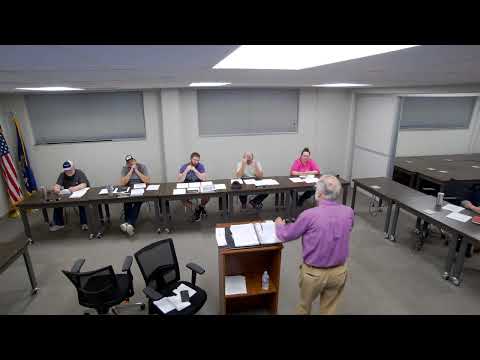
Attorney and planning consultant Jim Kalp told the Dickinson County Planning Commission on April 17 that the controlling legal standard for quasi‑judicial land‑use decisions is one of reasonableness and that courts most commonly reverse decisions that are fraudulent, arbitrary or unsupported by the record.
Kalp said, "a decision that's fraudulent is not reasonable. A decision that's arbitrary, arbitrary, or capricious is not reasonable," and he urged commissioners to ensure that the written record—staff reports, proposed findings and public testimony—supports their conclusions. He advised commissioners to prepare clear proposed findings, particularly when the commission’s recommendation will differ from staff’s, to give the Board of County Commissioners an explainable basis for its review.
On appeals, Kalp said the county commission typically bases its review on the planning commission record and that the upstairs board only occasionally accepts strictly limited new technical information. He warned that if the Board of County Commissioners receives new evidence it may remand the matter back to the planning commission for further record development rather than overturning the planning commission’s decision.
Kalp also noted practical risks that can arise when applicants present different information at the county board level than they presented to the planning commission, calling such ‘‘bait‑and‑switch’’ tactics damaging to public confidence. He recommended that planning commissioners document discussion of how each application aligns with the comprehensive plan and the specific findings that support any recommendation.
No formal appeal, ordinance or resolution was under consideration during this briefing.