Get Full Government Meeting Transcripts, Videos, & Alerts Forever!
Get email alerts on the Airport Fuel Infrastructure topic
No spam. Unsubscribe anytime.
Oklahoma Aeronautics Commission approves Claremore fuel-truck grant after heated debate and promise to revisit rules
Summary
The Oklahoma Aerospace Aeronautics Commission voted to approve a one-time grant for a new 3,000-gallon Jet A fuel truck for Claremore Regional Airport after extended debate over whether state funds should cover operational equipment. The commission agreed to revisit permanent rules on mobile fuel grants at its January meeting.
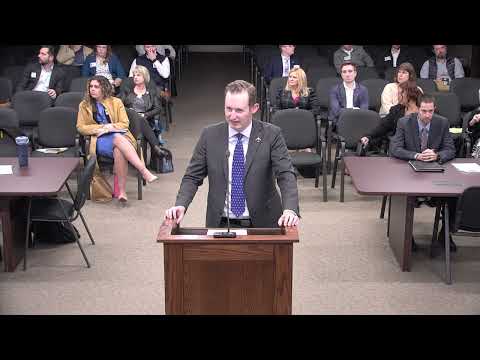
The Oklahoma Aerospace Aeronautics Commission approved a state grant for a 3,000-gallon Jet A fuel truck for Claremore Regional Airport on Dec. 11 after a lengthy debate over whether the agency should fund equipment that some commissioners described as an airport operational expense.
Commissioners voted to approve the grant for the mobile fuel truck as part of an amendment to the Airport Construction Program. The motion to approve item 9, section B (the Claremore fuel truck) passed with a majority; Commissioner Hunter voted against the motion. Commissioners also voted separately to add two other projects in the same agenda item — a hangar at Alba Regional Airport and a plane-spotting/viewing area at Tulsa International — which carried earlier.
The commission’s airports staff introduced the request as part of a broader expansion of the agency’s fuel system program. Staff said the state amended emergency rules this year to allow funding for mobile (truck) or fixed fuel systems and for Jet A as well as avgas. Nick Young, presenting the item for staff, told commissioners Claremore’s existing truck dates to 1986, is maintenance intensive and that many smaller community airports operate city-run fuel services because private FBOs are not profitable at those locations.
Cole Lindner, Claremore Regional Airport manager, said the airport’s truck leaks oil and power-steering fluid, has “a lot of unknown history” and has been in the city’s possession for roughly 10 to 15 years. He estimated Claremore receives about 20 to 30 jet landings a month. Lindner said a new truck would allow the airport to meet inspection and safety expectations and improve the impression pilots have of the field.
Opponents on the commission argued the grant would push the department into funding recurring operational needs that should be borne by local governments or private FBOs. “If your city cannot run your airport and live within a budget, maybe you need to reevaluate whether you need an airport,” Commissioner Jerry Hunter said. Hunter and other commissioners warned that buying trucks could create ongoing maintenance expectations and divert funds from core capital priorities such as pavements, lighting and AWOS systems.
Staff clarified the agency’s role: if the commission approves the purchase, the department would fund the one-time truck acquisition but the airport would be responsible for ongoing maintenance, inspections and operating costs. The staff presentation noted the rules require a new fuel truck (not used equipment) and that mobile trucks are intended for airports that already have storage tanks to fill from.
Commissioners also agreed to revisit the emergency rules when they are presented as permanent rules at the commission’s January meeting; several members sought tighter criteria for awarding mobile-truck grants. Director Ortiz told the commission the permanent-rule process is already scheduled for the January meeting and that the commission could remove the mobile option if it wanted.
The vote to approve Claremore’s truck grant carried with the caveat that the commission will review and potentially tighten the fuel-system rules in January. Commissioner Jerry Hunter was the sole “no.”
Why it matters: The action extends the agency’s capital program into mobile fuel equipment, a change staff said is meant to support airports that cannot attract private FBOs and to present Oklahoma as a pro-growth aviation state. Opponents said the move risks conflating capital grants with routine municipal operations.
Clarifying details: Claremore’s current truck is a 1986 model; airport manager Cole Lindner estimated 20–30 jet landings per month. The proposed total project cost for the truck was $304,790, with a 50/50 cost split shown in staff materials ($152,395 department / $152,395 local). The rules staff referenced require a new truck purchase (not used equipment) and state that the airport, not the department, will handle maintenance.
What’s next: The commission will revisit the emergency/permanent fuel-system rules at its January meeting and may remove or tighten the mobile-truck option. If rules change, previously approved grants would remain under the rules in effect when they were approved unless the commission votes otherwise.