Get Full Government Meeting Transcripts, Videos, & Alerts Forever!
Get email alerts on the Local Policing topic
No spam. Unsubscribe anytime.
Cleves Village Council approves ordinance reestablishing part-time local criminal‑justice enforcement
Summary
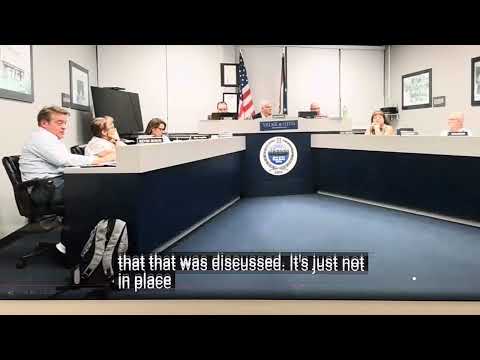
The Cleves Village Council voted 6-0 to approve Ordinance 24-20-25, creating a part-time local criminal‑justice enforcement unit to supplement county law enforcement and enforce local ordinances; implementation will require database access and coordination with the county.
The Cleves Village Council voted 6-0 to approve Ordinance 24-20-25 to reestablish a part-time local criminal‑justice enforcement unit that will have authority to enforce criminally codified village ordinances and supplement county law enforcement.
Council members and staff said the unit would not be a full-time municipal police department but would be staffed by part‑time officers focused on investigations and enforcement of local ordinances. Council members budgeted $60,000 for the program in the current year and said additional costs could increase over time.
Officials said the unit will work cooperatively with the county sheriff’s office and that all 911 calls will continue to be routed through the Highlands County Communication Center, which dispatches sheriff’s deputies for in‑progress and high‑priority incidents. The ordinance clarifies the village’s intent to have local criminal‑justice enforcement authority so it can access law‑enforcement databases, investigate matters the sheriff’s office does not pursue as local‑ordinance violations, and pursue arrest or warrant actions where probable cause exists.
Staff member Justin said, “I think there is a misconception out there that I'd like to clarify. This is not reinstating a full plea police police department with full time officers and this is the footprint.” He described the planned officers as “part time officers that are more reactive than proactive” and said they would concentrate on investigations “specifically investigations that, are otherwise not being addressed or haven't been addressed.”
Council discussion focused on response expectations, scope and limits of authority, coordination with the sheriff’s office, and budgetary limits. Council members and staff said the village’s officers would not supersede county patrols and would not respond faster than the sheriff’s office to 911 calls; rather, the local unit is intended to address matters left unaddressed by the county or to follow up on local‑ordinance violations the sheriff’s office declines to enforce.
Staff described planned operational coordination including report‑management system data sharing and daily briefings with sheriff’s personnel; Sergeant Schied and Sergeant Carney were named as current points of contact for information sharing. Officials said officers would wear uniforms, be equipped with a marked vehicle, and be stationed in the village. The staff member said database access is required before certain investigative functions can begin.
The council also discussed civil versus criminal enforcement paths: civil code violations (for example tall grass or blighted properties) would go to a village “clean court” and carry civil penalties, while criminally codified ordinance violations could lead to arrest and prosecution. Staff said the unit would coordinate with the village zoning and code enforcement officer on property and nuisance complaints.
When the council called for a motion, Council member Bable moved to approve the ordinance as described and Council member Meister seconded. The roll call vote recorded six yes votes; the motion passed 6-0.
Implementation steps discussed by council and staff include obtaining access to required law‑enforcement databases, finalizing operational memoranda of understanding with the sheriff’s office, and equipping and stationing part‑time officers. No effective date or staffing schedule beyond the part‑time description was specified in the meeting.