
CareerTech director outlines new funding formula aimed at equity across tech centers
Get AI-powered insights, summaries, and transcripts
Sign Up Free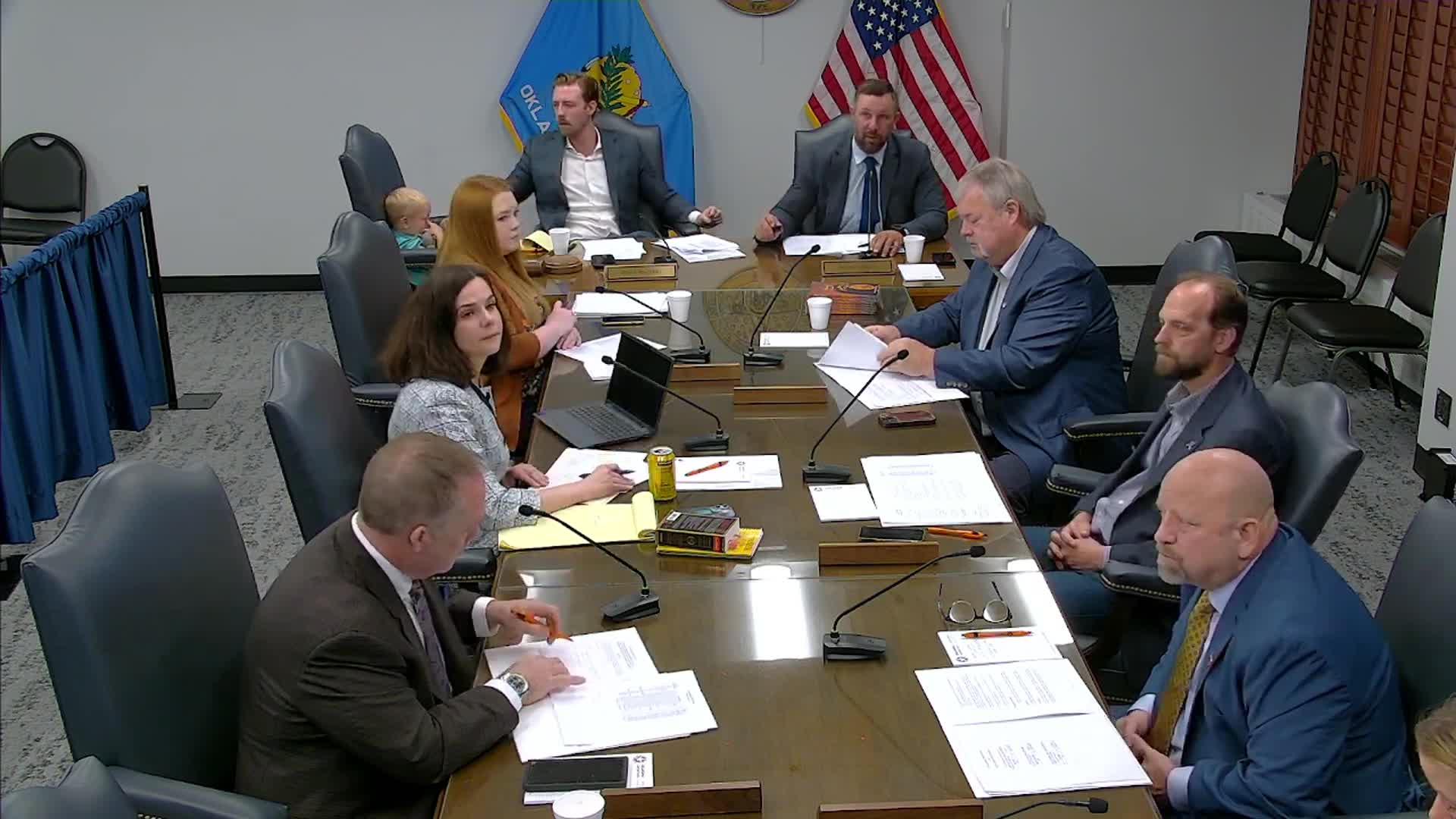
Summary
CareerTech Director presented a proposed operational funding formula designed to shift state aid toward centers with lower local revenue and to incentivize serving more eligible students; board discussion focused on implementation timing, winners and losers, and statutory constraints.
CareerTech Director Hakan gave board members an in-depth presentation of a proposed operational funding formula intended to redistribute state aid to achieve greater equity among technology centers.
The director said the proposal is designed to “make sure that we have equity across the system,” and described a formula built from four components: local needs (70% weight in the example), a secondary service incentive (10%), approved campus funding (10%) and a student services formula based on classroom-related expenditures (10%).
The proposal ties local funding to programs (defined by instructor/program identification) rather than to student enrollment alone. Under the director’s example, local general-fund collections would be multiplied by 0.65 to determine the pool available for programming; that pool is then divided by the total number of approved programs to generate a per-program comparison to a statewide average. The director said the approach is intended to align state support with centers that have less ad valorem revenue and to reward centers that serve more eligible juniors and seniors.
Board members asked how the formula would affect different centers. Director Hakan said rural centers that have lost ad valorem revenue over time, such as Western Technology Center, would be among the largest beneficiaries; fast-growing centers such as Canadian Valley would see temporary increases until local tax revenue catches up. Hakan warned that “as their ad valorem came up, they kept getting the same amount of state dollars, and they should have been brought down slowly,” and said a phased, multi-year implementation is likely to avoid large sudden changes for any center.
Under the secondary service incentive described, 67% of that portion would go to centers serving 29% or more of eligible juniors and seniors; 33% would go to centers serving 22–28%. Centers serving less than 22% would not receive that incentive, the director said, to encourage expansion of service. The campus allotment would be divided equally among approved campuses; with 63 campuses in the example, the campus portion would amount to roughly $122,000 per campus under the $75 million scenario presented.
Several board members praised the analysis as thorough but warned of political and practical constraints. Board member Randy Gilbert noted statutory limits on how ad valorem and other local funds may be used; Director Hakan acknowledged those constraints and said the proposal excludes building funds and works only with the general fund portions that statute allows the board to consider. Board members asked for additional modeling with actual budget numbers and more time to review; Hakan said he would provide scenario modeling after the legislature finalizes budget allocations.
No action was taken at the meeting. The director said he expects to bring an implementation item to the board in June if the legislature provides sufficient additional funding; he also suggested a possible multi-year phase-in to reduce sudden gains or losses for individual centers.
Ending: The board left the discussion without a vote and asked staff to provide scenario-specific examples once the state budget is finalized. The director said he will provide digital examples and meet with board members before any final action is proposed.