Get Full Government Meeting Transcripts, Videos, & Alerts Forever!
Get email alerts on the Energy Generation topic
No spam. Unsubscribe anytime.
House Rules Committee advances bill to keep Upper Peninsula "rice" natural‑gas generators online through 2049
Summary
The committee reported House Bill 4,007 with recommendation after testimony that the Upper Peninsula’s 13 reciprocating internal combustion ("rice") generators are needed for reliability and affordability; environmental groups oppose the bill.
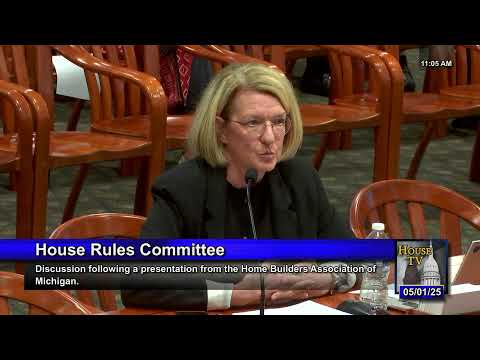
Representative Bonak testified in the Michigan House Rules Committee in support of House Bill 4,007, saying the measure would keep the Upper Peninsula’s 13 reciprocating internal‑combustion natural‑gas generators — referred to in testimony as "rice" units — operating through the end of their life cycle in 2049.
"Our rice generators play a vital role to our energy grid in the Upper Peninsula due to their reliability and affordability," Representative Bonak said, arguing that the units support communities "from our most populated county and city in Marquette to our most rural villages." He told the committee that, under green energy laws enacted by the previous Legislature, the units would be required to go offline 10 years before the end of their life cycle and estimated such a shutdown would raise power costs for Upper Peninsula residents and businesses.
Bonak also told the committee UMERC — identified in testimony as the utility that placed the units — would impose a renewable energy surcharge that could cost the Tilden mine in Marquette County "over $1,000,000 per month" in 2027 and rise "to over $13,000,000 by 2045," testimony said. Bonak summarized the bill as a measure to preserve reliability and affordability for local residents and employers.
A group of environmental and climate organizations — including the Michigan Environmental Council, Michigan Environmental Justice Coalition, Michigan Climate Action Network, NRDC, Ecology Center, Vote Solar, Sierra Club and others — filed notices opposing the bill and did not appear to speak live during the committee hearing.
Representative Wenzel moved to report House Bill 4,007 with recommendation. The roll call on that motion produced eight yays, zero nays and zero passes; the motion prevailed and the bill was reported with recommendation.
Committee minutes for the April 17 meeting were adopted earlier by unanimous consent.
No amendments to House Bill 4,007 were recorded in the Rules Committee transcript and no additional committee directions for staff were recorded during the segment of testimony and roll call.