Get Full Government Meeting Transcripts, Videos, & Alerts Forever!
Get email alerts on the SOAR Fund (Strategic Outreach And Reserve Fund) topic
No spam. Unsubscribe anytime.
MEDC defends SOAR fund use, details site-readiness and compliance as lawmakers press for job and payment data
Summary
The House Oversight Subcommittee on Corporate Subsidies and State Investments heard a detailed briefing April 30 from Michigan Economic Development Corporation officials on the Strategic Outreach and Reserve (SOAR) fund and related site-readiness efforts, and asked MEDC staff to provide additional data on mega tax credits, payment timelines and job-creation milestones.
The House Oversight Subcommittee on Corporate Subsidies and State Investments heard a presentation April 30 from Michigan Economic Development Corporation representatives on the Strategic Outreach and Reserve (SOAR) fund, with lawmakers pressing for more data on job-creation timelines, payments made and public-record disclosures related to mega tax credits.
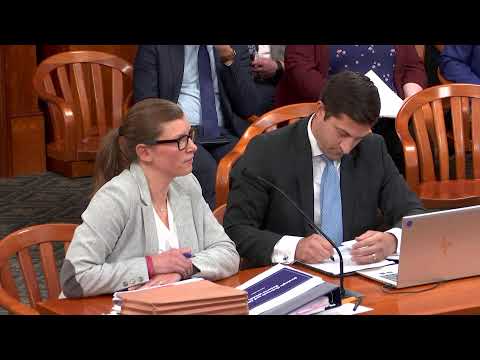
The SOAR presentation, delivered by Kristen Armstrong and Josh Hunt of the MEDC, described the fund’s two components — a Critical Industry program for closing deals and the Strategic Site Readiness Program (SSRP) for preparing investment-ready sites — and stressed that any SOAR spending requires legislative transfer approval after Michigan Strategic Fund board action. “We’re looking forward to discussing the impact and the value of the SOAR fund over the past several years,” MEDC representative Kristen Armstrong said in her opening remarks.
Committee members asked for additional follow-ups and raised concerns about the pace of job creation, whether clawbacks have been enforced, how return-on-investment is calculated, and whether MEDC will comply with a court order to disclose certain contract terms. MEDC staff agreed to provide requested datasets and clarified how monitoring and reimbursements work.
MEDC said SOAR was created in December 2021 to help Michigan compete for large, transformational projects after the pandemic; its Critical Industry awards are performance- and reimbursement-based while SSRP grants are milestone-based and typically go to local partners. MEDC officials described a multi-step site-readiness assessment — title, surveys, environmental, utility capacity, entitlements and feasibility — and said SSRP can support acquisition, permitting, remediation and other activities needed to make a site shovel-ready.
Lawmakers pressed MEDC on follow-up items including: - A request for MEDC to provide a report, similar to one the treasury provided, showing cumulative mega-tax-credit data and the share of employees who received maximum certified credits for the 10 companies that still receive those credits dating back to 2011; MEDC agreed to follow up. - A request for average certified credit per employee for those companies by year; MEDC said it will attempt to produce that calculation. - A request to produce unredacted contract text permitted by a court ruling in the case referenced in the hearing; MEDC said the MSF Act originally allowed redactions for certain information, but a court ruling limits redaction of agreement terms and that copies have been shared with the committee with only tax IDs still redacted.
Committee members cited reporting that incentives across multiple programs had promised tens of thousands of jobs but produced far fewer so far; MEDC repeated that most SOAR projects remain under construction and that job commitments often fall due years after agreement execution. MEDC also said it audits 100% of reimbursement requests for SOAR critical industry grants and tranches payments to milestones. “We audit every reimbursement,” Armstrong said; MEDC staff added that disbursements require a company certification of compliance.
MEDC walked the committee through several SOAR-supported projects announced to date, including: Dow (support described as $120 million Critical Industry grant tied to retained jobs in Midland), RNX Energy (a $200 million CIP grant and $15 million loan), General Motors (a roughly $480 million CIP award referenced in testimony), Corning (initially presented as a $900 million investment that the company has said it will expand to $1.5 billion and increase jobs to about 1,500; MEDC said Corning has filled about 1,000 positions), the Ford Blue Oval campus (which was resized and required reapproval), and a regional wastewater infrastructure project in West Michigan tied to manufacturing expansions.
On payments and disbursements, MEDC said Our Next Energy (ONE) has received just over $70 million in reimbursements since 2023 and that its job commitment is 2,112 jobs (the committee was told the job target’s due date is several years out and MEDC will provide the precise milestone dates). Committee members asked how MEDC enforces clawbacks; MEDC said there have been no SOAR clawbacks to date, and that triggers would include missed commitments, material misrepresentations, bankruptcy or project abandonment. MEDC also said it would pursue bankruptcy claims where applicable and has done so in prior programs, with recovery varying by case.
Lawmakers pressed MEDC on how return-on-investment is measured. MEDC said it uses REMI (Regional Economic Models, Inc.) as required by statute to estimate net positive economic impact over the incentive period, and that the analysis accounts for payroll impacts, capital investment, and downstream employment effects. MEDC acknowledged REMI has limits and said the agency can provide the REMI reports and a distilled summary for the committee.
Several members requested clearer public reporting on the timing of milestone and job due dates, the percentage of promised jobs achieved to date, and a simpler digest of legislative reports MEDC provides. MEDC agreed to follow up with clarified and consolidated data for the committee.
The committee spent about an hour on the presentation before opening a longer question-and-answer session. Representative Bierlein moved to approve the minutes of the April 23 meeting at the start of the hearing; the committee approved the minutes by unanimous consent. The committee adjourned at the close of business.
Less urgent details and next steps: MEDC offered to share copies of SOAR agreements, REMI analyses and compliance procedures and to provide a supplemental packet with per-project timelines, job-creation milestone dates, and the requested mega-credit employee-level calculations.