Get Full Government Meeting Transcripts, Videos, & Alerts Forever!
Get email alerts on the Energy Market Regionalization topic
No spam. Unsubscribe anytime.
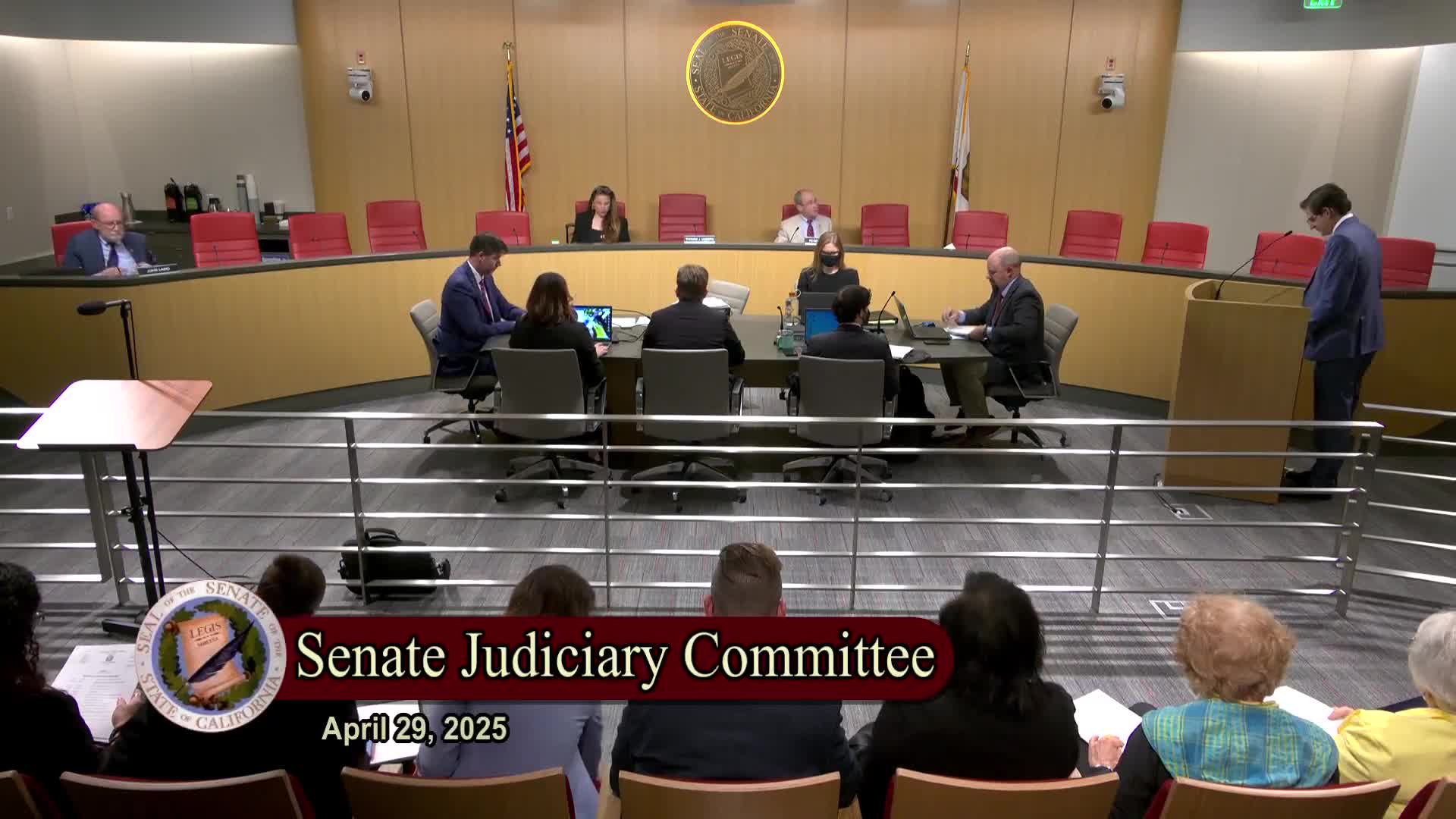
Senate committee hears debate on bill setting guardrails for California to join regional energy market
Summary
Senators, utility and environmental witnesses debated SB 540, a bill that would allow California to join a regional organized energy market only after extensive safeguards, with proponents citing emissions and reliability benefits and opponents warning of legal and sovereignty risks.
Senator Bob Becker opened debate on SB 540, a bill to allow California to participate in a regional organized electricity market only if the market meets a set of statutory guardrails.
The bill’s author said SB 540 builds on California’s voluntary participation in the Western Energy Imbalance Market and would not permit the state to join a regional market before 2028. “The amendments now make it, so we cannot join this before January 2028,” Becker said, adding the delay gives the Legislature and state regulators time to review federal and regional developments.
Supporters — a broad coalition of labor, environmental groups, utilities and large electricity customers — said the bill would reduce emissions, improve reliability during grid stress, and lower costs by letting zero‑marginal‑cost renewables compete across a wider market. Mark Joseph of the Coalition of California Utility Employees said the proposal “would reduce cost for rate payers. It would improve reliability during times of stress on the grid. And it would reduce emissions.” Caitlin Rodner Sutter of the Environmental Defense Fund said SB 540 would reduce curtailment of solar and wind and allow cleaner power to displace older coal and gas resources. “SB 540 also helps California’s electricity supply to become more reliable at times when our grid is under severe strain,” she said.
Senator Becker and witnesses outlined the bill’s main amendments: require the regional organization’s governing documents and tariff approved by FERC to respect state authority; prohibit establishment of a capacity market or mandatory resource adequacy regimes by the regional organization; prohibit assessment of costs for fossil generation to California participants; ensure unilateral, penalty‑free withdrawal procedures for states or participants; require CAISO to solicit feedback from Senate and Assembly energy committees before any final action to join; require CAISO to include a jobs study with any findings; and specify three automatic triggers requiring California electrical corporations to leave the regional market if certain adverse conditions occur (market rules harmful to California consumers or public policies, invalidation of California’s renewables rules on impermissible discrimination, or a federal action that forces California to subsidize fossil fuels).
Opponents said legal and practical risks remain. Bernadette Del Chiaro, representing an environmental group, said “Bigger isn’t always better” and warned of repeat mistakes from previous market experiments. Loretta Lynch, speaking for a coalition of community based environmental groups, argued that the bill could cede enforcement and interpretation of California law to federal tariff review, saying, “Putting that California language into the new RO tariffs only gives away California’s authority to enforce and even interpret those laws to FERC.” She also questioned whether withdrawal rights would be enforceable in future FERC proceedings.
Committee members pressed the authors on several recurring concerns: whether joining a regional market would force California to accept coal; whether California could exit the market if it harmed state climate goals; and whether the analysis underlying the bill — the Brattle pathways study — remains valid after recent federal policy changes. Becker and supporters responded that California already faces FERC jurisdiction now and that the bill’s prohibitions on capacity markets and cost allocation to California (plus the automatic withdrawal triggers) protect state policy. Senator Stern urged caution toward political attacks on proponents and said the bill’s amendments go a long way toward protecting state policy while allowing California ratepayers to benefit from a larger market.
The author and coalition representatives said negotiations with opponents — including TURN and community groups concerned about legal preemption and enforcement authority — would continue.
The committee did not take a final vote during the hearing. The bill will return for later action after the author and stakeholders continue discussion.
The most immediately relevant details: SB 540 delays any state participation until at least January 2028, prohibits regional capacity markets and allocation of fossil‑resource costs to California, requires CAISO to provide committee briefings and a jobs study, and includes automatic withdrawal triggers tied to legal and policy harms.