Get Full Government Meeting Transcripts, Videos, & Alerts Forever!
Get email alerts on the Federal Education Funding topic
No spam. Unsubscribe anytime.
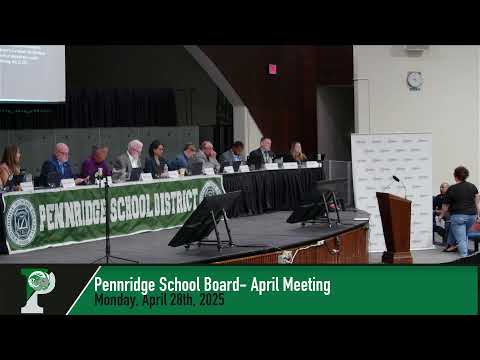
Pennridge board adopts resolution urging continued federal education funding; vote 6-2
Summary
The Pennridge School District board voted 6-2 to approve a resolution asking state and federal lawmakers to ensure continuity of federal education funding after administrators warned of uncertain federal grants and paused payments to regional programs.
The Pennridge School District Board of School Directors voted 6-2 to approve a resolution urging continued federal funding for K‑12 programs and related services, the board said at its regular meeting.
Board President Mister Wirtz introduced the resolution and moved its approval; the motion carried with six votes in favor and two opposed. The resolution directs the district to send the approved language to the district’s U.S. representative and state legislators asking them to advocate for “no gaps” in funding and services that schools rely on.
The vote followed several reports and public comments describing uncertainty over federal grant awards. Superintendent Doctor Barrios and President Wirtz earlier told the board that the Intermediate Unit (IU) had been notified informally that roughly $800,000 in previously approved funding may be at risk and that the Bucks County Head Start contract expires May 31 with renewal not yet confirmed in writing. Wirtz said the district itself is owed about $16,000 in federal funds that are currently on hold.
Supporters of the resolution said gaps or delays in federal payments would force painful local budget choices and could jeopardize special-education services, Title I supports and other programs. “To do nothing is to ignore the future consequences of reduced or eliminated funding and services,” Wirtz said in his president’s remarks.
Public commenters also addressed the issue. Several residents and parents asked the board to press legislators to preserve federal funding and to emphasize the real‑world effects of any lapse: loss of staff, program reductions and increased local tax burdens. Others urged the board to press at the state level and warned against assuming federal programs will be automatically replaced by state funding without delay.
Opponents said the resolution politicized education and warned it framed the issue as a financial emergency rather than a policy debate. One commenter referenced pending federal proposals (speaker cited HR 899 introduced Jan. 31, 2025) and argued states should be part of the discussion about how funding flows if federal responsibilities change.
Board discussion referenced the district’s adopted board policy on public comment and the IU materials provided to trustees. After the roll call, the board president said the district would forward the resolution to both state and federal representatives and encouraged community members to contact their lawmakers as well.
The resolution does not change district budgets or commit the board to specific fiscal remedies; it is a formal statement asking elected officials to maintain continuity of funding, the board said.