Get Full Government Meeting Transcripts, Videos, & Alerts Forever!
Get email alerts on the Wastewater Sewer Rates topic
No spam. Unsubscribe anytime.
Ossipee officials: Camp David septic lagoons must close under DES PFAS rules; sewer rates likely to rise
Summary
Town leaders said state Department of Environmental Services (DES) PFAS monitoring requirements mean the Camp David septic lagoons must shut down by 2031 unless extended, creating an approximate $140,000 annual revenue shortfall and prompting plans to evaluate sewer-rate increases over the next five years.
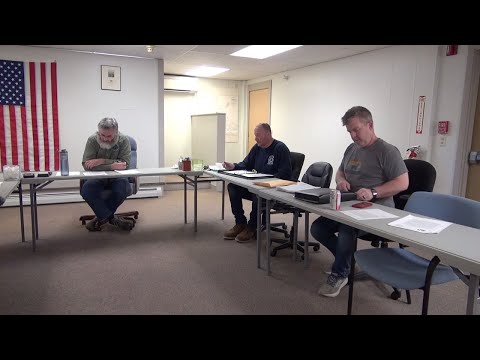
Ossipee Town officials told residents at the town meeting on 04/20 that the town’s septic lagoons at Camp David must be shut down under state Department of Environmental Services (DES) PFAS monitoring requirements, creating a revenue shortfall that will likely require sewer-rate increases over the next five years.
The issue matters because the Camp David lagoons accept septage pumped from Ossipee and five surrounding ponds, producing roughly $140,000 in annual revenue for the town’s sewer system, according to the town official who reported the update. That revenue helps cover operating costs for the system; without it, town leaders said they will need to evaluate and likely raise sewer rates to keep the system solvent.
“I went there as chairman of the board and as a state rep,” the official said after describing a recent meeting in Concord with DES staff. He told the board the state’s monitoring and PFAS-related ground-monitoring goals mean the town must discontinue the lagoon process by 2031 unless an extension is granted. “We’re kinda screwed. It’s $140,000 annual in revenue that we've taken,” he said. He added that the town had asked DES about alternatives but was told there was not a feasible option to continue the current process without meeting the new standards.
Town officials said the change will raise hauling costs for septage and require additional handling and testing. The speaker said there will be additional costs — he mentioned “about $40,000 a year” for extra cleaning and equipment maintenance as an example — but did not provide an itemized or final estimate. "TJ is gonna have to look into this, consult with the board, and raise the sewer rate to try to offset that loss of revenue because the system has to be self-sustaining," he said.
Officials described the Concord meeting as informative but not solution-yielding. They said participants included the DES commissioner’s senior staff, town representatives including TJ, and Senator Mark McClocky; the town official said the meeting yielded an educational path forward (additional testing and monitoring) and the possibility of an extension to avoid an earlier shutdown. The official said the town could have been shut down in 2026 without a grant of extra time but that, because of the meeting, the town expects an extension to 2031.
Board members and staff emphasized limits on local options: expanding the existing lagoon or adding another receiving facility is not practical without building a new treatment plant, which they said would carry multimillion-dollar costs. The official said the town will perform further analysis, revisit the sewer-rate structure next year, and hold the required public hearing before adopting any rate increases.
The town also discussed operational details the DES meeting highlighted: more intensive environmental testing, potential property-level inspections to confirm best-management practices, and longer hauls for solids disposal once the Camp David liquid-handling is restricted. Town officials did not present a final cost breakdown or a schedule of proposed rate increases at the meeting.
Town leaders said next steps include staff analysis led by TJ, additional testing and monitoring work to satisfy DES, and a public hearing next year if the board pursues rate changes.