Get Full Government Meeting Transcripts, Videos, & Alerts Forever!
Get email alerts on the Commercial Districts topic
No spam. Unsubscribe anytime.
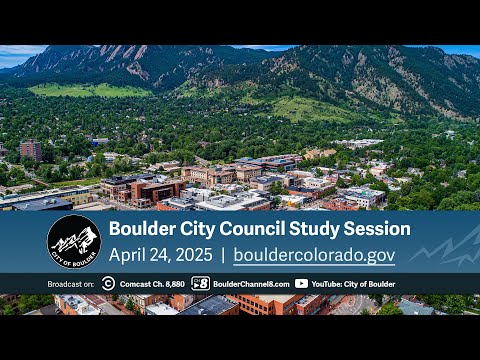
City presents improvement-district analysis; consultants and staff recommend exploring Downtown Development Authority
Summary
Consultants presented an analysis of Boulder's improvement districts and recommended near-term exploration of a Downtown Development Authority (DDA) to fund capital and services across downtown, University Hill and connecting corridors; council asked for further financial modeling and stakeholder engagement.
City staff and consultants presented results of an improvement-district analysis and updates on short- and mid-term projects intended to strengthen commercial-area connections and quality of life across downtown, University Hill and other commercial districts.
Chris Jones, Director of Community Vitality, and Regan Brown, Senior Project Manager, summarized recent investments and projects including a new creative crosswalk at 13th and Pennsylvania, temporary wayfinding between the Hill and downtown, expanded ambassador coverage on the Hill and a park-to-park shuttle route expansion. Consultants from Progressive Urban Management Associates (PUMA) presented economic indicators and recommendations drawn from district profiles and stakeholder engagement.
Brad Siegel, PUMA principal, said several economic indicators show "economic stagnation" in downtown and University Hill, noting downtown retail vacancy has increased post-pandemic and that downtown office vacancy remains "about 20%." Siegel also said the city's downtown and hill general improvement districts date to roughly 55 years ago and that the districts are at a point for re-evaluation.
The PUMA team recommended exploring a Downtown Development Authority (DDA) that could cover downtown, the Broadway corridor and University Hill and would provide funding for both capital projects and district services. The presentation said a DDA is enabled by state statute, can use tax increment financing (TIF) and may include an optional mill levy up to five mills; establishment would require affected-area approval and a plan of development.
Amanda Kennard of PUMA summarized district-specific findings: the Central Area General Improvement District (CAGID) has expanded beyond its original parking-management mission and could use clarified roles; the University Hill GID is constrained by limited revenue; and Boulder Junction currently generates assessment revenue above planned needs and could be rationalized to reduce administrative overlap.
Council members asked detailed questions about DDA scope, governance and funding mechanics. Brad Siegel said a DDA would require a plan of development tailored to Boulder and professional management to avoid potential pitfalls; he cited other Colorado examples in which DDAs have steered downtown redevelopment. Council members noted potential interactions with citywide ballot measures and with other taxing jurisdictions, including Boulder Valley School District, which receive a portion of property tax revenues.
Staff said next steps would include completing the PUMA final report, financial modeling and stakeholder engagement. Regan Brown said the city will fold DDA plan-of-development work into a forthcoming commercial areas blueprint RFP if council supports further exploration. Staff also noted they will apply the city's Racial Equity Instrument to recommended actions and continue engagement with district commissions and business stakeholders.
Council views varied: several members said they were interested in exploring a DDA but voiced caution about dedicating future incremental revenues and requested additional analysis about impacts on other ballot initiatives and on other taxing authorities. Multiple members expressed support for consolidation or simplification of overlapping districts in Boulder Junction and for prioritizing near-term improvements to pedestrian connections and public realm elements.
No final decision was made; staff will return with financial models, stakeholder engagement plans and further analysis of trade-offs between a DDA and other funding options such as increased district mill levies, public improvement fees, urban renewal tools and citywide bond measures.