Get Full Government Meeting Transcripts, Videos, & Alerts Forever!
Get email alerts on the Conflict Of Interest topic
No spam. Unsubscribe anytime.
Delaware City commission hears city attorney on conflicts of interest; staff to send applications earlier
Summary
City Attorney Natalia reviewed Ohio conflict-of-interest law with the Historic Preservation Commission, discussed recusal rules and liability risks, and staff promised earlier distribution of applications and a clearer path when recusals leave the commission without a quorum.
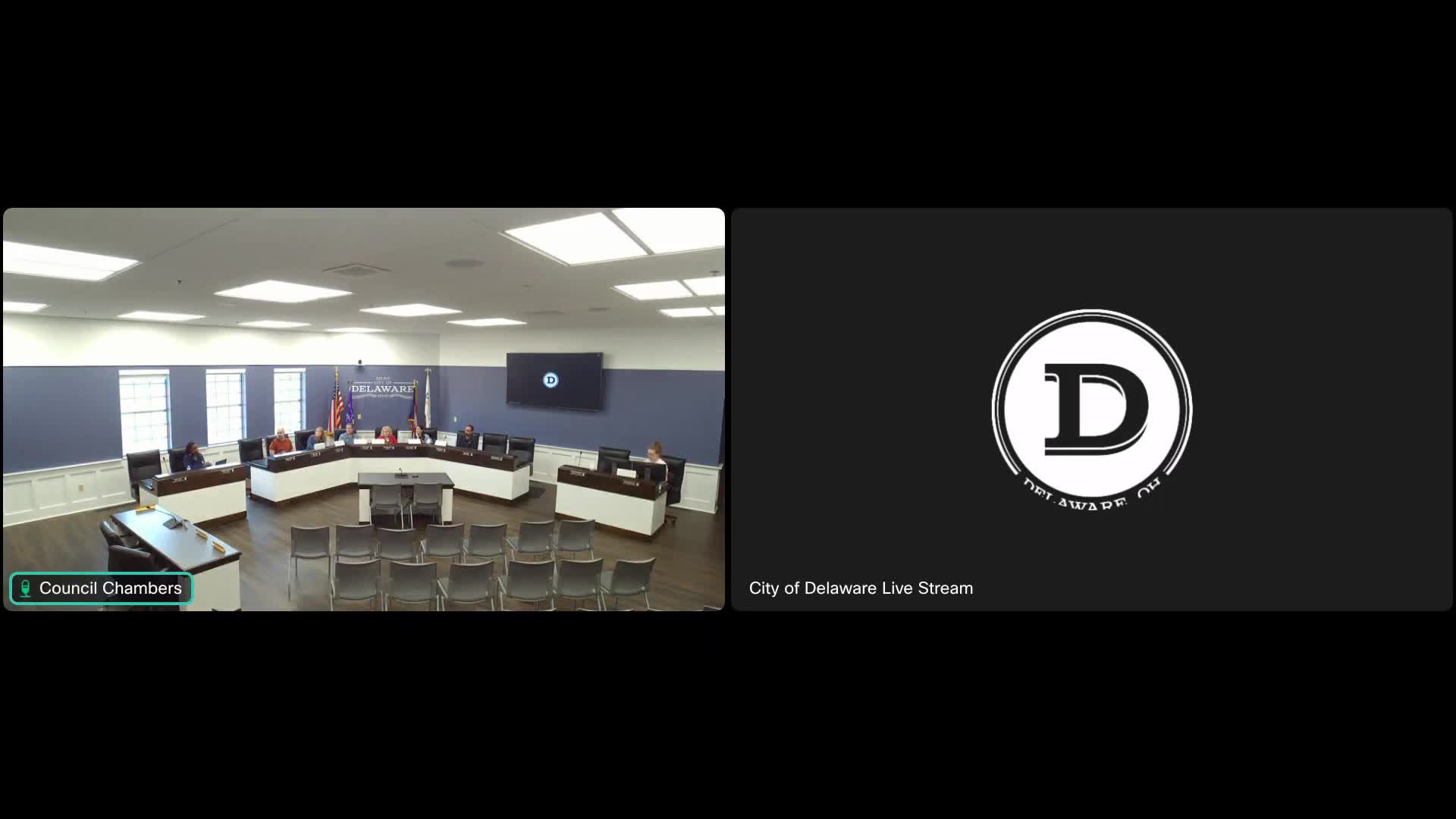
Delaware City94City Attorney Natalia told the Historic Preservation Commission on April 23 that conflicts of interest are governed by state law and that her primary concern is protecting the city from legal liability.
Natalia said, "my primary role as city attorney is to protect the city from liability." She summarized how Ohio Revised Code provisions define when an official, a family member or a business associate receives a direct benefit from a matter before a public body and when a recusal is required.
Why it matters: commissioners and staff raised concerns that recent recusals tied to Main Street Delaware could be applied broadly and might leave the Historic Preservation Commission unable to hear some downtown applications. Commissioners asked whether past approvals could be reopened and whether routine memberships or small purchases could create conflicts.
Natalia told the commission she had been conservative in earlier written advice because she lacked specific details about individual commissioners' relationships and said she would review records with staff and follow up individually where appropriate. "I've not advised that simply because you pay membership dues that you have a conflict," she said, responding to questions about whether Main Street membership automatically created a disqualifying interest.
Planning staff said that if recusals remove a quorum and the commission cannot act, the application would move to City Council with the staff recommendation. "That is what I had advised," Natalia confirmed when asked whether cases should go to council when the commission cannot legally hear them. Staff added council would apply the same architectural standards and could grant variances.
Commissioners and staff discussed practical steps to reduce last-minute recusals and to give commissioners time to seek legal clarification. Planning staff said they will enforce an application submission deadline and will send an applicant list earlier. "I will start sending out a list of the applicants, the applications that we have received and who those applicants are, to this commission... at least 3 weeks ahead of the meeting so that if you have questions, you can coordinate with Natalia and ask her," a planning staff member said.
Staff also outlined related code work and timelines. Planning staff said they expect to circulate a draft sign code in three to four weeks and hope to present the sign code to the Planning Commission in June, with a City Council public hearing in June and a likely approval in July. Staff added recommended changes to the city's architectural standards will come to the Historic Preservation Commission before going to Planning Commission and Council.
The commission and staff also discussed administrative clarifications: the city will refresh orientation materials for new commissioners, consider updating written guidance on conflicts in the welcome packet, and offer commissioners the opportunity for one-on-one conversations with the city attorney to resolve individual questions.
The commission's discussion followed a recent contested application for a mural and broader concerns about timing: commissioners said they received some conflict-of-interest guidance less than 24 hours before a vote on a controversial application, which heightened tensions. Staff apologized for the short notice and said the timing reflected when the question was raised and the information available to the city attorney.
The meeting did not produce a formal policy change; staff and the city attorney said they would follow up with individual commissioners and bring any recommended code clarifications or formal changes to the commission and then to Planning Commission and Council for review.
Ending: Staff asked commissioners to raise potential conflicts early, and the city attorney offered to meet with commissioners individually to refine determinations. Staff reiterated the timeline for the sign-code draft and pledged earlier circulation of application lists to the Historic Preservation Commission.