Get Full Government Meeting Transcripts, Videos, & Alerts Forever!
Get email alerts on the Short Term Rentals topic
No spam. Unsubscribe anytime.
Consultants tell Sedona council short‑term rentals shape prices but data limit clear workforce impact
Summary
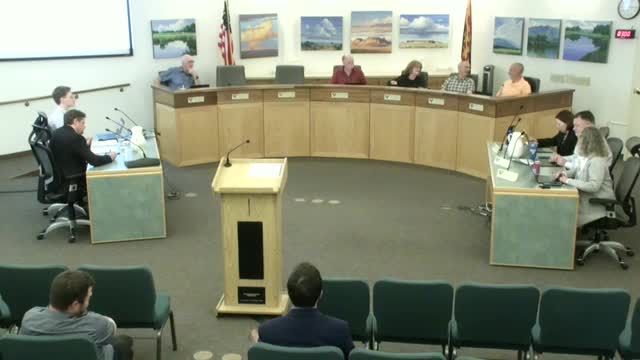
Consultants from Rounds Consulting Group presented an expanded analysis of short‑term rentals and housing affordability at a Sedona City Council discussion, urging more data work and offering policy options while warning of limits in the models. The presentation was delivered by James (Jim) of Rounds and data analyst Ethan; city staff including Annette and licensing staff Teresa participated.
Consultants from Rounds Consulting Group presented an expanded analysis of short‑term rentals and housing affordability at a Sedona City Council discussion, urging more data work and offering policy options while warning of limits in the models. The presentation was delivered by James (Jim) of Rounds and data analyst Ethan; city staff including Annette and licensing staff Teresa participated.
The consultants told the council that Sedona is “very unique,” and that the city’s visitor and retiree population complicate the standard housing‑affordability calculations. Jim said the analysis identified patterns the firm expected and some it did not, and that the team expanded its original scope to address workforce housing in addition to the initial question about price effects from short‑term rentals (STRs).
Why it matters: city staff and councilors are weighing whether local policy or state‑level fixes should be pursued. Rounds reported that roughly 18% of housing units were identified as STRs in one city dataset, but city staff and some councilors said an adjusted measure that excludes gated HOAs and other non‑convertible parcels could show concentrations “between 30 and 35 percent” in some neighborhoods — a difference councilors said would affect the political case for change.
Key findings and limits Round s consultants emphasized four points: Sedona’s visitor and retiree mix changes how housing demand and spending behave; listing‑scrape data sources can be inconsistent; assessed (tax) values can understate market prices; and simple econometric models risk invalid results when key variables are omitted. Jim told the council that when a model omits important variables, “the model is not valid,” and recommended caution about drawing firm conclusions from a single study.
The presentation noted the city’s experience tracking licensed STR addresses, and Rounds said the city’s own licensing data is more reliable than off‑the‑shelf scraped estimates such as AirDNA. Jim said the SVVAR report the city previously reviewed did “a decent economic analysis” but relied on AirDNA and used stronger wording than he would; Rounds’ review concluded some of SVVAR’s stronger conclusions should be written more softly and used as a basis for further policy development rather than presented as definitive proof.
Data and disputed counts Councilors and staff pressed the consultants on several numeric issues. Staff described a city calculation that, after removing HOAs and non‑convertible parcels from the calculation, produced a figure “that roughly approaches 30%” of residential parcels as STRs; Lauren, the city communications director, said “it is 18%” as a citywide snapshot but that some neighborhoods exceed that. Jim explained why a headline “35% under $500,000” figure in the draft appeared implausible: the SVVAR and some scraped datasets used assessed or “full cash” values from the county assessor, which are often well below market and can skew affordability calculations.
Councilor Fuhrman told the consultant the first wave of conversions had removed many lower‑priced homes from the long‑term rental market: “the first 3 to 5 years, all the lower end houses that were our workforce housing, those were grabbed up first.” The consultant said Rounds will add a section quantifying the likely occupational groups displaced and which wage levels are most affected.
Policy options and next steps Rounds proposed several types of additions for the final draft: (1) a stronger workforce‑focused chapter that maps occupations and wages against housing the workforce could afford; (2) analysis of seasonality and occupancy (how long STRs sit empty vs. targeted occupants); (3) a discussion of whether treating persistent STRs as a business class (rather than as a residential tax class) should be pursued at the state level; and (4) ideas to reduce barriers for workers — for example, expanding shuttle service and repurposing underused public buildings (school classrooms) for childcare to make commuting from nearby places more feasible.
Council reaction and evidence follow‑up Councilors pressed for clarity on which numbers should be the headline metric for outreach to state lawmakers: the 18% citywide number supported by city licensing data, or a higher neighborhood concentration number that excludes HOAs. Several councilors said the higher neighborhood percentages would be more persuasive in Phoenix; others said accuracy is critical to defend any legislative push.
City staff and Rounds agreed on next steps: Rounds will revise the draft to add the workforce chapter, expand the occupancy/seasonality analysis and normalize tax/assessed values to market estimates where possible. Staff said they would supply the consultant with parcel‑level licensing and assessor information and that the firm would return a revised draft in about two weeks for further comment.
Ending No formal action or vote took place. Councilors directed staff and the consultant to continue refining the report, with particular attention to (a) reconciling listing sources and assessor values, (b) a clearer occupational‑wage versus housing map, and (c) options the council, county or state could pursue to support workforce housing or manage STR growth.