Get Full Government Meeting Transcripts, Videos, & Alerts Forever!
Get email alerts on the Public Art topic
No spam. Unsubscribe anytime.
City to Host ‘Arc of Time’ Solar Sundial Sculpture at Mason Park, Organizers Say
Summary
City and community leaders announced plans to place a large, solar-powered public artwork called the Arc of Time at Mason Park in Houston’s East End.
City and community leaders announced plans to place a large, solar-powered public artwork called the Arc of Time at Mason Park in Houston’s East End. The project’s organizers said the privately funded arch will function as a freestanding sundial, a shaded gathering space and a solar array intended to generate about 400,000 kilowatt-hours of electricity a year — roughly matching the park’s recent annual consumption.
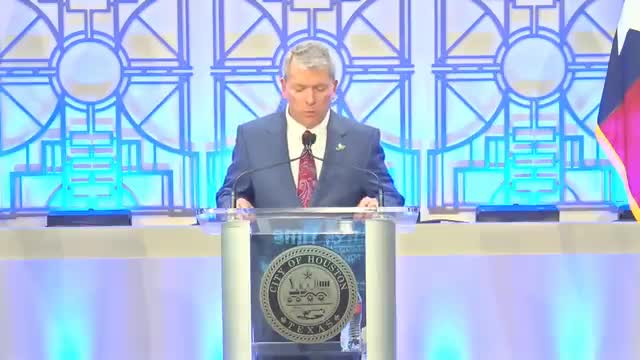
The announcement came at a public event led by Roland Garcia, vice chair of the Arc of Time Steering Committee, with remarks from City of Houston officials and the project’s founders. “This incredible structure will rise within Mason Park as part of the heart of the park revitalization for our beloved East End,” said Councilmember Joaquin Martinez, referring to the artwork as a “huge shade structure” that will create a microclimate and produce clean energy for the park.
Organizers said the Land Art Generator Initiative is gifting the artwork to the city and that the project is funded entirely by private donations. “No tax dollars will be spent in this,” said Karen Lee, development director for the project; organizers also said they are reserving about $1,500,000 for repairs and maintenance so the city will not incur those costs. Project leaders gave a ballpark construction cost of about $20,000,000.
Why it matters: Project backers described the Arc of Time as both a cultural landmark and a practical investment in sustainability and city budgets. “It will generate clean solar energy to cover all of Mason Park’s electricity needs,” said U.S. Rep. Sylvia Garcia at the event. Organizers and officials said reduced park utility costs could be reinvested in community programming.
Technical, siting and timeline details Project founders and technical partners described engineering and siting work already under way. Speakers said Walter P. Moore, an engineering firm with a Houston office, has completed schematic design for the foundation and superstructure and designed the work to withstand extreme wind events, which the presenters described as being planned for a “thousand-year event.” Organizers said the arch’s geometry has been adapted to Houston’s sun path so it will both act as a sundial and maximize solar energy production.
Robert and Elizabeth, founders involved with the Land Art Generator Initiative, said they estimate the artwork will produce about 400,000 kWh per year and that Mason Park’s recent consumption figures are about 375,000 kWh per year, putting the installation near net-zero for the park. The founders said the artwork will have a dedicated meter and that they are in discussions with CenterPoint Energy about metering and transformer details; “that meter will mostly run backwards,” they said, meaning the installation would export more electricity than it draws over the year. Organizers said off-take or accounting arrangements with the city remain to be worked out.
Funding and ownership Organizers said the Land Art Generator Initiative will transfer the artwork to the City of Houston as a gift and that funding for construction and an initial maintenance reserve is private. Karen Lee said details about specific donors can be provided by the project’s development office. At the event organizers cited a ballpark project cost of around $20 million and confirmed a $1.5 million reserve for repairs and maintenance so the city would not bear initial upkeep costs.
Community, education and cultural aims Speakers described multiple intended uses: shade and gathering space, event and educational programming, and a “living classroom” for students to learn about solar power and engineering. Councilmember Martinez and Houston Parks and Recreation Department Director Kenneth Allen said the arch will complement ongoing Mason Park revitalization work, including park facilities, trails and ball fields. Project organizers also noted plans for complementary programming and said the arch could draw tourism and related local spending.
Timeline and next steps Organizers estimated a ribbon-cutting fewer than two years from the announcement, subject to design, permitting and fundraising variables. They said remaining steps include final design with stakeholders, coordination on electrical interconnection and permitting, and community engagement around siting and preservation of park features.
Questions and constraints noted at the event Speakers addressed durability for hurricane-prone Houston, module lifespan and replacement cycles, and future technology upgrades for solar modules (organizers said modules are expected to last 30–40 years and could be replaced with more efficient technology later). They said site selection favored Mason Park because the artwork needs long sun exposure without shading by tall nearby buildings. Organizers also said the project team surveyed many potential sites and evaluated criteria such as contiguous open acreage, parking, permitting feasibility and compatibility with the park master plan.
What was not decided or specified Organizers said some implementation details remain open, including exact donor names and the final accounting/utility off-take agreement with the city and CenterPoint Energy. While project leaders described engineering work already underway, they did not present a finalized construction schedule, a signed city acceptance document, or a formal municipal vote at the event.
The Arc of Time team invited further questions and said staff and project partners would be available after the announcement for detailed follow-up.