Get Full Government Meeting Transcripts, Videos, & Alerts Forever!
Get email alerts on the County Facilities Commercial Use topic
No spam. Unsubscribe anytime.
Pulaski County adopts ordinance setting procedures for commercial use of county facilities after split vote
Summary
The Pulaski County Quorum Court adopted Ordinance 24 I 69, establishing procedures and policies for commercial uses of county facilities, after a divided debate over executive authority and employee protections. The ordinance passed 8–6 with one abstention.
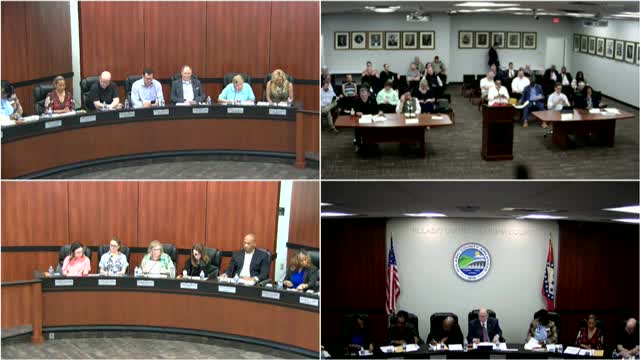
The Pulaski County Quorum Court on April 22 adopted Ordinance 24 I 69, an ordinance establishing procedures and policies for the commercial use of county facilities, following debate about executive authority and protections for county employees. The measure passed by roll call, 8 ayes, 6 nays and 1 abstention.
Supporters said the ordinance clarifies processes for third-party commercial activity on county property and establishes forms and guidance to implement the policy. Justice Massey said the ordinance “requires consideration be given to the circumstances of employees greater than what already exists in our processes,” arguing the change primarily adds protections for employees.
Opponents contended the ordinance concentrates too much authority in the county judge’s office. Justice Blackwood said, “My main problem with this ordinance is that I think it gives too much power to the executive too much executive power.” She said her objection was grounded in concern about future occupants of an office, not the current judge.
County staff described the ordinance as restating powers granted under the state constitution while giving clearer, written procedures. “My my response is no. What it does is it provides a probably a more clear process and to some degree, some restraint in requiring that, each contract exclusive or expressly state what the public purpose,” said a staff member identified in the meeting as Mister Fogelman.
The court debated implementation details, including how nonprofit activity, food trucks, and vendors would be treated. Staff told justices that truly charitable nonprofit uses would not be treated as commercial, but activities that are commercial in nature (for example, a nonprofit operating a food truck) would follow the ordinance’s process. The court also discussed a standard facilities-use agreement that would simplify recurring requests for on-site services.
After discussion the clerk called the roll for final adoption; the clerk announced the result as 8 ayes, 6 nos, 1 abstain. Justice Davis moved for adoption; the second was recorded but not named in the public roll-call exchange.
The ordinance language will be accompanied by forms and implementation guidance, which staff said will clarify routine situations such as invited food trucks and private photographers at weddings. The court did not take additional formal amendments during the session.
The ordinance was read into the record on the meeting agenda and carried to third and final reading before adoption.