Get Full Government Meeting Transcripts, Videos, & Alerts Forever!
Get email alerts on the Ai And Legal Ethics topic
No spam. Unsubscribe anytime.
Court questions law firm after petition with AI-generated, nonexistent case citations; sanctions discussed
Summary
A three-judge panel of the Utah Court of Appeals on Tuesday held an order-to-show-cause hearing after a petition for interlocutory relief contained case citations later identified as fabricated by an artificial-intelligence tool.
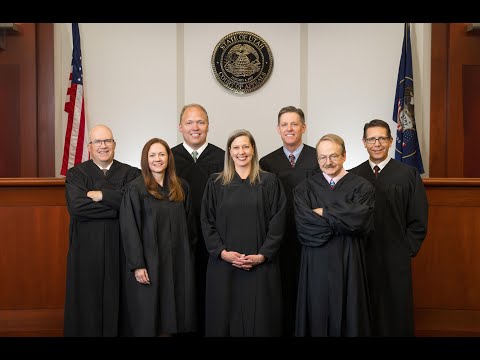
A three-judge panel of the Utah Court of Appeals on Tuesday held an order-to-show-cause hearing after a petition for interlocutory relief contained case citations later identified as fabricated by an artificial-intelligence tool. The panel—Judge Michelle Christensen Forster, Judge Gregory Orme and Judge Amy Oliver—questioned counsel about how the error occurred and whether sanctions are warranted.
Why it matters: The hearing probed the duty of candor attorneys owe to tribunals and the growing risk posed when lawyers rely on generative-AI tools without verification. Fabricated case law in filings threatens the integrity of judicial records and imposes time and expense on opposing counsel and courts that must identify and respond to the false authorities.
At the hearing, counsel representing the attorneys who filed the petition said the filing was “a serious mistake” and that a law clerk used ChatGPT to help draft the initial petition. “This filing was a serious mistake. My clients apologize to the court, to opposing counsel and their clients and certainly to their own client,” said Matthew Barnett, who appeared for the respondents to the order to show cause concerning Douglas D’Urbano and Richard Bednar.
Barnett told the panel that Bednar signed and filed the petition and takes responsibility as the licensed attorney, but that Bednar did not know the law clerk had used the AI tool to generate portions of the filing. The firm later learned—during internal reconstruction of events—that the clerk had used ChatGPT and that at least one cited case, Royer v. Nelson, does not exist in Utah and is effectively a hallucinated citation. Barnett said other Utah cases cited in the petition are real but were cited for propositions they do not support.
Opposing counsel told the panel they had identified the fabricated citations and requested the hearing. An offer to reimburse opposing counsel for the expense of responding to the original petition was described as being made and remaining open.
The bench made clear the concern was not merely a typographical error. “We depend very much on the honor system of those attorneys who practice before us,” Judge Amy Oliver told counsel. She and the other judges emphasized that courts cannot be the backstop to verify every authority and that presenting nonexistent cases under a lawyer’s signature elevates the issue beyond a routine citation mistake.
Barnett told the court his clients have adopted a formal firm policy restricting use of AI for filings and said the attorneys who signed the petition intend to make opposing counsel whole for the extra work. He acknowledged sanctions are within the court’s discretion under appellate rules and said the attorneys would be responsible for any monetary sanctions or fee awards and would not pass those costs on to the client.
Panel questions and discussion touched on professional-responsibility rules, specifically Rule 3.3 (candor toward the tribunal) and Rule 40 (appellate sanctions), and on whether the conduct reached a level of recklessness or merely negligence under Utah standards. The firm’s counsel told the court that one citation was a table citation in another jurisdiction and that the fabricated Royer v. Nelson had no substantive opinion to support the proposition for which it was cited.
The panel also raised broader concerns about widespread adoption of generative-AI tools and the risk that attorneys who do not supervise nonlicensed staff or do not verify machine-generated legal citations will file misleading pleadings. Several bench comments framed the problem as a failure of supervision and a threat to judicial workflow if it becomes common.
The court said it will take the matter under advisement and issue a written disposition at a later date. No formal sanctions were announced at the hearing.
What’s next: The Court of Appeals will rule on whether to impose monetary sanctions, require reimbursement of opposing counsel’s fees, or take other corrective measures. The hearing record shows the firm has offered to pay costs incurred responding to the initial petition and has adopted an internal policy restricting use of AI-generated legal research and drafting.