Get Full Government Meeting Transcripts, Videos, & Alerts Forever!
Get email alerts on the Speed Camera Policy topic
No spam. Unsubscribe anytime.
Committee continues resolution on photo speed monitoring after police and public-works briefing
Summary
Committee members heard staffing, funding and statutory differences among school zone, red-light and high-risk intersection speed cameras; staff agreed to provide a recommendation within 30 days and the committee voted to continue the resolution to the May meeting.
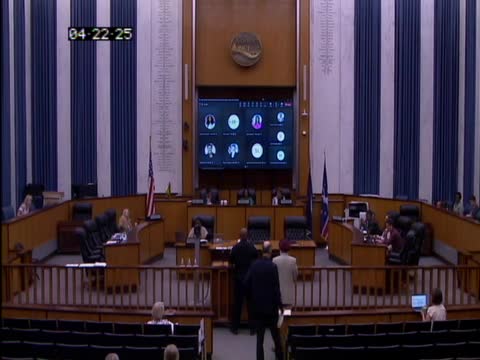
The Land Use, Housing and Transportation Standing Committee continued a resolution directing study and possible installation of photo speed monitoring devices at high-risk intersection segments after a multi-department briefing on operational, financial and legal considerations.
Major Armstead of the Richmond City Police Department told the committee the department already operates 26 school-zone cameras at 13 locations on a limited schedule tied to school hours, and that validating citations requires sworn officers. Armstead said current staff hours for existing camera programs include four part-time officers and one full-time officer and estimated the associated salary cost at about $400,000. He warned that high-risk intersection cameras would run 24/7, likely produce more citations and require additional staff to validate citations.
A Department of Public Works (DPW) representative (Ms. Khara) explained the city's current vendor arrangement with Conduent Solutions, the process for collecting revenue from school and red-light cameras and the differences introduced by a state code change for high-risk intersection segment (HRIS) cameras. Khara said revenues from school and red-light cameras can be placed in a special fund to pay vendor and program costs and then support the Vision Zero safety action plan, but that revenue from HRIS cameras must be remitted to the Commonwealth Transportation Board to be allocated through the statewide Highway Safety Improvement Program (HSIP). Because HSIP funds are distributed statewide, DPW said the city would need to advance installation costs and budget for the program up front.
Mike Sawyer, city transportation engineer, noted camera-generated revenue is intended to fund changes to the built environment under the Vision Zero plan and encouraged community engagement; he also pointed council members to a Speed Management Symposium scheduled for May 22 at Main Street Station.
Council members pressed staff for a concrete recommendation tied to the study and a timeline for next steps. DPW and police staff said procurement and budgeting would be required; police recommended an internal procurement process, and DPW noted the existing Conduent contract could cover up to about 50 locations with a total contract value up to $5 million for school- and red-light programs. Staff agreed to discuss a recommendation with police and email a proposal to the committee within 30 days. The committee voted to continue Resolution 2024R41 to the next scheduled Land Use meeting on May 20.