Get Full Government Meeting Transcripts, Videos, & Alerts Forever!
Get email alerts on the Hoa Governance topic
No spam. Unsubscribe anytime.
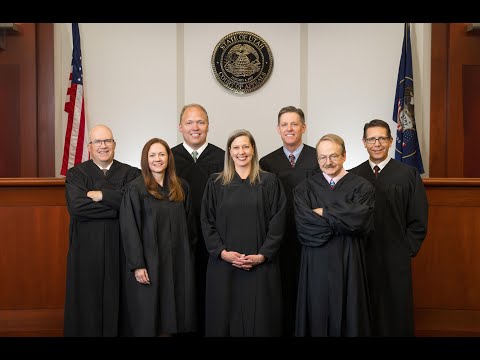
Court of Appeals hears dispute over gross negligence, fiduciary characterization in HOA lawsuit
Summary
The Utah Court of Appeals on Tuesday heard arguments in Fleming v. Delante over whether homeowner George Fleming’s claims against a homeowners-association officer should be treated as statutory negligence claims or as breach-of-fiduciary-duty claims and whether the record contains disputed facts sufficient to send gross-negligence allegations to a jury.
The Utah Court of Appeals on Tuesday heard arguments in Fleming v. Delante over whether homeowner George Fleming’s claims against a homeowners-association officer should be treated as statutory negligence claims or as breach-of-fiduciary-duty claims and whether the record contains disputed facts sufficient to send gross-negligence allegations to a jury.
Why it matters: The court’s characterization determines whether the plaintiff had to bring a derivative claim on behalf of the association, and it affects eligibility for attorney fees under provisions that allow fees when a fiduciary-duty claim is found and the litigation posture changes. The outcome could affect how members of homeowners associations bring individual claims for property-related harms.
At argument, counsel for Fleming said the Nonprofit Corporations Act shields officers and directors from liability for ordinary negligence but not for gross negligence, and that Fleming’s amended pleadings were intended to state individualized harms rather than derivative corporate injuries. “The legislature...shielded officers and directors of the corporation for general negligence. It did not shield officers and directors when their actions constitute gross negligence,” counsel said.
John Morris, counsel for defendant Jim Delante, urged the court to apply the high bar for gross negligence and to treat the primary claim as a fiduciary-duty–based claim that was litigated and parsed in earlier proceedings. “The standard for gross negligence is the failure to observe even slight care. It is carelessness or recklessness to a degree that shows utter indifference to the consequences that may result,” Morris said, arguing the undisputed record shows care was exercised.
The dispute at argument focused on two issues: (1) whether the complaints as drafted were fundamentally fiduciary-duty claims that should have been pursued derivatively rather than individually, and (2) whether the record—particularly testimony from a witness identified in argument as Mr. Rolfe and expert testimony—showed concealment and deception sufficient to create a jury question on gross negligence or willful misconduct.
Fleming’s counsel said evidence in the record showed Delante allegedly concealed material facts from the HOA board, formed a subcommittee he controlled, steered recommendations that the board adopted without full knowledge, and hired an out-of-state contractor without proper local licensing at the time. Counsel argued that those facts could allow a jury to find that the defendant “was acting in a manner that is grossly negligent” because of concealment and minimizing of problems.
Delante’s counsel responded that the record contains hundreds of emails, meeting minutes and testimony showing ongoing oversight and engagement; he argued that, at most, the evidence shows ordinary care and disputed questions of fact on negligence but not the extraordinary standard of gross negligence.
Counsel for both sides debated how to read earlier district-court rulings. Fleming’s side said a prior judge allowed amendment to clarify that the claim alleged ordinary-care duties and individualized harms rather than solely fiduciary duties; the defense argued the earlier pleadings and orders show the dispute was, in substance, fiduciary in origin and that the award of attorney fees by the district judge was therefore appropriate for the period when the case was framed as a fiduciary claim.
The attorneys also discussed a $250,000 attorney-fee award the lower court allocated to the period before a particular amended complaint, with counsel for the defense arguing that that award reflected prevailing on the fiduciary-duty posture of the case and counsel for Fleming disputing whether the claims were fiduciary throughout.
The appellate panel asked detailed questions about whether the underlying harms alleged—loss of enjoyment of a unit and individualized property harms—are properly characterized as nonderivative individual harms and whether the core factual record (deposition testimony, minutes, emails) could support a jury finding of gross negligence.
The court took the matter under advisement and said it would issue a written decision at a later date.
Courtroom context: The argument included extended discussion of statutory text in the Nonprofit Corporations Act and related Utah statutes, case law the parties invoked to elucidate the state-of-mind requirement for gross negligence, and how derivative-versus-individual-claim doctrine should apply in the homeowners-association context. There were no formal votes or orders announced from the bench at the hearing; the panel reserved decision.
What’s next: The Court of Appeals will issue a written opinion resolving (a) whether parts of Fleming’s claims were fiduciary in nature and (b) whether the record contains disputed facts sufficient to let a jury consider gross negligence and attendant attorney-fee implications.