Get Full Government Meeting Transcripts, Videos, & Alerts Forever!
Get email alerts on the Labor Enforcement topic
No spam. Unsubscribe anytime.
Committee advances reform to encourage employer participation in wage-claim process
Summary
AB 1234 would allow the labor commissioner to enter default judgments and add administrative penalties when employers fail to participate in wage-claim proceedings, a response to long delays and a backlog of unpaid-wage claims.
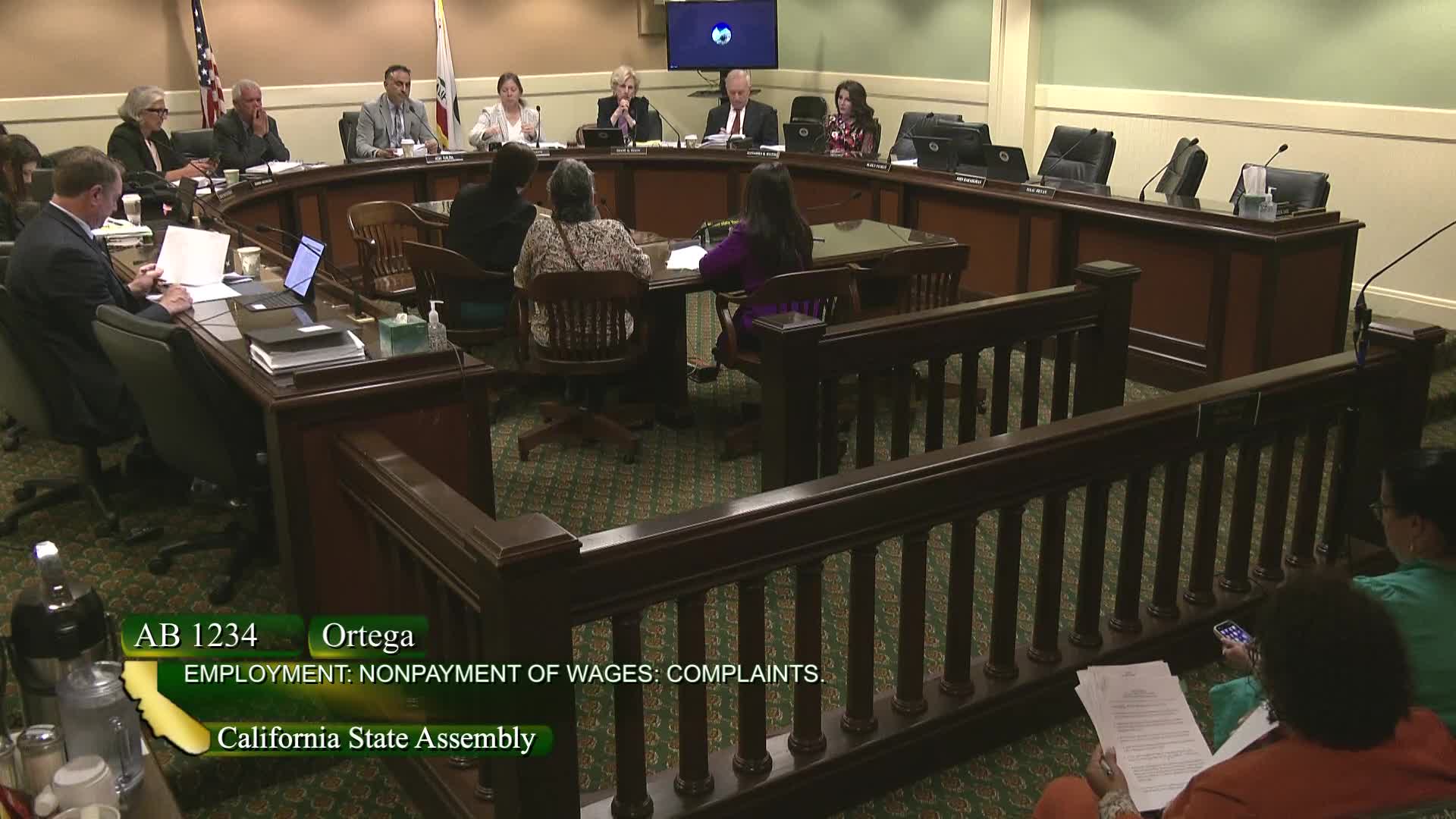
Assemblymember Ortega presented AB 1234, a bill the author said is designed to speed the Labor Commissioner's wage-claim process and deter employers who ignore claims. Ortega said wage claims take more than two years on average even though statute envisions a faster process; a backlog of tens of thousands of claims causes severe hardship for workers, one witness said she waited eight years to recover unpaid wages.
Supporters including the Center for Workers' Rights and the California Labor Federation urged reforms that give the Labor Commissioner stronger tools: default judgments where employers refuse to answer or attend hearings, and administrative penalties to deter delay. The author said she was willing to negotiate the proposed 30% administrative penalty and that it was intended to deter bad actors while protecting employers who act in good faith.
Opposition groups including the California Chamber of Commerce and several business associations raised concerns that a blanket 30% fee could punish employers acting in good faith and urged amendments to distinguish bad actors from inadvertent procedural noncompliance. Committee members pressed for clearer distinctions and said some delays are internal to the Labor Commissioner's office and not attributable to employers.
The committee passed AB 1234 as amended to appropriations; the author said she would continue discussions on the administrative-fee structure and targeted enforcement language.