Get Full Government Meeting Transcripts, Videos, & Alerts Forever!
Get email alerts on the Arts And Culture topic
No spam. Unsubscribe anytime.
Leesburg Performing Arts Commission seeks approval of bylaws, offers two small funding options
Summary
The newly formed Performing Arts Commission presented bylaws and a choice between a grassroots scholarship program and an advocacy/marketing campaign; council members gave informal support for an outreach‑focused campaign.
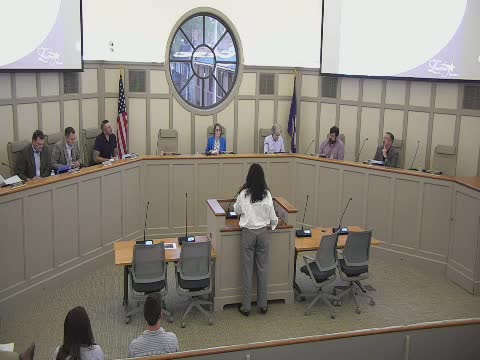
Maliki, chair of Leesburg’s newly formed Performing Arts Commission (PAC), presented the commission’s bylaws, artist selection handbook, and two options for spending the commission’s remaining fiscal‑year budget of $1,795.
The PAC asked the council to approve its bylaws and selection handbook and requested direction on which of two options to pursue: (1) three $500 graduating‑senior scholarships (one each for Tuscarora, Loudoun County, and Heritage high schools) with application requirements and school outreach, or (2) an arts advocacy and marketing campaign to gather data and increase public awareness of the performing arts’ local economic impact.
“Our purpose…is to position the arts as a vital cultural, economic, and wellness driver for Leesburg,” Maliki said, outlining the commission’s focus on visibility, education and building partnerships to support future programming and grant competitiveness.
The scholarship option would award three $500 scholarships and include a follow‑up survey to inform future objectives. The advocacy option would use digital advertising, printed materials and community engagement to collect audience and economic data the PAC could use for future budget proposals and grant applications. The presentation included statewide arts sector figures intended as background on potential economic impact.
Council members pressed the commission on governance, funding beyond fiscal year 2025, and how the PAC would determine “relevance to the community” in its rubric. Maliki said the commission plans surveys and coordination with existing arts planning efforts to gather community input and noted the PAC is considering models used by the Commission on Public Art (COPPA) and the public arts commission’s nonprofit fundraising approaches.
Council discussion emphasized caution about embedding subjective language in bylaws and asked the PAC to clarify that commission members would not be producers or directors of funded performances. Several council members recommended option 2 — the advocacy and outreach campaign — as a better near‑term use of limited funds to build public awareness and partnerships.
No formal council vote was held; staff will return revised bylaws and selection criteria for council review at a future meeting.