Get Full Government Meeting Transcripts, Videos, & Alerts Forever!
Get email alerts on the Events Planning topic
No spam. Unsubscribe anytime.
Philadelphia officials outline 2026 World Cup and 250th preparations, warn transit funding could limit service
Summary
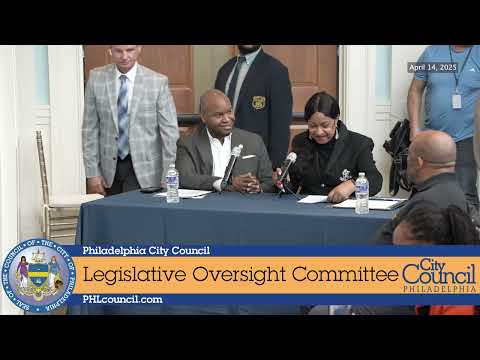
Philadelphia City Council’s legislative oversight committee heard updates April 14 on the city’s planning for 2026 — including World Cup matches, Fan Fest and America’s 250th — and on how those events will affect neighborhoods, businesses, transit and airport operations.
Philadelphia City Council’s legislative oversight committee heard updates April 14 on the city’s planning for 2026 — including World Cup matches, Fan Fest and America’s 250th — and on how those events will affect neighborhoods, businesses, transit and airport operations.
The hearing opened with city officials and event partners saying Philadelphia has been preparing for years and intends to use the moment to invest in neighborhoods and small businesses. “It really will take all of us working together,” Michael Neubas, 2026 director for the City of Philadelphia, told the committee. Giselle Jones, who described multi-agency planning teams for safety, transportation, communications, finance and sustainability, said plainly: “I’m here before you today to say, Philadelphia is ready.”
Why it matters: the city’s organizers estimate a substantial economic lift from 2026 and are proposing budget and program changes to steer benefits into neighborhoods. At the same time, regional transit funding remains unresolved; SEPTA officials warned that without state action their ability to add special-event service could be severely limited.
Planning and legacy projects City officials said committees have been working across public safety, transportation, infrastructure and community engagement. The administration described a neighborhood-centered approach that pairs corridor beautification, banners and planters with a new neighborhood centers grant program intended to help grassroots events qualify for funding and promotion. Officials said many welcome events and Fan Fest at Lemon Hill will be free to enter.
The administration’s FY26 proposal includes supplemental capital allocations for cultural institutions and legacy preservation projects, and officials flagged ongoing work with federal partners to prioritize restoration of Independence Hall and other heritage sites. Michael Eames (City 2026 team) said changes in federal language have enabled a national time-capsule project; City funding to support the city’s portion of that installation is included in the proposed budget.
Marketing and small-business outreach Angela Bau, president and CEO of Visit Philadelphia, described a paid media campaign targeting nearby and national markets and said the organization is testing messaging and creating a dedicated 2026 newsletter and information hub. “We are a mere eight months away from 2026,” Bau said, urging rapid outreach to small and neighborhood operators.
Visit Philadelphia and partners described programs to increase visibility for Black- and brown-owned businesses and to improve small-business listings (including work with Google and a “Google DMO” effort). City staff said they plan matchmaking tools for local service providers (food trucks, vendors, transportation) and workshops to help businesses pursue procurement and event opportunities.
Equity and neighborhood access Committee members pressed administration witnesses on how smaller neighborhood events and minority-owned businesses will access private-sector and city contract opportunities. Officials described district-level co‑creation, a commercial-corridor investment set to identify two target corridors per council district, and prioritization within a new neighborhood grants program for events likely to drive economic activity along corridors.
Economic estimates and budget numbers Speakers cited an economic-impact study estimating additional revenue from 2026 events between about $1.3 billion and $2.5 billion. Visit Philadelphia and Philadelphia 250 leaders said the city and governor had proposed significant public investments: the administration cited the mayor’s proposed FY26 funding and a mayoral/transfers package; Visit Philadelphia noted Governor Josh Shapiro’s inclusion of $64 million in his proposed state budget and advocacy seeking an additional $36 million to match a $100 million target of combined state and city support.
Airport and airport-area preparations Atif Saeed, representing Philadelphia International Airport (PHL), outlined a roughly $500 million capital plan developed with airline partners to rehab passenger-facing facilities and runways ahead of 2026. Saeed identified near-term projects including a $13 million SEPTA platform rehabilitation, a $20 million restroom upgrade, a $16 million terminal refresh and a $25 million runway rehabilitation. He also described concessions and programming changes to bring more local vendors into terminals and said roughly 40 percent of current concessions participation was from disadvantaged businesses.
Transit warning and event logistics Scott Sauer, interim general manager for SEPTA, told the committee that SEPTA had committed planning and budget resources for 2026 but that the authority’s ability to expand service depends on state funding. “If Governor Shapiro’s funding plan is not enacted and service cuts were to go into effect in late August, SEPTA will not be able to provide additional service for special events, or support the transportation needs demanded of our world class city next year,” Sauer said.
SEPTA described a planned $50 million contribution to 2026 support that included about $21 million for operations, staffing, safety and marketing and roughly $30 million for facility and infrastructure upgrades (platform resurfacing, lighting and camera upgrades at key stations). SEPTA also summarized operational plans: the Broad Street Line, at full capacity, can carry 25,000 to 30,000 passengers per hour with 6-to‑8 minute headways; dedicated buses to Fan Fest at Lemon Hill were planned at roughly 10‑minute intervals and estimated to carry more than 1,800 people per hour.
Council questions and community concerns Committee members repeatedly asked how city efforts will ensure Black- and brown-owned businesses capture opportunities. One member noted that Black-owned businesses represent less than 5% of businesses in the city and pressed for concrete pipelines when private organizers issue RFPs. City staff and partner organizations described outreach, lists of procurement opportunities, and agreements to follow up in writing with timelines and sign-up links.
Other community issues raised during public comment included coach-bus staging and public restroom availability for visitors; tour guides and neighborhood advocates requested expanded public facilities downtown and more coach parking capacity.
What’s next No formal votes or ordinances were taken at the hearing. Officials said they will continue interagency planning and promised follow-ups on procurement timelines, district corridor lists and specific public-safety integration of community organizations. SEPTA reiterated that its ability to implement planned service and station upgrades depends on enactment of a permanent state transit funding plan.
Ending Committee chair Thomas closed by thanking city and non‑government partners and said the committee will recess and return in the fall for additional oversight before the 2026 events begin.