
Seismologist urges San Marino residents to prepare for stronger shaking, liquefaction and prolonged recovery
Get AI-powered insights, summaries, and transcripts
Subscribe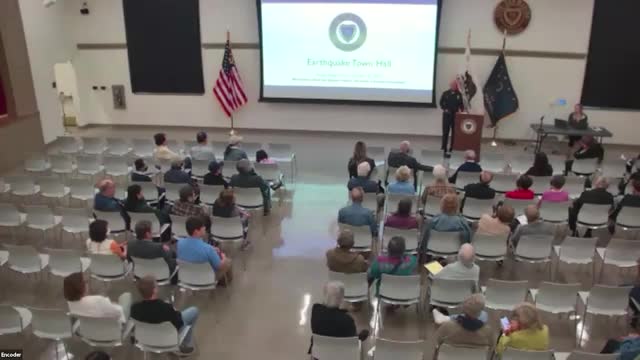
Summary
At a San Marino earthquake and infrastructure town hall, seismologist Dr. Lucy Jones described how long‑fault ruptures, basin amplification and liquefaction could intensify damage in the San Gabriel Valley and warned that recovery — especially restoring imported water and utilities — could take months.
Dr. Lucy Jones, a seismologist and former U.S. Geological Survey research scientist, told a San Marino town‑hall crowd that the most important immediate action during an earthquake is to "drop, cover and hold on," and urged residents to prepare now for long disruptions after a large event.
Jones spoke at an earthquake and infrastructure town hall hosted by San Marino public safety staff ahead of the Great ShakeOut drill. She described how very large earthquakes rupture long stretches of fault, how shaking intensity varies across basins, and how local soils can liquefy and damage buried infrastructure.
Jones said the largest earthquakes are not only stronger at any single site but affect many more locations because they rupture much longer fault lengths. She highlighted the San Gabriel and San Bernardino basins as potential “waveguides” that can trap and amplify shaking for communities in the region, including San Marino. She explained liquefaction — the temporary loss of soil strength when water‑saturated sand is shaken — and showed examples of sand and ground water surfacing after shaking.
The seismologist cautioned that most building codes in California are focused on life safety rather than preventing financial loss or preserving building usability after a major quake. "The building code in California is a life‑safety only code," Jones said, adding that it allows some probability of collapse in very large events. She noted that retrofitting older structures, bolting houses to foundations and securing heavy furniture reduce damage and expedite recovery.
Jones also stressed that restoring some utility services can take many months after a major rupture. She said pipelines that cross major faults are especially vulnerable and that analyses of repair time for imported water systems suggest the quickest repairs take about six months and the longest about 18 months. "If you're right on top of the fault, that offsets those things," she said, noting that mutual aid will be strained after region‑wide events because many jurisdictions will be affected simultaneously.
During a brief question period, Jones recommended household measures such as bolting tall bookshelves, using museum wax on fragile items and creating family and neighborhood communication plans. She emphasized community preparedness and local mutual assistance: "Forget the kit. Go talk to your neighbors," she said.
The event combined Jones’s presentation with a water‑utility briefing and local emergency updates; city staff said they will continue public information efforts, including more practical, residential‑focused sessions with police and fire staff.
The meeting did not include any votes or formal actions; it was an informational town hall and question‑and‑answer session.
Ending: The city said it plans follow‑up public sessions that will focus on household preparedness and steps residents can take to reduce damage and speed recovery.