Get Full Government Meeting Transcripts, Videos, & Alerts Forever!
Get email alerts on the Economic Development Policy topic
No spam. Unsubscribe anytime.
Ramsey County asks St. Paul to support bill allowing use of HRA levy for economic development programming
Summary
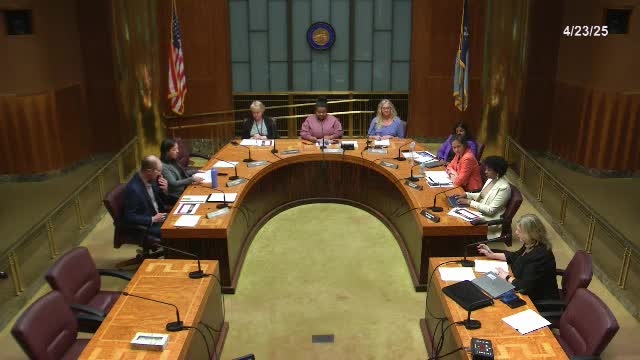
Ramsey County commissioners presented proposed legislation to let the county use a portion of its HRA levy for business and economic development programming. County leaders asked the St. Paul authority for a letter of support and outlined a plan to seek approximately $2 million of levy funding for business programming while retaining geographic‑sp
Ramsey County officials asked the St. Paul board to provide a letter of support for proposed state legislation that would allow the county’s housing and redevelopment authority levy to be used for economic‑development programming, in addition to housing and redevelopment activities.
Ramsey County Commissioner Mai Chang Zhang, who serves as chair of the county HRA, told the authority the county’s legislative request is sponsored by state legislators including Senator Kari Dziedzic (referred to in‑meeting as “Senator Hur” sponsorship) and Representative Liz Lee, and would give Ramsey County new flexibility to support workforce and business programs alongside housing programs. “This request is seeking for our ability to use our HRA levy, towards, economic programming,” Commissioner Zhang said.
Commissioner Josh Olsen (community and economic development director) and county staff described the county’s plan for modest reallocation if cities opt in: the county estimates roughly $2 million of the current levy (the county’s HRA levy currently totals about $13–13.5 million, officials said) could be used for business programming while preserving geographic parity with cities. The county described an opt‑in process for municipalities and said participating cities would need to opt in by July 1 for tax‑calendar timing; cities that do not opt in would continue to have their full levy amounts focused on housing.
County staff emphasized statutory requirements that the county obtain city support for projects and maintain spending parity across jurisdictions: “We are required by state statute to ensure that we receive city support for any of the projects that we recommend for funding,” Commissioner Zhang said. Staff also listed cities that have already submitted letters or taken action supporting the request, including Roseville, Shoreview, Lauderdale, Falcon Heights and White Bear Lake.
Several St. Paul commissioners asked how the city would retain influence over use of any economic‑development allotment if it agreed to participate. Commissioner Naker asked how much say the city would have over allocations and whether the dollars would simply flow into county‑run programs like Open to Business; county staff said projects still require city support under statute and that program‑level funding would be evaluated annually. Commissioner Naker said she supports affordable housing but wanted clarity on the city’s role in prioritizing economic‑development uses if St. Paul opts in.
County staff said the legislation is in the senate omnibus bill at the time of the briefing and that letters of support from cities would help keep it under consideration as the legislature works through the package. The county said it would likely return to the St. Paul board for additional briefings and to report on legislative progress; county staff sought a letter of support from St. Paul to accompany the legislative request.
What happens next: County staff requested a letter of support; no formal action was taken by the St. Paul board during this meeting. Commissioners asked for more detail about how funds would be used and the city’s role in program design and oversight prior to any opt‑in decision. County staff said they would follow up with additional materials and opportunities to discuss specifics.