
HRA approves Healthy Homes, Power of Home guidelines and refers measures to city council
Get AI-powered insights, summaries, and transcripts
Sign Up Free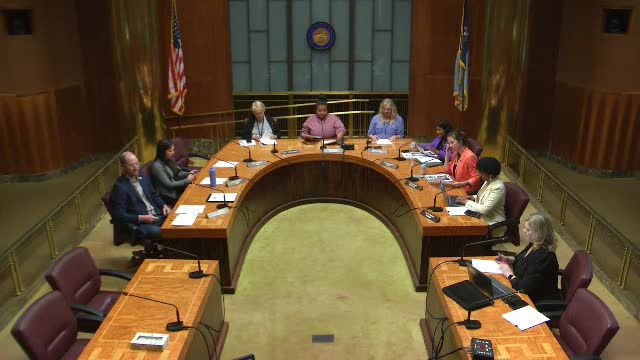
Summary
The St. Paul Housing & Redevelopment Authority voted to approve and refer to the City Council a resolution establishing program guidelines for Healthy Homes and Power of Home, two home‑improvement programs aimed at lowering energy costs and addressing health‑and‑safety barriers to weatherization.
The St. Paul Housing & Redevelopment Authority voted to approve and refer to the City Council a resolution establishing program guidelines for Healthy Homes and Power of Home, two home-improvement programs aimed at lowering energy costs and addressing health-and-safety barriers to weatherization.
Chief Resilience Officer Russ Stark told the authority that “Healthy Homes will include both pre‑weatherization measures and weatherization,” and that pre‑weatherization work would only be done where it is necessary to enable weatherization. He summarized Power of Home as work to “help our lower income households move away from the use of fossil fuels,” including electric heat pumps, heat‑pump water heaters and induction stoves, plus required electrical panel upgrades or expansions.
The authority’s staff described eligibility and important distinctions between the two programs. Healthy Homes is proposed for owner‑occupied one‑to‑four‑unit dwelling units up to 80 percent of area median income or a geographic proxy area previously discussed; the program will permit pre‑weatherization repairs such as rewiring, asbestos or vermiculite removal, mold remediation, leaking pipes and roof repairs as needed to allow weatherization work. Power of Home is focused initially on owner‑occupied single‑family homes at 50 percent of AMI or the program’s smaller geographic proxy and is limited to single‑unit homes in the first phase because of complexity in buildings with tenants.
Staff described several changes after earlier feedback: rental properties were removed from initial eligibility to simplify administration; an asset test was removed from the income qualifications; a $50,000 cap was retained for two‑to‑four‑unit buildings under Healthy Homes; Power of Home was made ineligible for two‑to‑four‑unit buildings in this first stage; and the programs explicitly include electric appliance replacement, panel upgrades and panel expansions, and heat‑pump washer/dryer combinations when recommended by a home energy audit. Staff said audit‑recommended, cost‑effective measures not listed explicitly would be treated as eligible.
Stark and staff said the city will coordinate with existing providers and rebate programs to maximize outside funding. “Because the city will be actually making the payments for these projects, we would maximize our ability to capture those rebates and then put them essentially back into the programs,” Stark said. He also named Community Action programs (Ramsey and Washington), the EnergySense Coalition and Xcel Energy as partners and referral sources where those organizations encounter properties that need larger pre‑weatherization investments than their programs can fund.
On financing, staff said the original Healthy Homes allocation was $1 million, with roughly $900,000 expected to remain available for projects after administrative costs; Power of Home has $300,000 available in year one and is funded by an ongoing franchise fee revenue stream. Staff said the intention is to evaluate and likely consolidate the two programs in future budget cycles using ongoing revenues.
The authority approved the resolution by voice vote; the clerk corrected the roll call to note six present and one excused, and recorded the outcome as 6 in favor, 0 opposed. The resolution will be presented to the City Council under suspension later the same day for final approval.
The guideline package includes targeted outreach to climate‑vulnerable neighborhoods and households denied or deferred by other service providers, and it prioritizes homes where unaddressed health and safety issues prevent weatherization work.
What happens next: the authority referred the item to the City Council for formal approval; staff said program details, contractor selection and outreach plans will return to the authority and council as the programs are implemented.