Get Full Government Meeting Transcripts, Videos, & Alerts Forever!
Get email alerts on the Opioid Settlement Funds topic
No spam. Unsubscribe anytime.
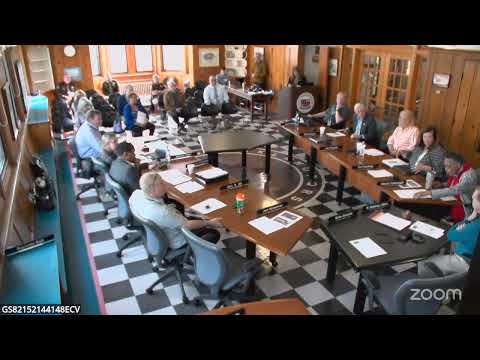
Berrien County commissioners hear updates on opioid-settlement-funded recovery programs
Summary
County commissioners received presentations from the Restoration House and the sheriff’s office on programs funded by Berrien County’s opioid settlement dollars, including a men’s recovery home seeking accreditation and a jail-based medication-assisted treatment program described as successful but facing discharge-planning and funding challenges.
Berrien County commissioners on Thursday heard status reports on programs funded through the county’s opioid settlement funds, including a men’s recovery home run by the Restoration House and a jail-based medication-assisted treatment program that county officials called successful but in need of stronger discharge planning and sustainable funding.
The presentations came during a report from the county’s opioid oversight committee, which reviews quarterly reports, financial status and program performance for vendors funded through the settlement process established by county resolutions in November 2023. "The committee ... has scored each program awarded funds based on the key performance metrics" and recommended continued funding, a county staff member told the board.
Peter Sando, executive director of the Restoration House, described the men’s home and its partners, thanked the county for funding and outlined outcomes since opening. "This has been a deep passion of mine for years now to start a men's home and is deeply needed," Sando said. He told commissioners the house has received more than 25 applications, has housed up to nine people, and is currently at capacity with six residents. Sando gave the board several program measures: staff have administered more than 150 drug tests with one positive on intake, residents have completed more than 104 hours of community service, four residents completed intensive outpatient therapy, and the household has logged more than 504 combined hours of group therapy.
Sando said the Restoration House is pursuing accreditation from the Commission on Accreditation of Rehabilitation Facilities to become eligible to bill insurance as a group home and to support longer-term financial stability. He also listed community partners that help with treatment and reentry services, including Riverwood, Connexus, the Equal Opportunity Center, Michigan Works, the YMCA, Celebrate Recovery and Corewell Health. Sando said the house works with the Berrien County jail to accept residents who are on medication-assisted treatment after release.
A representative of the sheriff’s office described the county’s jail-based medication-assisted treatment (MAT) program, noting the program’s move to a new medical provider on Jan. 1 and a roughly one-year period of full operation. The speaker said the program provides buprenorphine (Suboxone), methadone and related therapy; discharge planning and continuity of care after release are central goals. "The MAT program is definitely a success," the sheriff's office presenter said, while also naming areas for improvement: minimizing diversion risk during in-jail dosing, improving data collection after release, and strengthening coordination with community partners so people released from custody can continue care.
Speakers discussed an injectable buprenorphine product (referred to by presenters as SUBLOCADE) as a promising option to reduce diversion but said it is expensive and that Medicaid coverage for incarcerated people remains uncertain. The sheriff’s office representative said county leaders were exploring other funding sources, including state MDHHS funds, to sustain and expand the program beyond the opioid settlement dollars.
County commissioners also heard that three commissioners (Yarbrough, Freeland and Wuerffel) participate in the oversight committee and that the county intends to steward roughly $8.5 million to $9 million in opioid settlement funds over an 18-year plan, according to a presentation to the board.
Votes at a glance: The board approved the minutes from the previous meeting in a voice vote. Pitchford moved to approve the minutes and Vollrath seconded; the motion passed by voice vote with no roll-call tally in the transcript. One commissioner announced an upcoming abstention on Requisition No. 77319 (Rev Excavating) for $16,290 at the board’s 10:30 meeting due to a familial connection; the abstention notice was recorded but no formal vote on that requisition appears in the transcript.
The oversight committee materials — including completed scoring rubrics and vendor performance summaries — were provided to commissioners and will inform future funding and contracting decisions.
Commissioners and presenters said the county will continue to refine program reporting, discharge planning and community partnerships to improve outcomes for people with substance use disorders and to make the best use of the opioid settlement funds.