Get Full Government Meeting Transcripts, Videos, & Alerts Forever!
Get email alerts on the Animal Welfare Shelter Operations topic
No spam. Unsubscribe anytime.
San Marcos volunteer board outlines steps to expand shelter volunteer, transport and TNR programs
Summary
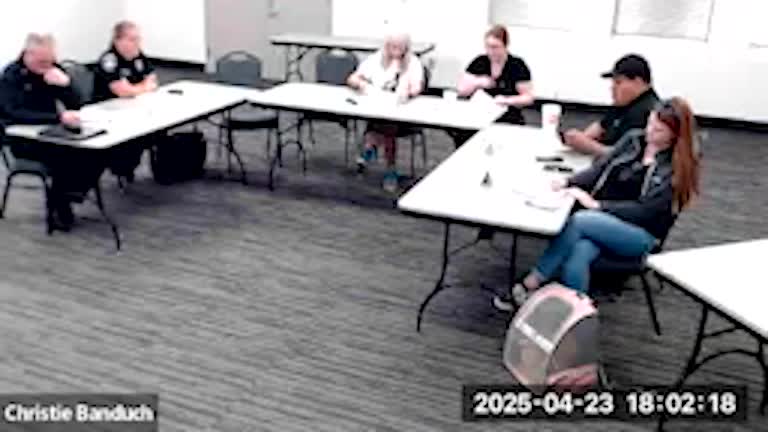
At a regular advisory meeting, San Marcos shelter leaders described plans to strengthen volunteer training, a foster program, animal transport partnerships and targeted trap-neuter-return efforts; the group approved minutes and added county shelter updates to a future agenda.
San Marcos shelter advisory members spent the bulk of their meeting reviewing current programs and identifying steps to expand volunteer capacity, formalize transport partnerships with out-of-area rescues and pursue targeted trap-neuter-return (TNR) efforts in neighborhood “hot spots.” The group also reviewed quarterly intake and outcome numbers and approved minutes from the January meeting.
The discussion centered on four existing programs—volunteering, fostering, transport/rescue placement and TNR—plus an intake-diversion effort called the Forget Me Not voucher program. Christie (meeting facilitator) said the goal is not to “reinvent the wheel” but to strengthen existing work: building a tiered volunteer training program, adding volunteer trainers who can buddy new volunteers with shelter staff, and creating a small team to support the one-person foster program.
Why it matters: shelter staff described persistent capacity constraints—multiple speakers said the shelter often is over 100% capacity—and limited staff time is throttling program growth. Advisory members framed volunteer development and direct outreach (TNR, transport networking and foster recruitment) as the most immediate ways to reduce intake pressure and improve animal outcomes.
Shelter staff and board members described specific priorities. They want a small core of experienced volunteers to act as trainers and on-call support for fosters, so staff are not the only point of contact for late-night foster questions. The group discussed recruiting volunteers to handle adoption counseling, intake paperwork, event outreach and transportation logistics for transfer partners.
On transport and rescue placement, advisory members said they are trying to expand the shelter’s network beyond large metropolitan receivers (cities named in the discussion included Austin, San Antonio, Dallas and others) that already receive heavy flows. “One of the problems with transport is some of the bigger cities kind of monopolize the northern shelters,” Christie said; the board discussed the need to identify mid‑ and long‑distance partners that can accept animals when local placement options are limited.
TNR was described as a targeted program rather than ad-hoc trapping: advisory members said success requires mapping neighborhoods, setting numeric targets and running methodical, zone-by-zone campaigns. Speakers described using yard signs, management permission from mobile-home park managers and neighborhood outreach to get buy-in and reduce births over time.
The advisory reviewed shelter statistics for the quarter. Staff reported 875 intakes during the quarter, with roughly 600 recorded as strays; they said outcomes were strong enough that the shelter’s live/outcome rate was above 90 percent for the quarter. Staff noted that seasonality will increase admissions in the coming quarter and cautioned that progress in winter does not mean a sustained lull once kitten and puppy season begins.
Staffing and capacity updates: the shelter has added an animal shelter supervisor since the prior meeting and is closer to full staffing than it had been; however, advisory members said the shelter population still frequently exceeds facility capacity. Several participants emphasized that program expansion—especially high-volume public TNR clinics and transport days—will require a larger, better trained volunteer corps to handle check-in/out, paperwork and post-op follow-up.
Nonprofit partnerships: speakers identified two local nonprofit partners that already assist the shelter—Paws on the Ground (transport, boarding and fundraising support) and another local nonprofit that helps with medical or intake-diversion needs. The board discussed coordinating support rather than creating a new “friends” group, and some members urged strengthening existing partnerships rather than duplicating efforts.
County relationship and contracted services: advisory members raised recent changes to an APA contract and noted uncertainty about whether the county will change how it places animals or provides services; Christie said the shelter’s relationship with county animal services (the county brings animals and the shelter receives them) had not materially shifted yet, but the members acknowledged “question marks” remain and asked for updates at future meetings.
Formal actions: the committee approved the January minutes with a correction to an item in that packet and later voted to add three county update presentations (separately for Kyle, Hays County and Buda) to a future meeting agenda for informational updates.
Board members said next steps include recruiting and training a small cohort of volunteer trainers, mapping neighborhoods for targeted TNR campaigns, pursuing a pilot high-volume TNR/clinic day (with volunteer staffing for intake and transport) and formalizing transport partner outreach to diversify destinations for transfers.
Quotes in context: “We’re not reinventing the wheel,” Christie said while outlining the four program areas the board already runs. On intake figures, staff said, “Out of 875 intakes, 600 of them were strays.” Those numbers framed the conversation about expanding intake diversion and community outreach.
The advisory agreed to revisit detailed operational proposals and funding needs at the next meeting, and members asked staff to return with more granular volunteer role descriptions, training checklists and a proposed timeline for a targeted TNR pilot.
Votes at a glance
- Motion to approve January meeting minutes as amended (mover: Brianna Geddes; seconder: Bo Kidd). Outcome: approved (unanimous). Note: board recorded a correction in Item 8 to clarify wording.
- Motion to add three county update presentations (separate briefings on Kyle, Hays County and Buda) to a future meeting agenda (mover: Christie; seconder: Nikki Lattice). Outcome: approved (unanimous).